The Uprising (2026) Movie Trailer: Andrew Garfield’s Robin Hood Origins, Release Date, Cast, and Fan Reaction Breakdown
There are historical movies that make you want to read a book afterward, and then there are movies that make you wonder why everyone in medieval England apparently owned nothing but wet brown clothes.
The Uprising (2026) is clearly aiming for the first category, but its trailer left me with mixed feelings. On one hand, Andrew Garfield, Paul Greengrass, the Peasants’ Revolt of 1381, and a grounded Robin Hood origin story is an absurdly strong combination. On the other, the first footage sometimes looks like Hollywood has once again decided that “historically accurate” means “everything is grey, muddy, miserable, and filmed while the camera is having a nervous breakdown.”
And yet, I absolutely want to see it.
Directed and written by Paul Greengrass, The Uprising takes the real Peasants’ Revolt and turns it into something considerably more personal. Garfield plays an ordinary farmer who gets dragged into the uprising and eventually becomes the foundation for the Robin Hood legend. That is a much more interesting approach than simply giving us another version of Robin Hood shooting arrows at people in Sherwood Forest.
The movie arrives in U.S. and Canadian theaters on September 11, 2026, with international releases beginning around the same period. After watching the trailer closely, I have a feeling this could either become one of the year’s most memorable historical dramas—or a two-hour mud bath with an excellent cast.
The 1381 Revolt Is the Real Star
The smartest thing about The Uprising is that it isn’t starting with the Robin Hood myth.
It starts with anger.
England in 1381 was a country still struggling with the consequences of the Black Death. The enormous loss of life created a labor shortage, giving surviving workers more leverage than the ruling class wanted them to have. Laws attempted to control wages and restrict workers’ movement, while the government desperately needed money to continue the Hundred Years’ War.
Then came the poll taxes.
The third poll tax proved disastrous. The concept was brutally simple: ordinary people were expected to pay a fixed amount regardless of their ability to afford it. For poor rural families, this wasn’t an abstract government policy. It was money they simply didn’t have.
That pressure eventually exploded in Essex and Kent, where resistance to tax collectors developed into something far larger.
The historical revolt included figures such as Wat Tyler and John Ball, and the rebels eventually marched toward London. Their demands weren’t simply random violence. There were political, economic, and social grievances behind the uprising.
That’s where I think Greengrass has found the perfect material.
He doesn’t need to invent an oppressed medieval population for dramatic effect. The real history is already brutal enough.
Andrew Garfield’s Robin Hood Is a Surprisingly Good Idea
The biggest marketing reveal is also the part I’m most curious about.
Garfield plays a character initially presented as The Ploughman, an ordinary farmer whose life is shattered by the circumstances surrounding the rebellion. Rather than beginning as a legendary outlaw, he becomes one through the events of the story.
I genuinely prefer this approach.
We’ve seen Robin Hood reinterpreted countless times. We’ve had noble aristocrats, charming rogues, superhero versions, gritty versions, comedic versions, and everything in between. Starting with a completely ordinary man gives the legend somewhere new to go.
The fascinating question isn’t simply “How does he become Robin Hood?”
It’s “How does a real person become a legend after everyone else starts telling his story?”
That distinction could make The Uprising much more interesting than another conventional medieval adventure.
The Trailer Looks Absolutely Filthy
And I mean that as a compliment.
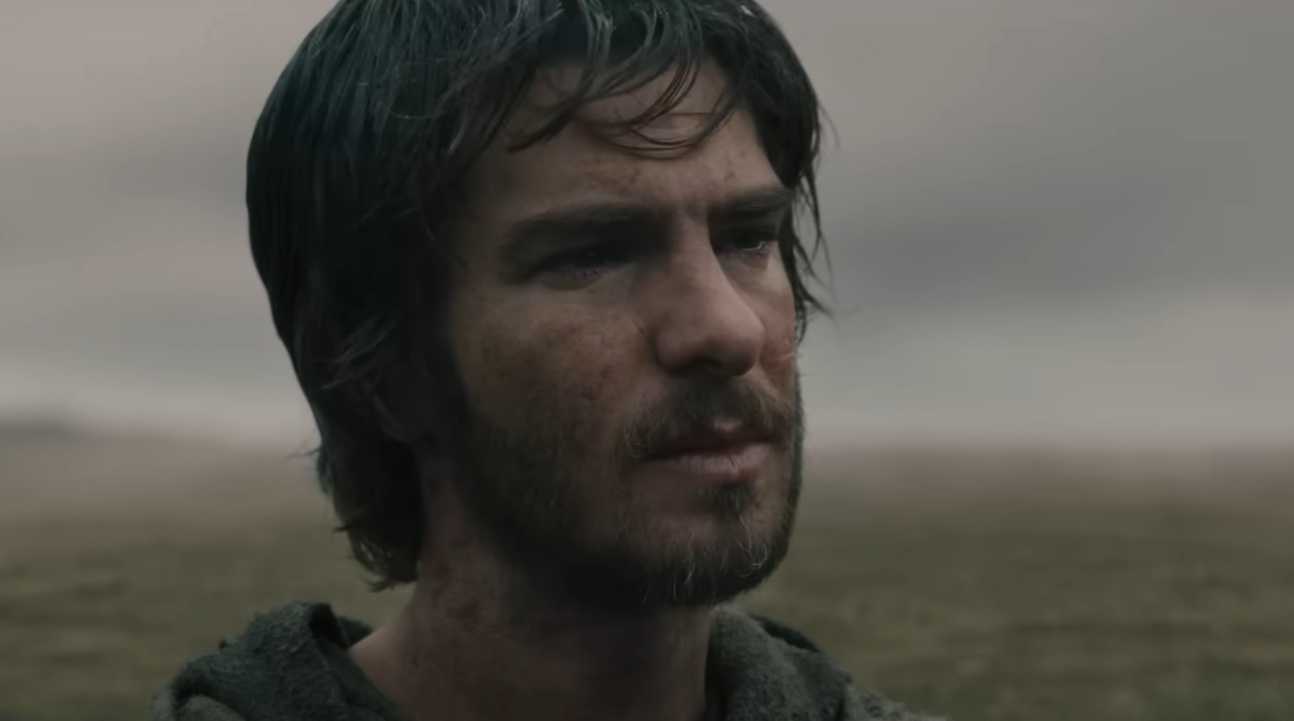
The trailer doesn’t present medieval England as some polished fantasy kingdom. It’s wet, cold, crowded and filthy. Villages look impoverished. Soldiers look exhausted. The rebels look like people who grabbed whatever weapons were available because waiting for a proper armory wasn’t an option.
Garfield’s opening narration establishes that tone immediately. His character doesn’t sound like a future folk hero. He sounds like a man who has simply reached the point where he cannot tolerate another demand from the people exploiting him.
The confrontation with the tax collectors is particularly effective. A royal official demands payment from a young girl because she has reached the age at which the tax applies. The scene is deliberately uncomfortable, and when Garfield’s character finally snaps, the entire story changes direction.
That moment matters because the protagonist doesn’t start as a revolutionary.
He becomes one.
The trailer then expands from a village dispute into a national uprising. Farmers and laborers gather together, and suddenly we’re looking at enormous crowds marching toward London.
That escalation is where Greengrass appears to be having the most fun.
Paul Greengrass Bringing the Bourne Style to Medieval Warfare
I have to admit: this is where I’m both excited and nervous.
Greengrass is famous for putting audiences inside chaotic events rather than observing them from a safe distance. His handheld camera work and rapid editing have become almost a signature.
That approach worked brilliantly for some of his films.
But medieval combat is tricky.
A sword fight needs geography. You need to understand who is attacking whom, where the characters are standing and how the battlefield is changing. If every shot lasts half a second and the camera is shaking like it just drank six coffees, the result can become exhausting rather than immersive.
The trailer already gives us plenty of that style.
The upside is obvious: the fighting feels ugly rather than glamorous. These aren’t elegant fantasy warriors performing choreography for the audience. People swing axes, agricultural tools and crude weapons with genuine desperation.
The downside is that I occasionally found myself wanting Greengrass to hold the camera still for approximately three seconds.
That isn’t a deal-breaker. But it’s something I’m watching closely.
The Cast Is Doing a Lot of Heavy Lifting
The cast is arguably one of the strongest reasons to be optimistic.
| Actor | Character | Why It Matters |
|---|---|---|
| Andrew Garfield | The Ploughman / Robin Hood | The emotional center of the story |
| Cosmo Jarvis | Wat Tyler | The rebellion’s military leader |
| Jamie Bell | John Ball | Radical preacher and ideological voice |
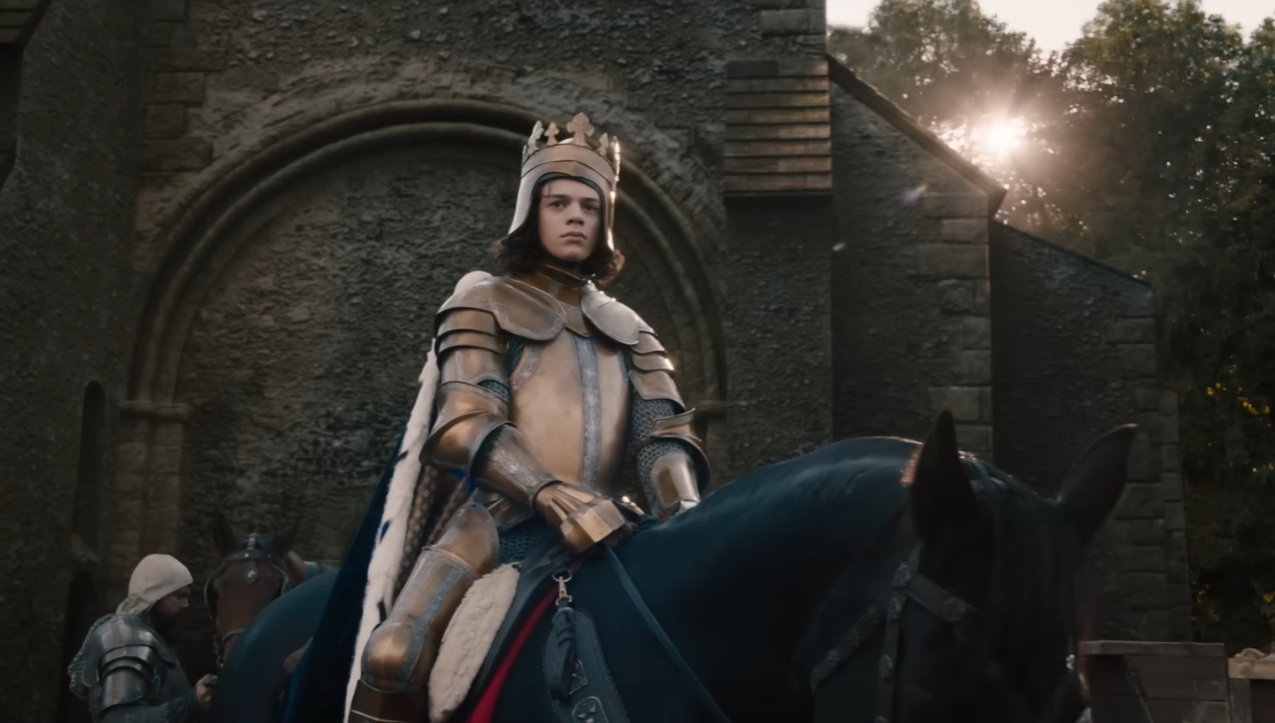
| Woody Norman | King Richard II | Young monarch caught in the crisis |
| Stephen Dillane | Simon Sudbury | Major figure within the royal establishment |
| Tom Hollander | Robert Hales | Associated with the hated tax system |
| Katherine Waterston | Joan of Kent | Important member of the royal family |
| Thomasin McKenzie | Supporting role | Key presence among the rebels |
The combination of Garfield and Jamie Bell is especially promising. Both actors can play wounded, intense characters without turning every scene into theatrical shouting.
Jamie Bell as John Ball could be fascinating because Ball wasn’t merely a generic angry priest. His ideas about social equality became closely associated with the revolt, giving the film an opportunity to explore the ideological side of the uprising.
And then there’s Woody Norman playing Richard II.
A teenage king facing an armed population marching toward London is inherently dramatic. Richard was young, politically inexperienced and surrounded by powerful advisers. That gives the royal side of the story considerably more complexity than simply portraying the monarchy as cartoon villains.
The “Grey Medieval” Problem Is Real
Here’s my biggest visual complaint.
Why does every medieval movie have to look like somebody drained the saturation slider?
The trailer is gorgeous in places, but it is also relentlessly grey and brown. Mud is everywhere. The sky is permanently miserable. Clothing looks deliberately dirty. Even scenes that should provide visual contrast seem determined to remain inside the same bleak palette.
I understand what Greengrass is doing.
This isn’t a fantasy version of Robin Hood. It’s supposed to feel like a society coming apart.
But historical England wasn’t literally a world without color. Medieval people wore dyed textiles, decorated clothing and brightly colored materials when they could afford them. Wealthier people certainly weren’t walking around looking like extras from a post-apocalyptic survival game.
A little more visual variety would actually make the dark scenes hit harder.
If everything looks miserable, eventually nothing looks particularly miserable.
The Robin Hood Reveal Changes Everything
The marketing shift from a straightforward historical revolt movie into a Robin Hood origin story is probably the biggest gamble here.
Initially, The Uprising had been associated with earlier titles including The Hood and The Rage, and the project went through major casting changes before Garfield became attached.
That messy production history doesn’t necessarily bother me. If anything, the final concept is stronger because it has found a way to connect documented history with one of Britain’s most enduring legends.
The fascinating part is that the movie doesn’t need Robin Hood to be historically real.
Instead, it can explore how legends are born.
A farmer fights against injustice. People remember him. Stories become exaggerated. Songs spread. Decades pass. The man disappears, but the symbol survives.
That’s a fantastic foundation for a Robin Hood movie.
The Uprising 2026 Streaming Release Date: Max, Hulu, or Netflix?
My Biggest Concerns Before Release
I’m genuinely excited, but I’m not pretending the trailer is flawless.
My concerns are pretty straightforward:
- The shaky-cam could become exhausting during extended battles.
- The grey-and-brown color palette risks making the movie visually monotonous.
- The Robin Hood connection could feel forced if the screenplay overexplains the legend.
- The enormous scale needs equally strong character development.
- Historical authenticity will be judged harshly because the movie is using real events as its foundation.
Still, these are the kinds of problems I’d rather have than the usual complaints about a historical blockbuster being completely weightless.
Release Date and What I’m Expecting
The Uprising is scheduled for September 11, 2026, in the United States and Canada, with select international releases beginning September 10 and a UK theatrical release following on October 9.
The timing makes sense. This feels like a movie designed to attract adult audiences during the fall awards corridor rather than compete as a disposable summer spectacle.
And frankly, I’m glad.
The concept deserves room to breathe.
Paul Greengrass directing the Peasants’ Revolt with Andrew Garfield gradually becoming Robin Hood is too interesting to dismiss. The trailer has convinced me that this isn’t going to be a comfortable historical drama, and I’m perfectly fine with that.
What I’m less convinced about is whether Greengrass knows when to stop shaking the camera.
If the finished movie manages to balance the brutal realism with strong character work—and doesn’t turn every scene into fifty shades of mud—The Uprising could be one of the more distinctive historical films of 2026.
My current verdict after the trailer: very interested, cautiously optimistic, and absolutely not convinced I need another 138 minutes of beige medieval England.