The Whisper Man Movie Ending Explained: Who Is the Accomplice and Killer?
There are horror movies that scare you while you’re watching them, and then there are movies that become significantly worse once you start thinking about them. The Whisper Man belongs firmly in the second category.
James Ashcroft’s 2026 Netflix thriller spends most of its runtime playing a nasty little game with the audience. You think you’ve figured out who is helping Frank Carter. Then another clue appears. You think you’ve identified the copycat. Wrong again. By the time the credits arrive, the movie has turned what looked like a straightforward serial-killer mystery into something much uglier: a story about fathers, sons, abuse, obsession, and the terrifying possibility that violence can become a family inheritance.
And honestly? That ending is brutal.
Not because the movie suddenly throws one gigantic twist at us, but because several mysteries we’ve been following turn out to be connected in ways that make the entire story feel much more tragic.
So, who was the original accomplice? Who actually kidnapped Jake? And what the hell was Frank Carter planning from prison?
Let’s get into it.
The Whisper Man Ending Explained: The Twist, The Ghost, and That Shocking Prison Scene
Who Was the Original Whisper Man?
Before dealing with the ending, we need to go back to Frank Carter.
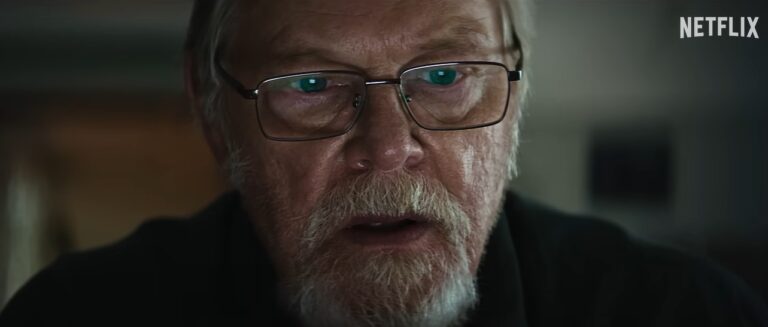
Michael Keaton’s Carter is the kind of villain who becomes more frightening the less the movie tries to make him look like a traditional monster. Twenty years earlier, he terrorized Garretton by targeting lonely young boys. His signature was particularly horrifying: he would whisper to children through their bedroom windows before abducting them.
Carter also collected recordings and drawings connected to his victims, turning his crimes into a grotesque conversation with the police.
Detective Peter Willis eventually caught him.
Case closed, right?
Not quite.
For years, Willis suspected that Carter couldn’t have managed everything alone. Somebody had to help him identify victims, move around unnoticed, and maintain the logistics of the kidnappings. But the original investigation never produced enough evidence to prove the existence of an accomplice.
That’s the first major piece of the puzzle.
And the movie waits a long time before finally giving us the answer.
The Fingernail Clue Changes Everything
When another child disappears in the present day, Detective Amanda Beck discovers something deeply disturbing about the victim.
His fingernails were trimmed before his death.
That sounds like a tiny detail. It isn’t.
The information was never publicly released during the original Whisper Man investigation. Only people intimately connected to the case could have known about it.
Suddenly, Beck isn’t dealing with some random murderer inspired by an old serial killer.
Someone knows the original case from the inside.
That revelation is what makes the investigation so interesting. The killer isn’t simply copying Carter’s methods. Whoever is responsible has access to information that should have remained buried.
And then Norman Collins enters the picture.
Norman Collins Looks Guilty — Almost Too Guilty
I have to admit, Norman is exactly the sort of character these movies train you to distrust immediately.
He’s obsessed with serial killers. He collects disturbing memorabilia. He’s fascinated by Frank Carter. Tom even catches him trespassing.
That’s basically the thriller equivalent of wearing a giant neon sign saying I’M THE KILLER.
Naturally, the police start looking at him.
The situation gets even stranger when Norman’s connection to Carter is uncovered. He’s communicating with the imprisoned killer through an intermediary, suggesting that Carter may still be directing events from behind bars.
For a while, it seems like the movie is finally handing us the answer.
It isn’t.
Norman isn’t the original accomplice.
He’s something arguably more pathetic and disturbing: a spectator who became obsessed with being close to real violence.
And that’s where the basement mystery comes crashing into the story.
What Was Hidden Inside the House?
Norman discovers that the house Tom and Jake have moved into contains a horrifying secret.
The remains of Tony Smith, one of the original Whisper Man victims, are hidden inside the walls.
But Tony isn’t alone.
Another body is discovered: Dominic Barnett.
This is the moment when the old mystery finally gets its missing piece.
Dominic Barnett was the original accomplice.
He had lived in the house and secretly assisted Frank Carter years earlier. Barnett wasn’t the mastermind. That was always Carter. Instead, he provided the practical help Carter needed—watching people, identifying potential victims, and helping the killer operate without immediately attracting suspicion.
So when the movie finally reveals his identity, it doesn’t feel like some random last-minute name pulled from a hat.
Barnett was literally hiding inside the story’s central location.
That’s a nasty touch.
Why Did Norman Kill Dominic Barnett?
Here’s where Norman’s obsession turns deadly.
Norman eventually seeks out Barnett because he wants access to the secrets surrounding the house and Carter’s crimes. But Barnett doesn’t treat him like a dangerous criminal mastermind.
He mocks him.
To Barnett, Norman is just a pathetic voyeur—a man who likes the mythology of murder because he has never experienced its reality.
Norman snaps.
He kills Barnett and hides his body inside the house.
So Norman is guilty, but not in the way we initially expect.
He’s not the person resurrecting Frank Carter’s killing spree.
He’s another damaged man orbiting the original crimes, feeding his obsession until it destroys someone.
And then he takes himself out of the equation.
When Willis and Beck confront Norman, he refuses to give them the answers they desperately need. Instead, he kills himself by slashing his throat.
It’s an infuriating moment because Jake is still missing.
The police have one of the most important pieces of the puzzle in front of them—and it dies with Norman.
Or so it seems.
Who Is the New Whisper Man?
The real answer is Francis Carter Jr.
Yes. He’s Frank Carter’s son.
And this is where the movie’s entire theme suddenly clicks into place.
Francis Jr. grew up carrying the name and legacy of a father who was publicly known as a monster. Rather than rejecting that legacy completely, he became fascinated by it.
He didn’t simply inherit Frank’s DNA.
He inherited the mythology surrounding Frank.
Francis Jr. was eventually placed under a new identity through witness protection after his father’s arrest. That gave him exactly what a person planning something terrible would need: anonymity.
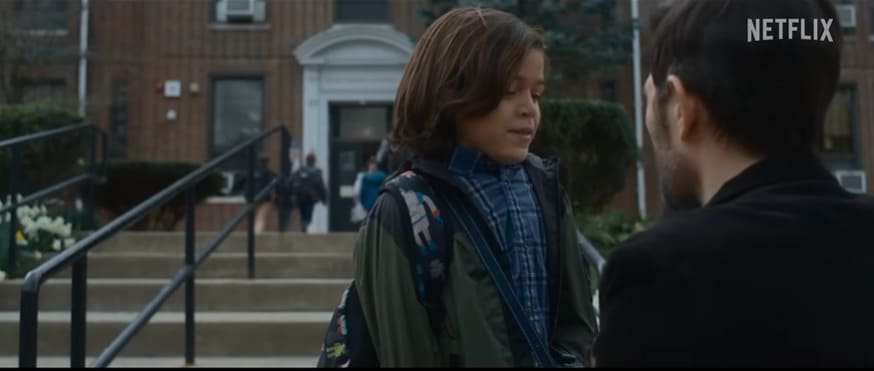
Years later, he positions himself close to children by working as a teaching assistant at Jake’s school.
That’s the real trick.
Francis doesn’t need to break into the children’s world.
He gets invited into it.
The film even drops subtle hints about him earlier, including his presence around Jake’s school and brief visual clues that are easy to miss on a first viewing.
I actually prefer this reveal to the Norman fake-out because it rewards viewers who were paying attention rather than simply trying to guess which creepy adult would eventually be exposed.
Why Did Francis Take Jake?
Francis isn’t just copying his father for the thrill of it.
He’s trying to continue his father’s legacy.
That’s what makes the relationship between Francis and Frank so disturbing. Francis has spent years building an almost mythical image of his absent father. He doesn’t understand Frank simply as a murderer. He sees him as someone whose actions had a twisted logic.
Frank, meanwhile, had always claimed that he was somehow ‘saving’ lonely children from abusive parents.
It’s monstrous reasoning, obviously, but the film uses it to show how abusers and killers can construct entire moral systems around their own violence.
Francis buys into that mythology.
Jake becomes the next piece.
What Happens to Peter Willis?
The final confrontation brings Tom, Amanda, Peter, Francis, and Jake into the same nightmare.
Jake is being held in the basement.
Amanda enters the house without initially realizing the child is there.
Then everything falls apart.
Peter Willis arrives and fights Francis in a desperate attempt to save Jake.
Unfortunately, the old detective doesn’t survive.
Peter dies fighting the son of the man who destroyed his life twenty years earlier.
It’s a particularly cruel ending for Peter because his entire existence has been defined by Frank Carter. He caught Frank, but he never truly escaped the case.
And even after all those years, Carter’s shadow still reaches him.
Francis is eventually defeated when he falls through a weakened section of the attic floor, allowing the police to rescue Jake.
At this point, you might think the nightmare is finally over.
The movie isn’t finished.
Not even close.
The Prison Ending Explained
This is the scene that changes the meaning of everything that came before it.
Frank Carter is still alive in prison.
Francis Jr. is arrested and eventually placed in the same facility.
That is not an accident.
Before his death, Peter apparently helped arrange the circumstances that brought father and son together.
Then Amanda receives a disturbing letter from Frank.
The message thanks her and Peter for everything they’ve done.
And suddenly the film cuts back to the prison.
Frank gets access to Francis.
What happens next is horrifying.
Frank kills his own son.
He strangles Francis without covering his face.
That last detail matters.
Throughout the film, Frank’s violence has been connected to his inability—or unwillingness—to confront the humanity of his victims. He hid their faces because looking at them forced him to acknowledge what he was doing.
But with Francis, he doesn’t look away.
He finally gives in to the violent impulse he had spent decades suppressing.
The son who tried to become his father’s successor instead becomes his father’s final victim.
That’s a vicious piece of irony.
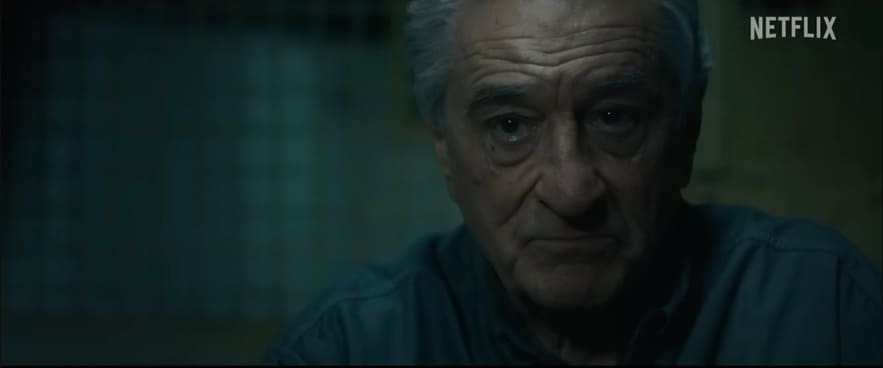
Why Did Frank Kill Francis?
The movie’s earlier prison conversation provides the answer.
Frank reveals that his own childhood was shaped by abuse. He claims that his crimes came from a warped desire to ‘save’ children from suffering like the suffering he experienced.
But there’s another, much darker element.
When Francis was born, Frank experienced an urge to kill his own child.
He couldn’t do it.
So, instead, he redirected that impulse toward other children.
That revelation completely reframes the final murder.
Francis isn’t simply another victim.
He’s the one victim Frank had always wanted to kill but couldn’t bring himself to touch.
Twenty years later, he finally does it.
There is something almost unbearably bleak about that.
Francis spends his life trying to become Frank, only to discover that the original Whisper Man never wanted a successor. He wanted an outlet.
The Three Generations at the Heart of The Whisper Man
For me, this is what makes the ending work better than the actual murder mystery.
The film keeps circling the same relationship:
| Generation | Relationship | What It Represents |
|---|---|---|
| Frank Carter → Francis Jr. | Father and son | Abuse and inherited violence |
| Peter Willis → Tom Kennedy | Father and son | Estrangement and regret |
| Tom Kennedy → Jake | Father and son | Protection and healing |
These relationships aren’t just background drama.
They’re the movie’s real subject.
Frank destroys his son.
Peter dies trying to save his grandson.
Tom spends the film struggling to protect Jake while dealing with the emotional damage of losing his wife.
Jake, meanwhile, represents the possibility that the cycle doesn’t have to continue.
That’s why saving Jake matters more than catching Francis.
Jake survives.
The cycle can stop with him.
Who Was Actually Working With Frank Carter?
The answer is slightly more complicated than simply naming one accomplice.
- Dominic Barnett was Frank Carter’s original accomplice twenty years earlier.
- Norman Collins was an obsessed intermediary who became involved with Carter’s secrets and ultimately murdered Barnett.
- Francis Carter Jr. became the modern-day copycat and the person actively targeting children in the present.
- Frank Carter remained the source of the original ideology—and ultimately the person who ends his own son’s life.
So if you’re asking, ‘Who is the accomplice in The Whisper Man?’ the cleanest answer is Dominic Barnett.
If you’re asking, ‘Who is the killer in the present-day story?’ that’s Francis Carter Jr.
And if you’re asking who is ultimately responsible for the entire nightmare?
That’s harder.
The movie’s answer is Frank.
Not because he personally commits every murder, but because his influence survives long after his arrest.
My Take on That Ending
I’ll be honest: the prison twist is the part of The Whisper Man I’m still thinking about.
Some viewers will probably find it too cruel, too convenient, or even a little contrived. I understand that criticism. The mechanics of getting Francis into the same prison as Frank require the audience to accept a lot without seeing every step.
But emotionally?
It lands.
The movie isn’t really saying that evil is genetically inherited. It’s saying something more interesting—and more frightening—that children can inherit the stories, wounds, excuses, and distorted beliefs created by their parents.
Francis chose to become like Frank.
Frank helped create the person Francis became.
And then, when Francis finally stood in front of him, Frank killed him.
That’s not redemption. It’s not justice.
It’s just another act of violence completing a circle that should never have existed in the first place.
And that final image of Frank refusing to look away from his son’s face is probably the darkest thing the movie does.
The Whisper Man doesn’t end by defeating its monster.
It ends by showing what the monster leaves behind.