Forgotten Island (2026) Movie Theories: Exploring the Nakali Mythology and Ending Explained
I went into Forgotten Island expecting a cute, colorful DreamWorks adventure. I came out staring at the credits and mentally texting every friend I’ve ever drifted from. Nobody warned me about that part.
Directed by Joel Crawford and Januel Mercado, DreamWorks’ 50th feature (released through Universal) mixes hand-drawn 2D textures with a slick anime-flavored look, and it’s gorgeous. But the visuals are just the wrapper. The real hook is Nakali, a magical island from Philippine folklore that quietly deletes the memories of anyone who sets foot on it.
Since release, Reddit threads and YouTube essays have been going feral over what it all means. Here are the theories I keep coming back to, plus my own two cents.
Why Forgotten Island is DreamWorks’ Most Complex Movie Yet
The Setup, Fast
It’s the 1990s. Best friends Jo Fatima (H.E.R.) and Raissa Molina (Liza Soberano) have just graduated, and it’s their last night together before life pulls them in different directions. Fueled by the folktales Jo’s grandmother, Lola Fatima (Dolly de Leon), used to tell, they accidentally crack open a portal and land in Nakali.
The island is packed with creatures from Filipino myth:
- Raww, a chaotic weredog (Dave Franco)
- Bungi, a tiyanak baby demon (Manny Jacinto)
- Mermahn, Prince of the aquatic Kataw (Kevin McCann)
- Truffle Wuffle, King of the Duwende (Ronny Chieng)
The catch is brutal. To get home, the girls have to give up every memory they share. The island is already eating their past, and the exit fee is each other.
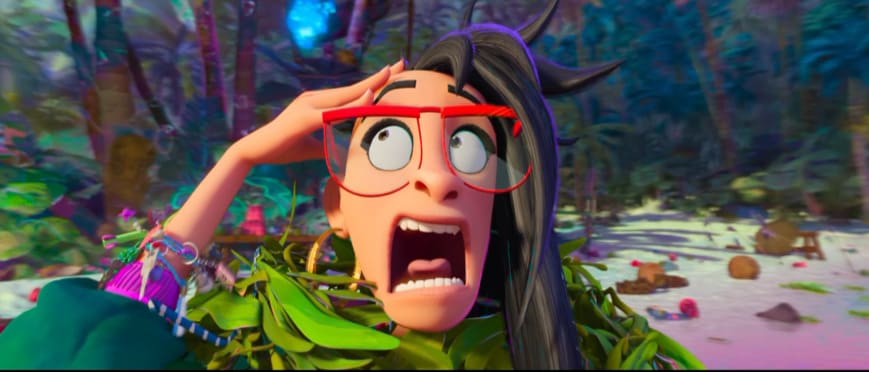
Theory #1: Nakali Is What Drifting Apart Feels Like
This is the reading I buy most. Most friendships don’t die in a screaming fight. They die slowly, as inside jokes stop landing, schedules stop matching, and one day you realize you haven’t texted in eight months.
Plenty of fans argue Nakali isn’t really a place at all, but Jo and Raissa’s shared dread of graduating and growing apart, made physical. That’s why the plot works. Crawford and Mercado turned a quiet, invisible ache into a ticking clock you can actually watch. Forgetting is the villain, and it doesn’t need a cape.
Theory #2: The Island’s Residents Used to Be Visitors
This one made my stomach drop. A popular YouTube-essay theory says the creatures living in Nakali were once human teens or travelers who never made it out in time. The island took their names and stories, and what’s left is the myth.
Look at Raww through that lens. His clingy, frantic energy around Jo and Raissa stops being pure comic relief. It reads like someone who has forgotten who he was and grabs onto any new connection he can find. Even the villains fit. Batiba (Jenny Slate) and the Dreaded Manananggal (Lea Salonga) start to feel less like monsters and more like people who gave in to loneliness and now want company in the dark.
If that’s true, the film’s real horror isn’t teeth or claws. It’s what isolation does to someone over enough time.
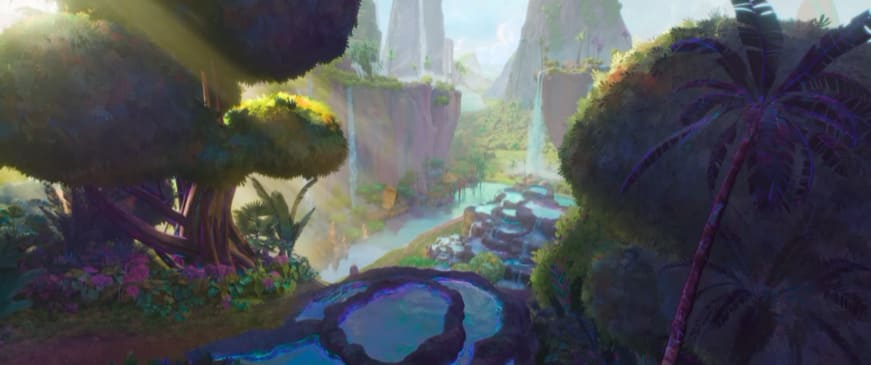
Theory #3: Why Jo Turned Their Story Into a Love Triangle
Here’s a detail I loved. Years later, Jo has gone off to Caltech and written a hit book based on Nakali, except she reworks it as commercial fantasy. In her version, the Raissa stand-in ends up in a romantic triangle with fictionalized takes on Raww and Mermahn.
Why change it? The consensus I keep seeing is that it’s armor. What happened on that island was raw and personal, so Jo repackaged it as something glossy and marketable. The world gets a fun romance, and the real thing, her bond with Raissa, stays hers. It’s a sharp little comment on how we use stories to survive our own memories.
The Bracelet Portal: What the Ending Actually Means
The final choice is the gut punch. Stay on the island and lose the real world, or go home and lose each other. The film refuses the easy ‘magic fixes everything’ ending, which is why it hurts so much.
Then comes the last scene. After Jo’s book event at Caltech, the two reunite in a hallway, hold up their old friendship bracelets, and open a fresh portal to Nakali right there in the corridor. They step through and it cuts to black. Fans have split into two camps:
| Theory | What it says | Why fans love it |
|---|---|---|
| Conquering the Island | Their selfless choice broke Nakali’s curse, and the bracelets became permanent keys | Love beats memory loss, and the prison becomes a sanctuary |
| Acceptance of Evolution | Friendship doesn’t die when lives diverge, it just changes shape | Childhood wonder and adult life can share the same hallway |
I’m in camp two, with a little of camp one mixed in. The portal opens at Caltech, the most grown-up, serious backdrop the movie could have picked. That feels deliberate. Magic isn’t something you outgrow and leave behind. You carry it into your adult life, even if it doesn’t look the same.
Why This Movie Sticks
A lot of animated films have a message. Few of them make you feel it in your own history. Part of the reason is the cultural texture: the jeepney, the Sarimanok, the deep well of Filipino folklore all sit at the center of the story instead of being decoration. The other part is that it won’t flinch from its own premise. Something has to be lost, and the film makes you sit with it.
So here’s my question for you: if Nakali offered you the same deal, would you trade your shared memories to keep your best friend? I still haven’t settled on my answer.