HBO Harry Potter Episode Count: Everything Confirmed for Season 1 and Beyond
There is one number Harry Potter fans keep coming back to whenever the HBO reboot comes up: eight. Not seven seasons, not the December premiere, not even the new trio of young actors. The episode count has become its own little battleground, especially among fans who remember exactly how much the original movies had to cut from J.K. Rowling’s books.
And honestly, I get the concern. When HBO announced that the first season would adapt Harry Potter and the Philosopher’s Stone across eight episodes, my first reaction was basically: “Wait, only eight?” After watching the films squeeze enormous chunks of the books into two-hour movies, I wanted the opposite this time. Give the story room. Let Hogwarts breathe. Let the characters actually exist between the big plot points.
But the more I think about it, the more eight episodes for Harry Potter Season 1 starts to make sense. The first book is comparatively short, and stretching it across ten or twelve episodes could easily create a completely different problem: padding. Nobody wants a Hogwarts reboot where half an episode exists just because somebody decided every season needs twelve hours.
Harry Potter HBO Series Trailer 2026: Release Date, Cast, and Everything We Know
Harry Potter Season 1 Has Eight Episodes
The current production information points to an eight-episode first season, giving the creative team roughly eight hours to tell Harry’s first year at Hogwarts. That is already a dramatic increase over the 2001 film, which had to compress the entire novel into a single feature-length adventure.
Francesca Gardiner, the series showrunner, has previously described the first season as having eight hours available to explore the book. Cinematographer Adriano Goldman also confirmed the eight-episode structure while discussing the production’s visual approach. Goldman worked on four episodes, including the opening pair and the final two chapters, while the season’s cinematography was divided among multiple directors of photography.
For me, that detail is actually reassuring. This isn’t simply a movie chopped into eight pieces. The production is being designed as a television series from the ground up, which should give the storytelling a very different rhythm.
| Season | Book | Current Episode Count |
|---|---|---|
| Season 1 | Harry Potter and the Philosopher’s Stone | 8 episodes |
| Season 2 | Harry Potter and the Chamber of Secrets | Planned; episode count not firmly established |
| Later Seasons | Books 3–7 | Expected to vary with story length |

Eight Episodes Give Hogwarts Something the Movies Never Had
This is where I think the HBO adaptation has a real opportunity to separate itself from the films. The original movies were often remarkably faithful considering the circumstances, but “faithful” doesn’t mean complete. There simply wasn’t enough runtime to include everything.
The television series doesn’t have that same problem.
Imagine an entire episode having enough breathing room for the Hogwarts Sorting ceremony rather than treating it as another quick milestone. Think about seeing more of the Gryffindor common room, spending actual time with Nearly Headless Nick, understanding the strange collection of ghosts wandering around the castle, or finally getting Peeves the Poltergeist properly integrated into the story.
Those aren’t necessarily gigantic plot developments. That’s precisely why they were vulnerable to being cut from the movies. Yet they’re part of what makes Hogwarts feel like a living place rather than a collection of expensive sets surrounding the main characters.
I’m particularly curious about Peeves. Fans have been complaining about his absence from the films for years, and the HBO show has the luxury of actually giving characters like him room to be disruptive, annoying and funny. Harry Potter works best when the world feels slightly chaotic around the central story.
Could Eight Episodes Still Feel Too Short?
Absolutely.
This is where I don’t completely buy the argument that eight hours automatically means there will be plenty of room. The first season has a surprising amount of ground to cover before Harry even arrives at Hogwarts.
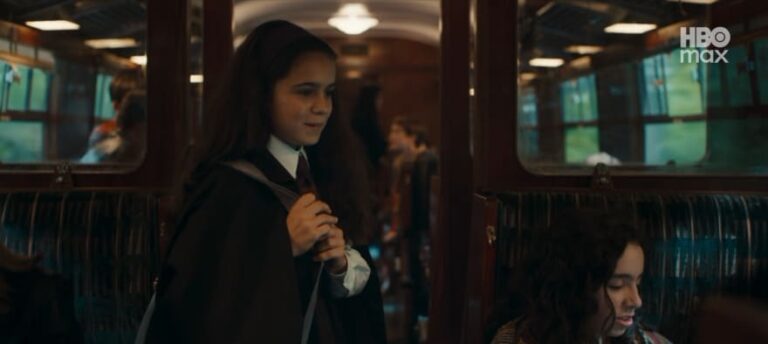
We have the Dursleys, Harry’s miserable childhood, the letters, Hagrid’s arrival, Diagon Alley, the shopping trip, Ollivanders, the Hogwarts Express, the Sorting ceremony, the first classes, Quidditch, the mystery surrounding the Philosopher’s Stone and the eventual confrontation beneath Hogwarts.
That is a lot of material. And television episodes aren’t actually eight uninterrupted hours of story. Opening credits, recaps, title sequences and end credits all eat into runtime. A nominal one-hour episode can deliver considerably less than sixty minutes of narrative.
So yes, I can understand why some fans are nervous. If the writers start sprinting through major scenes, the reboot could end up feeling strangely familiar for the wrong reason: it would once again be rushing through the book.
The Difference Is How the Episodes Are Structured
The number eight matters less to me than what HBO does with those eight episodes. A tightly written 50-minute episode can accomplish a lot. A badly structured 60-minute episode can accomplish almost nothing.
If the season uses the first few episodes to establish Harry’s miserable life with the Dursleys and his discovery of the wizarding world, then gradually expands into Hogwarts, the pacing could work beautifully. The show doesn’t need every chapter of the novel to receive identical screen time. It needs the important emotional beats to land.
Harry meeting Ron should matter. Harry meeting Hermione should matter. The first glimpse of Hogwarts should feel enormous. The friendships should develop naturally instead of appearing because the plot needs the trio assembled by a certain timestamp.
Why HBO Probably Won’t Use Eight Episodes Forever
This is the part that interests me most about the long-term plan. I don’t think the first season’s eight-episode count should be treated as a template for the entire Harry Potter series.
The books get much bigger.
Philosopher’s Stone, Chamber of Secrets and Prisoner of Azkaban are relatively manageable compared with what comes later. Then Goblet of Fire arrives and the scale changes dramatically. After that, Order of the Phoenix is enormous, while Half-Blood Prince and Deathly Hallows introduce increasingly complicated political, emotional and historical material.
Trying to cram every one of those books into exactly eight episodes would be madness if the goal really is the more faithful Harry Potter adaptation HBO has been promising.
There are entire storylines later in the books that deserve time rather than being reduced to exposition. Voldemort’s history becomes crucial. The Horcrux mythology becomes increasingly complicated. The Order of the Phoenix needs room to function as something more than a name-drop. Even the school itself changes as Harry’s world becomes darker.
By the time the story reaches its final chapters, an eight-hour season could feel brutally compressed.
Could Harry Potter Seasons Eventually Reach 10 or 12 Episodes?
I wouldn’t be surprised at all if HBO increases the episode count for the larger books. In fact, I’d prefer that approach to forcing every season into the same production mold.
A sensible structure could look something like this:
- Books 1–3: around eight episodes each, depending on the final scripts.
- Goblet of Fire and Order of the Phoenix: potentially nine to twelve episodes.
- Half-Blood Prince and Deathly Hallows: flexible episode counts based on how much material the writers retain.
Nothing says every Harry Potter season has to have exactly the same length. Television has moved far beyond the old idea that every season needs a predetermined number of episodes. HBO has plenty of experience with seasons that expand or contract depending on the material, and Harry Potter is probably one of the few franchises where that flexibility genuinely matters.

The Young Cast Is Another Reason for the Fast Production Schedule
There is also a practical issue that fans sometimes overlook: Harry, Ron and Hermione are children.
That sounds obvious, but it creates a production headache that adult-led shows don’t have. Young actors can look noticeably different after only a year or two. Their voices change, their height changes and their faces mature quickly.
HBO therefore has a very good reason to keep the early seasons moving. The production can’t casually spend five years making one book and expect the actors to remain visually consistent with the story’s timeline.
The reported strategy of filming with relatively short gaps between seasons makes sense for exactly that reason. The first season has already moved through its principal photography period, while the series has also been renewed for a second season adapting Chamber of Secrets.
From a fan perspective, I would much rather have HBO deal with the realities of a child cast now than try to manufacture a fake sense of urgency later.
What I Actually Want From the Eight-Episode Season
My biggest fear isn’t that eight episodes will be too few. It’s that the writers will become obsessed with proving how “faithful” the reboot is and forget that an adaptation still has to work as television.
I don’t need every line of dialogue from the book repeated word-for-word. I need the feeling of the book. I want Hogwarts to feel enormous and occasionally weird. I want Harry, Ron and Hermione to become friends gradually. I want the teachers to have personalities beyond delivering plot information. I want the quieter moments that the movies had to sacrifice.
Give me the mundane stuff. Give me breakfast in the Great Hall. Give me students wandering around corridors after dark. Give me arguments between friends that aren’t immediately connected to Voldemort. Those scenes are often what make a fantasy world believable.
If HBO can do that while telling the Philosopher’s Stone story across eight episodes, I’m perfectly happy with the number.
The Christmas 2026 Premiere Makes This Even Bigger
The reboot is currently positioned as one of HBO and Max’s major holiday events, with the first season scheduled to premiere on December 25, 2026. That’s an enormous date for a Harry Potter revival, and frankly, it feels almost suspiciously perfect.
Harry Potter has always had a strong Christmas identity. The films were packed with snow-covered Hogwarts, fireplaces, Christmas feasts and that cozy-but-magical atmosphere that became part of the franchise’s visual language. Launching the new series around the holiday season gives HBO a chance to recreate some of that cultural moment without simply copying the movies.
And that’s ultimately what will decide whether this reboot works for me. Not whether it has eight episodes or ten. Not whether every fan-favorite line survives. Not whether one costume looks exactly like the illustration in the book.
It needs to feel like Harry Potter again.
Eight episodes are enough to make that happen if the writers understand where to slow down and where to move. I’m cautiously optimistic, but I’m also keeping the expectations in check. We’ve already seen this story become one of the biggest film franchises ever made. HBO isn’t competing with some forgotten adaptation sitting on a shelf. It’s competing with people’s childhood memories.
That’s a much tougher opponent than Voldemort.