Blood Sacrifice Episode 5 Ending Explained: The Forest Discovery & Fateful Night Breakdown
There are crime thrillers that leave you satisfied, and then there are crime thrillers that leave you staring at the credits wondering how badly everyone involved managed to screw things up. Blood Sacrifice Episode 5 belongs firmly in the second category.
The Netflix Swedish thriller spends four episodes building a murder investigation around Detective Thomas Berg, a series of calculated attacks on police officers, and his deeply damaged relationship with his estranged father Alfred. By the finale, those threads finally collide. The result is bleak, angry and deliberately uncomfortable.
I liked that the show refuses to turn its final hour into a conventional victory lap for the detective. What I liked less is how heavily the finale leans on familiar conspiracy mechanics once it finally explains what happened. The emotional material is considerably stronger than some of the plot mechanics holding it together.
Still, the forest discovery and the revelation about the night two years earlier give Blood Sacrifice its real meaning. Suddenly, the murders are no longer just a present-day investigation. They are the bill coming due for something the police buried and convinced themselves they had escaped.
What Happens in Blood Sacrifice Episode 5?
Episode 5 begins with investigators following the scattered clues that have accumulated throughout the season. The search eventually leads them away from the immediate murder scenes and into a remote forest outside Stockholm.
What they find there is horrifying.
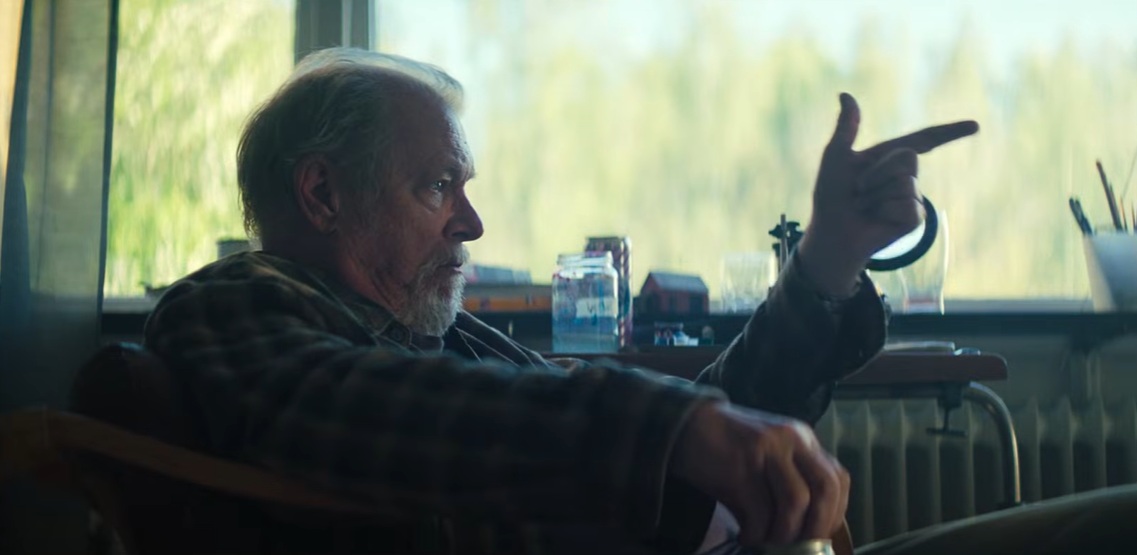
The location contains evidence of an older crime, one that clearly predates the current wave of police killings. The condition of the remains makes it obvious that this isn’t another fresh murder. Someone has been waiting for the right moment to expose what happened.
That distinction matters.
Until this point, the killer can be viewed as an exceptionally disciplined murderer with an obsession against the police. The forest discovery changes that interpretation. There is history here. The killer isn’t simply hunting officers because of who they are today. Someone is punishing them for something that happened years earlier.
And suddenly, the title Blood Sacrifice stops sounding like a stylish Nordic Noir name and starts sounding like the killer’s entire philosophy.
The victims are being treated as offerings in a private version of justice.
It’s disturbing. It’s also one of the strongest ideas in the finale.
The Forest Discovery Explained
The forest crime scene becomes the key that unlocks the entire investigation.
Evidence recovered from the site connects the old victim to the Stockholm police and, more specifically, to an incident that had effectively disappeared from the official record. The further Thomas investigates, the harder it becomes to maintain the idea that the murders are unrelated acts of revenge.
They are connected.
The killer has been reconstructing an old crime through a series of attacks against the people and institution responsible for hiding it.
That makes the elaborate traps seen throughout the season much more significant. They aren’t random set pieces designed merely to keep the audience nervous. They echo police tactics and procedures, turning the department’s own methods against its officers.
That is a nasty little piece of storytelling.
The police believed their knowledge of tactical operations made them difficult targets. The killer uses that same knowledge to anticipate them.
The irony is almost cruel: the more confidently the police behave like the police, the easier they become to manipulate.
What Happened Two Years Earlier?
The finale eventually connects the forest discovery to a disastrous police operation from two years earlier.
The operation involved a small group of officers, with Alfred Berg among them. Something went catastrophically wrong. An innocent person or vulnerable informant died, and instead of allowing the incident to trigger a genuine investigation, the officers involved chose protection over accountability.
The body was hidden.
The truth was buried.
The official version of events was manipulated.
Someone outside the inner circle was made to carry the blame.
That decision becomes the original sin of the entire story.
This is where I think the finale works best. The murders aren’t presented as some completely disconnected mystery suddenly solved in the final twenty minutes. The story has been steadily pushing toward the idea that the police themselves are hiding something rotten.
The problem is that Blood Sacrifice ultimately makes the conspiracy fairly straightforward. Once the forest evidence is uncovered, the destination becomes much easier to predict. There are still emotional surprises, but the mystery itself loses some of its bite.
Who Is the Killer?
The person behind the killings is revealed to have a deeply personal connection to the victim from the earlier incident.
Rather than seeking justice through official channels, the killer decides that the police have forfeited the right to judge themselves.
The attacks are therefore carefully constructed acts of retaliation.
The killer knows how officers respond to emergency calls. They understand police deployment patterns and exploit the department’s assumptions. Every ambush becomes another reminder of the original operation and the institutional failures surrounding it.
This isn’t revenge in the simple “you killed someone I loved, so now I kill you” sense.
The killer wants the police to understand what it feels like to walk knowingly into a trap.
That distinction makes the character more interesting, even if the finale occasionally pushes the symbolism a little too hard.
Alfred Berg’s Biggest Betrayal
The most painful revelation isn’t actually the identity of the killer.
It’s Alfred.

Thomas has spent much of the season dealing with his father as a difficult, damaged former detective. Their relationship is already fractured, but working together gives Thomas a chance to understand the man behind the bitterness.
Episode 5 destroys that possibility.
Alfred wasn’t merely someone who knew about the old crime. He was one of the people who helped protect the lie.
And that completely changes the father-son relationship.
Alfred’s defense is brutally pragmatic. He sees the decision as a necessary compromise, something done to protect the larger institution and the people inside it. Thomas sees exactly what it was: a betrayal of the principles that were supposed to define the badge.
I found this part considerably more effective than the murder mystery itself.
Because Thomas isn’t simply discovering that his father did something terrible.
He’s discovering that the person he hoped to reconnect with has been carrying a version of himself that Thomas never knew existed.
That hurts more than another corpse in the woods ever could.
Thomas Berg’s Final Choice
Thomas eventually reaches the point where protecting his father and protecting the truth are no longer compatible.
This is the real climax of the episode.
He can continue operating as a police officer who protects the institution, or he can acknowledge what the institution did and allow the consequences to reach the people responsible.
The finale doesn’t treat that decision as heroic in a conventional sense. Thomas doesn’t get a clean victory. There is no satisfying moment where everything is repaired because he finally made the morally correct choice.
Instead, he loses something.
His relationship with Alfred is damaged beyond easy repair. His understanding of his career is shaken. The police department’s reputation is compromised. And the old crime can no longer remain safely buried.
That feels appropriate for a series built around the idea that suppressed violence doesn’t disappear. It waits.
Why the Endless Summer Daylight Matters
One of the smartest choices in Blood Sacrifice is its visual approach.
This isn’t the traditional Nordic Noir landscape of permanent darkness, icy streets and miserable weather. The series places its characters against the bright, almost oppressive daylight of a Swedish summer.
That makes the finale’s themes even sharper.
There is nowhere for these characters to hide.
The forest may provide physical darkness, but the wider world remains flooded with light. The past isn’t disappearing into some gothic night. It is being dragged into the open.
The daylight becomes almost accusatory.
I wouldn’t call the visual concept subtle, but it works.
The show understands that darkness isn’t necessary to create a bleak atmosphere. Sometimes bright sunlight can feel far more disturbing, particularly when everyone is desperately trying to conceal something.
Blood Sacrifice Netflix 2026: Total Run Time, Episode Length, and Binge Guide
What Does “Blood Sacrifice” Really Mean?
The title operates on two levels.
On the surface, it refers to the murders themselves. The killer sees the dead officers as sacrifices made in response to an older injustice.
But the deeper meaning is about what everyone sacrifices to maintain the lie.
Alfred sacrifices his integrity.
The officers sacrifice the truth.
Thomas sacrifices his belief in his father.
The victim’s family sacrifices any possibility of ordinary closure.
And the killer sacrifices their own humanity in pursuit of revenge.
That last point is crucial. Blood Sacrifice doesn’t argue that revenge is justice. It shows how easily a demand for justice can become another form of violence when every legitimate path has been closed.
That’s a much darker proposition.
Blood Sacrifice Episode 5 Ending: My Verdict
The finale is at its strongest when it focuses on Thomas and Alfred. Jakob Oftebro and Peter Andersson give the episode the emotional weight it needs, particularly once the investigation stops being abstract and becomes a deeply personal reckoning between father and son.
The actual conspiracy is less impressive.
I’ve seen variations of the “police covered up a terrible crime and someone comes back for revenge” structure before, and Blood Sacrifice doesn’t completely reinvent it. Some of the revelations arrive exactly where you’d expect them to. A few of the explanations feel almost too convenient for a story that spent so much time cultivating ambiguity.
But the final emotional fallout saves it.
The show understands that exposing corruption isn’t the same thing as fixing it. Thomas can uncover the truth, but he can’t undo the death that started everything. He can’t restore Alfred’s reputation. He can’t magically repair their relationship. And he certainly can’t erase the damage inflicted on everyone caught between institutional loyalty and basic morality.
That is why the ending sticks.
Blood Sacrifice Episode 5 isn’t really about catching a killer. It’s about discovering that the killer’s story began long before the first murder we saw.
The forest doesn’t just contain a body.
It contains the truth the police decided they could bury.
And once that truth is dragged back into daylight, there is no version of the ending where everyone gets to walk away clean.