20+ Hidden Clues You Totally Missed In Spider-Man: Brand New Day (MCU 2026 Breakdown)
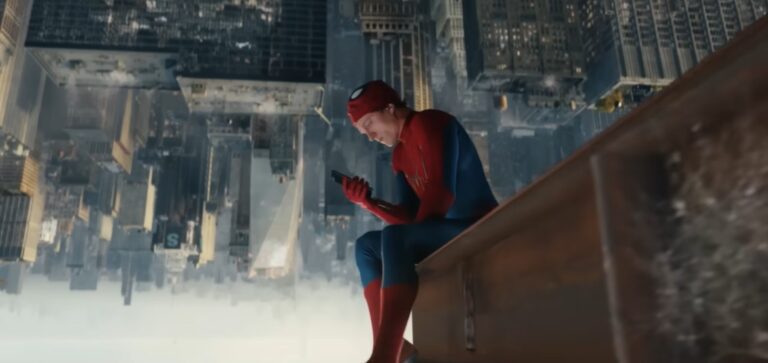
There is a strange thing about Spider-Man: Brand New Day. On the surface, Marvel Studios finally appears to be giving Tom Holland’s Peter Parker exactly what many fans have been asking for: a smaller story, a battered New York, fewer multiverse fireworks, and a Spider-Man who actually has to survive without Tony Stark’s technology or a magical safety net.
Then you start looking at the background.
Suddenly, the movie feels much bigger than it wants you to believe.
Spider-Man: Brand New Day is loaded with comic references, visual callbacks, mutant breadcrumbs, suspicious technology, and tiny details that seem almost meaningless until you connect them. Some are genuinely clever. Others feel like Marvel is practically waving a giant sign at the audience. And a few are so obvious that I honestly wonder why the studio bothered hiding them in the first place.
That mix is exactly what makes this movie fascinating—and occasionally frustrating.
Here are 21 Spider-Man: Brand New Day Easter eggs and hidden clues that deserve a closer look, including the details that could have major consequences for the MCU’s future.
1. Peter Still Has the Coffee Cup From No Way Home
One of the most painful details appears almost immediately.
Inside Peter Parker’s miserable New York apartment, the camera briefly passes a familiar blue-and-white coffee cup. It appears to be the same cup Peter held during his final meeting with MJ at Peter Pan Donut & Pastry Shop in Spider-Man: No Way Home.
That is a brutal little callback.

Everyone else forgot Peter. Peter didn’t forget them.
Keeping something as worthless as a disposable coffee cup perfectly captures where this version of Peter is emotionally. He has almost nothing left, so even garbage from his old life has become a keepsake.
It is one of the better examples of Marvel trusting a tiny visual detail instead of forcing another emotional speech.
2. MJ’s Black Dahlia Necklace Is Still With Her
MJ hasn’t magically thrown away every physical reminder of Peter’s existence.
During the house party sequence, she can be seen wearing the broken Black Dahlia necklace associated with Peter and their relationship in Far From Home.
The significance is obvious but effective: Doctor Strange’s spell affected memories, not objects.
MJ doesn’t consciously remember Peter, yet she is still carrying something connected to him.
That opens a much more interesting question. Can emotional attachment survive even when the memory itself is gone?
The movie doesn’t give us a clean answer, which is probably for the best.
3. Oscorp Is Finally Creeping Into the MCU
A seemingly throwaway conversation between MJ and Ned contains another big clue.
MJ mentions turning down a job because she was uncomfortable with the company’s approach to experimental biotechnology and questionable corporate ethics. The company is never loudly identified, but the description screams Oscorp.
If that reading is intentional, Marvel is finally establishing Norman Osborn’s corporate empire inside the main MCU reality without immediately throwing Green Goblin at us.
Frankly, that’s the smarter way to do it.
Let Oscorp exist first. Let the audience wonder who is behind it. Then introduce the monster.
4. Ned’s Spider-Man Tracker Is Glitching for a Reason
Ned’s old Spider-Man tracking software returns, but something is clearly wrong with it.
The interface occasionally produces bizarre visual distortions that resemble the glitch effects associated with Sony’s Spider-Verse movies.
Could this simply be outdated software?
Maybe.
But given everything else happening around Peter, I wouldn’t bet on it.
The glitches look suspiciously deliberate, especially considering what eventually happens during the post-credits sequence.
5. Why Does Peter Call Himself “Maynard”?
Peter is forced to improvise an alias when he encounters MJ and Ned.
His choice?
Maynard.
That sounds ridiculous until you remember Maynard Tiboldt, the comic-book identity of Ringmaster, leader of the Circus of Crime.
It’s exactly the sort of bizarre comic-book reference that most viewers will never notice.
And honestly, those are my favorite Easter eggs. They don’t interrupt the movie. They reward people who know the source material.
6. Tom Holland’s BERO Appears in the Bodega
Yes, Peter Parker walks past BERO.
For anyone unaware, BERO is Tom Holland’s real-world non-alcoholic beer brand.
It’s a shameless little meta joke, but I actually like it. Marvel has never been afraid of putting recognizable real-world products into its movies, and this one is particularly funny because Holland’s personal business has effectively wandered into Peter Parker’s neighborhood.
It also makes the MCU feel slightly less polished and corporate for a moment.
7. The Battle of New York Is Still a Tourist Attraction
Spider-Man swings through Manhattan while a double-decker sightseeing bus passes below him.
The tour guide explains that the group is traveling through an area connected to the infamous Battle of New York from The Avengers.
It’s a small reminder of just how absurd the MCU’s history has become.
Aliens invaded Manhattan. Buildings were destroyed. Thousands of people witnessed superhuman warfare.
And now people sell bus tickets for it.
That is exactly the kind of world-building Marvel should be doing more often.
8. Bill Metzger Could Be a Much Bigger Problem
William “Bill” Metzger, played by Tramell Tillman, immediately raises eyebrows.
His comic-book counterpart is associated with anti-mutant activism, making his position inside Damage Control particularly uncomfortable.
If Marvel is intentionally borrowing that history, Damage Control could be evolving beyond a government cleanup agency.
It could become one of the MCU’s primary weapons against mutants.
That would be a significant development, especially with the X-Men’s eventual arrival becoming increasingly difficult for Marvel to avoid.
9. The Mutant Suppression Collar Is Not Subtle
The film eventually introduces technology capable of suppressing emerging mutant abilities.
The glowing restraint collar used against Sadie Sink’s character looks unmistakably familiar to anyone who has watched previous X-Men stories.
This is not subtle world-building.
It’s Marvel establishing that the MCU now has the technological infrastructure to identify, restrain, and control mutants.
And that is a much darker direction than another generic superhero team-up.
10. Bellevue Hospital Has Comic-Book History
A medical helicopter is redirected to Bellevue Hospital during one of the film’s major sequences.
To most viewers, it’s simply a recognizable New York location.
Comic readers know better.
Bellevue has appeared repeatedly throughout Marvel history as a location connected to superhuman injuries and various heroes.
It’s not the biggest Easter egg in the movie, but it helps sell the idea that this version of New York is becoming the lived-in Marvel city we’ve always wanted.
11. Jean Grey May Have Broken Strange’s Spell
This is where things become much more interesting.
During Jean Grey’s massive psychic attack, ordinary people appear frozen or completely disconnected from their surroundings.
Then the movie cuts to MJ.
She’s crying.
She looks terrified.
And, crucially, she appears to understand something she shouldn’t.
The implication is enormous: Jean’s psychic abilities may have temporarily bypassed Doctor Strange’s memory spell.
If MJ really remembered Peter for even a few seconds, then the spell is no longer as absolute as we were led to believe.
That could completely change Peter’s future.
12. Jean Grey “Breathes” for Peter
After Peter is critically injured by Frank Castle, the movie cuts away from the hospital.
Jean is sitting alone, concentrating intensely.
Peter’s condition suddenly stabilizes.
The later explanation suggests Jean was using her psychic abilities to help regulate Peter’s failing body from a distance.
It’s strange. It’s dramatic. And, yes, it’s a little ridiculous.
But this is comic-book logic, and I’m willing to accept it if Marvel actually uses their psychic connection for something meaningful later.
13. A Kid Is Wearing Peter’s Homemade Suit
One of the sweetest moments comes after Peter leaves the hospital.
A child spots him and imitates Spider-Man’s famous web-shooting gesture.

The kid’s homemade costume resembles Peter’s original pre-Iron Man suit from Captain America: Civil War and Homecoming.
It’s a tiny visual reminder that Spider-Man was never supposed to be about expensive armor.
He was supposed to be the neighborhood hero.
The movie works best when it remembers that.
14. Mac Gargan Could Become Venom
Michael Mando’s return as Mac Gargan is one of the most interesting pieces of setup in the entire film.
Gargan has an obvious comic-book connection to the Venom identity, and references to The Amazing Spider-Man #345 only make the speculation louder.
Then there’s the obvious loose end from No Way Home: a piece of the symbiote was left behind in the MCU.
Marvel has basically put all the ingredients on the table.
The only question is whether it actually has the nerve to let Gargan become Venom.
15. The Helicopter Scene Pays Tribute to Raimi’s Spider-Man
One action sequence deliberately echoes the iconic helicopter imagery from Sam Raimi’s 2002 Spider-Man.
Instead of allowing the helicopter to fall, Peter uses his webbing and nearby construction equipment to hold it in place.
The callback is unmistakable.
Raimi’s original marketing famously featured Spider-Man trapping a helicopter between the Twin Towers, footage that was removed following the events of September 11.
Recreating the basic visual idea decades later feels less like nostalgia bait and more like Marvel acknowledging the character’s cinematic history.
16. Peter’s New AI Is Called E.V.
Tony Stark’s technology is gone, so Peter builds something himself.
His new AI assistant, E.V., helps monitor police scanners and information around the city.
The reported voice performance by Naomi Watts gives the otherwise modest system an unexpectedly high-profile presence.
I actually prefer this direction to another absurdly powerful Stark replacement.
Peter building cheap, imperfect technology feels far more appropriate for a street-level Spider-Man.
17. Frank Castle’s Boat Is Named The Golden Girl
Frank Castle operates from a heavily fortified waterfront location, complete with a boat called The Golden Girl.
The name is a reference to Frank’s comic-book history, where the vessel served as a mobile base during his battles against criminal organizations.
It’s exactly the kind of detail that makes the Punisher feel like he belongs in this world rather than simply appearing because Marvel wanted Jon Bernthal back.
18. Yelena Finally Claims the Black Widow Name
Florence Pugh’s Yelena Belova has evolved considerably since her debut.
Here, she is positioned as a leader within the New Avengers and is finally referred to directly as Black Widow.
That matters.
Yelena has spent years existing in Natasha Romanoff’s shadow. Giving her the name isn’t just fan service. It represents a deliberate passing of the mantle.
Whether the MCU actually follows through on that idea remains to be seen.
19. Cindy Moon Is Hidden in Bruce Banner’s Classroom
Mark Ruffalo’s Bruce Banner appears during a university lecture about genetics and mutation.
Then the camera briefly reveals a familiar name:
Cindy Moon.
Comic readers immediately know what that means.
Cindy was bitten by the same radioactive spider as Peter Parker and eventually became Silk.
If this is intentional, Marvel has quietly planted another spider-powered character directly into the MCU’s background.
At this point, the question isn’t whether Spider-Man’s corner of the MCU is expanding.
It’s how crowded Marvel intends to make it.
20. The Title “Brand New Day” Is a Huge Comic Reference
The title isn’t random.
Brand New Day was one of Marvel Comics’ most controversial Spider-Man eras, following One More Day and the erasure of Peter’s marriage to Mary Jane.
The parallels with the MCU are obvious.
Peter has lost MJ.
His identity has been erased.
His previous life has effectively been deleted.
And he has been forced to rebuild himself from nothing.
The movie title tells you exactly what kind of Peter Parker this is.
He’s not returning to normal.
He’s starting over.
21. The Second Spider-Man Signal Changes Everything
Then comes the post-credits scene.
Ned’s Spider-Man tracker displays one signal in New York.
Peter’s signal.
Then the system glitches.
A second Spider-Man signature appears.
That’s the moment the entire movie suddenly becomes suspicious again.
There are two obvious possibilities.
| Theory | What It Could Mean |
|---|---|
| Miles Morales | The MCU may finally be preparing Miles for his live-action debut. |
| Tobey Maguire’s Spider-Man | Multiversal incursions could be bringing a legacy Peter Parker into Earth-616. |
The Miles theory makes sense because of the earlier visual glitches and the increasingly obvious spider-themed expansion.
The Tobey theory is even more dangerous.
If Doctor Doom and the events surrounding Avengers: Doomsday are destabilizing reality, then another Peter Parker appearing in New York would be the perfect way to connect Brand New Day to the larger Phase 6 storyline.
And yes, I’m skeptical.
Marvel has trained audiences to assume that every unexplained detail is secretly setting up another crossover. Sometimes a second signal is just a second signal.
But if that dot belongs to Tobey Maguire?
That’s the kind of reveal that would make an entire theater explode.
Spider-Man Brand New Day Black Suit Scene Explained: Symbiote Spoilers & Ending Breakdown
My Take: Marvel Finally Understands What Makes Spider-Man Work
What surprised me most about Spider-Man: Brand New Day isn’t the number of Easter eggs. It’s the fact that the movie is at its strongest when it stops trying to be the biggest thing in the MCU.
Peter is broke. He’s isolated. He’s improvising technology. He’s fighting criminals in ordinary streets. He doesn’t have Avengers headquarters behind him, Stark armor in his closet, or Doctor Strange standing nearby to fix reality whenever the plot gets complicated.
That is Spider-Man.
The mutant setup, Oscorp hints, Venom possibility, Cindy Moon reference, Jean Grey reveal, and second Spider-Man signal all point toward something much larger. Some of those ideas excite me. Others make me nervous because Marvel has a habit of planting ten stories when one great story would have been enough.
Still, the foundation is strong.
The best Easter eggs here aren’t the ones screaming about the next crossover. They’re the quiet ones—the coffee cup, the homemade suit, the battered apartment, the old technology, the physical reminders of a life Peter can no longer recover.
That’s where Brand New Day actually earns its title.
Peter Parker has been given a new life.
The question is whether Marvel has the discipline to let him live it before dragging him back into the multiverse again.