Spider-Man: Brand New Day Ending Twist Explained: How Ned Broke Doctor Strange’s Spell and What the Post-Credits Scene Means for Avengers: Doomsday
After walking out of Spider-Man: Brand New Day, I kept thinking about one scene more than any explosive fight or flashy visual effect. Not Jean Grey’s psychic meltdown. Not the rooftop sacrifice. Not even the mysterious post-credits tease floating somewhere beyond Earth.
It was a simple handshake.
Marvel has spent years convincing us that bigger stakes always require bigger explosions. This movie quietly proves the opposite. Some of its most powerful moments happen when characters simply remember who they are—even when magic says they shouldn’t.
Here’s my take on the ending, why I think it works better than many recent MCU finales, and what that final post-credits scene could actually be setting up.
Peter Parker Finally Stops Fighting Alone
Since No Way Home, Peter Parker hasn’t just been lonely—he’s been emotionally erased from the lives that once defined him.
Everyone remembers Spider-Man.
Nobody remembers Peter.

That distinction has haunted the character for years, and Brand New Day leans into that pain instead of rushing past it. Peter isn’t trying to rebuild a superhero career. He’s trying to figure out whether his own life still has meaning when every relationship has disappeared.
The biological mutation affecting his spider abilities reflects that perfectly. His body is literally changing because he can’t emotionally stabilize himself anymore.
Instead of relying purely on gadgets, Stark technology, or upgraded suits, Peter is forced to confront something much simpler:
Who is Spider-Man without the people who made Peter Parker whole?
That question drives almost every major decision in the final act.
Jean Grey Isn’t Really the Villain
One thing I appreciated is that the movie refuses to turn Jean Grey into another generic unstoppable threat.
She becomes dangerous because of grief.
Learning the truth behind her sister’s death pushes her telepathic abilities beyond anything she can control. The Department of Damage Control isn’t simply experimenting on mutants—it creates the emotional trigger that breaks her completely.
When the psychic wave freezes New York, the obvious expectation is another massive superhero showdown.
Marvel goes somewhere much smarter.
Peter doesn’t beat Jean.
He reaches her.
Inside their shared psychic space, the appearance of Aunt May becomes the emotional center of the film. Whether audiences interpret it as Peter’s subconscious or something genuinely spiritual almost doesn’t matter.
Her message lands because it feels authentic.
Power doesn’t define either of them.
Choice does.
That idea has always been the heart of Spider-Man.
Peter Taking the Bullet Might Be His Most Spider-Man Moment Yet
The rooftop sequence surprised me.
Frank Castle sees an uncontrollable omega-level mutant.
Peter sees someone who still deserves saving.
Those perspectives couldn’t be more different.
When Castle pulls the trigger, Peter never hesitates. His spider-sense reacts before his brain can process the decision, and he throws himself directly into the path of the sniper round.
That’s classic Spider-Man.
- No speeches.
- No dramatic pause.
- Just instinct.
Honestly, I liked that Marvel didn’t immediately paint Punisher as evil afterward. Frank genuinely believes he’s preventing a catastrophe. The instant regret on his face sells the tragedy better than another prolonged action sequence ever could.
Sometimes heroes fail.
Sometimes antiheroes regret succeeding.
That moral gray area gives the ending extra weight.
The Hospital Scene Is Way Smarter Than It Looks
I’ve already seen people online asking the obvious question:
“If Peter wakes up without his mask, doesn’t everyone finally know who Spider-Man is?”
The movie actually handles that problem surprisingly well.
Frank Castle putting on Spider-Man’s costume and acting as a public decoy feels ridiculous on paper.
Watching it play out?
It somehow works.
The image of Punisher awkwardly waving at cheering New Yorkers while Peter quietly escapes the hospital is probably the funniest scene in the entire movie, but it also solves a huge continuity problem.
Even better, Jean Grey’s psychic overload creating fragmented memories gives Marvel another believable explanation for why Peter’s identity doesn’t instantly become public knowledge.
For once, the MCU doesn’t ignore its own rules.
It works within them.
The Ned Twist Is Easily My Favorite Scene
Everything in the movie builds toward one incredibly ordinary moment.
Peter walks into a convenience store.
He says his real name.
He reaches out his hand.

Then something impossible happens.
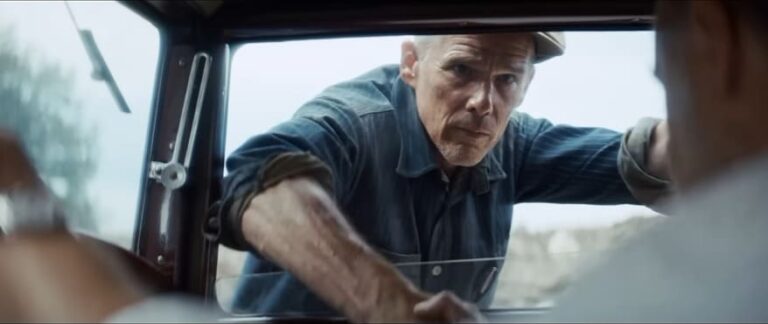
Ned automatically performs their old handshake.
No hesitation.
No conscious thought.
Just muscle memory.
That tiny interaction says more than pages of dialogue ever could.
Doctor Strange erased memories.
He didn’t erase friendship.
The movie suggests that years of shared experiences became so deeply embedded that even reality-altering magic couldn’t fully destroy them.
I absolutely love that idea.
Instead of beating magic with bigger magic, the film argues that genuine human connection leaves permanent marks.
Ned doesn’t remember because someone explains the truth.
His body remembers first.
Then his mind catches up.
It’s probably one of the most emotionally satisfying scenes Tom Holland’s Spider-Man has received since Homecoming.
What About MJ?
Marvel wisely avoids rushing this relationship.
MJ doesn’t suddenly recover every memory.
She doesn’t run into Peter’s arms.
Instead, we get a quiet image of her holding the broken black dahlia necklace.
It’s subtle.
It’s understated.
And honestly, it’s stronger because of that.
The movie leaves just enough hope without undoing the emotional cost of No Way Home.
Sometimes smaller moments stay with audiences longer than giant declarations of love.
That Post-Credits Scene Is Going to Fuel MCU Theories for Months
The final scene barely lasts a minute.
- No dialogue.
- No cameos.
- No Avengers assembling.
- Just a digital tracker.
Watching Ned’s Spider-Man app zoom farther and farther away from Earth immediately made my brain start racing.
Then the second Spider-Man icon appears.
That’s it.
Cut to black.
Marvel knows exactly what it’s doing.
The Two Biggest Theories
| Theory | Why It Makes Sense |
|---|---|
| A Legacy Spider-Man Signal | The tracker detects another Spider-Man existing outside normal reality, potentially teasing Tobey Maguire or Andrew Garfield before the next Avengers event. |
| Peter Has Already Been Pulled Into Battleworld | Doctor Doom’s multiversal plans may already be unfolding, dragging Holland’s Peter into the coming conflict long before anyone on Earth realizes he’s gone. |
Personally, I lean toward the second option.
The tracker moving away from Earth feels too deliberate to be random fan service.
Marvel usually hides its biggest clues inside simple visuals.
This feels like one of them.
Spider-Man Brand New Day Plot Summary: Everything to Know (Spoiler-Free)
Why This Ending Works Better Than Recent MCU Finales
Not every recent Marvel ending has landed emotionally.
Some become overloaded with CGI armies, endless sky beams, or multiverse chaos that overshadows the characters.
Brand New Day avoids that trap.
Yes, it still connects to the larger Phase 6 storyline.
Yes, it clearly points toward Avengers: Doomsday.
But before all of that, it remembers something Marvel occasionally forgets:
Spider-Man stories work because Peter Parker feels real.
The ending isn’t memorable because another universe is collapsing.
It’s memorable because one friend finally remembers another.
That emotional victory matters more than any cosmic setup.
If Marvel can carry that balance into the next Avengers movies, Phase 6 might finally deliver the character-driven storytelling many fans have been asking for.
The universe may be falling apart, Doctor Doom may be waiting in the shadows, and another Spider-Man might already be drifting somewhere beyond the stars—but the biggest breakthrough in Brand New Day happens in the middle of a convenience store, with a handshake that refuses to be forgotten.