The Weight Movie (2026) and Executive Order 6102: The Real History Behind Ethan Hawke’s Gold Smuggling Thriller
There are historical thrillers that use the past as decoration, and then there are movies that make history feel like a loaded gun sitting on the table. The Weight (2026) looks firmly planted in the second category.
Directed by Padraic McKinley and led by Ethan Hawke and Russell Crowe, this bleak Depression-era thriller takes place in the Oregon wilderness in 1933, when America was drowning in poverty, fear, and economic uncertainty. The basic setup sounds like a rough-and-ready survival movie: prisoners, a hidden gold mine, dangerous mountains, and a desperate escape plan.
But the gold is where things get really interesting.
The movie builds its entire premise around Franklin D. Roosevelt’s Executive Order 6102, the real 1933 order that restricted private ownership of gold. That historical detail turns what could have been a familiar treasure hunt into something much nastier. The characters aren’t simply stealing gold. They’re moving something that the government has effectively turned into contraband.
And honestly, that is exactly the kind of historical hook that makes me want to see a movie before I even know whether every action scene lands.
The Weight Movie Release Date: When Will Ethan Hawke and Russell Crowe’s Thriller Hit Theaters?
A Prisoner Has One Shot to Save His Daughter
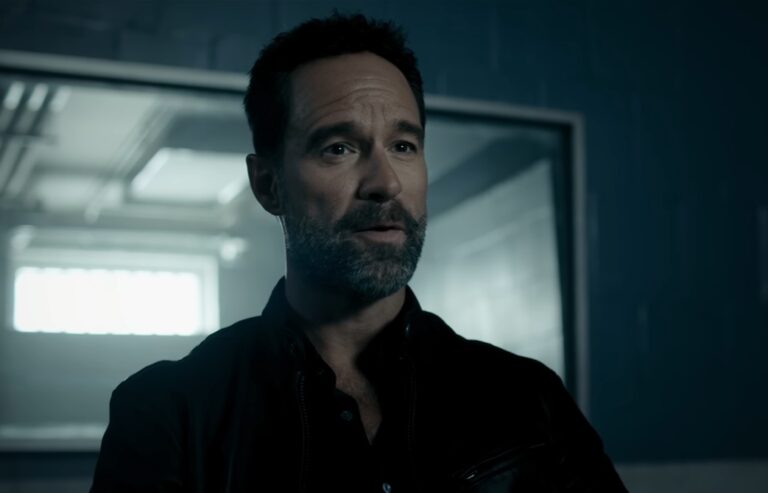
Ethan Hawke plays Samuel Murphy, a World War I veteran who has been chewed up by the Great Depression and left with almost nothing. He’s imprisoned in a brutal work camp, but his biggest fear isn’t the camp itself.
His daughter is in danger of being taken away and placed into state care.
That gives Murphy a motivation that feels far more desperate than the usual Hollywood ‘one last job’ setup. He isn’t chasing gold because he’s greedy. He isn’t looking for adventure. He needs an escape route, and he’s running out of time.
That’s when Russell Crowe’s Warden Clancy enters the picture.
Clancy offers Murphy a deal that sounds almost too good to be true: guide a group of prisoners into the remote Oregon wilderness, reach a concealed gold mine, and smuggle the fortune out. In exchange, Murphy gets his freedom and a chance to get back to his daughter.
Of course, anyone who has watched enough prison thrillers knows that a deal like this never comes without a knife hidden somewhere.
The further the group travels, the more dangerous the situation becomes. The wilderness is brutal, but the people around Murphy may be worse. Hunger, fear, greed and suspicion begin eating away at the group until the gold becomes less of a prize and more of a curse.
And that is where The Weight gets its title feeling right.
The gold has actual physical weight, but the psychological weight is much heavier.

Executive Order 6102 Is What Makes the Story Work
The historical foundation isn’t some random detail pasted onto the screenplay.
On April 5, 1933, Roosevelt signed Executive Order 6102, restricting the private hoarding of gold coin, bullion and gold certificates in the United States. Americans were required to surrender qualifying gold holdings to Federal Reserve banks or member banks, receiving payment at the official price of $20.67 per troy ounce.
For someone living through the Great Depression, that was an extraordinary change to the rules.
Failure to comply could bring severe penalties, including a fine of up to $10,000 or imprisonment for as long as ten years. The order was presented as part of the government’s response to the economic crisis and the instability of the banking system.
That context makes the premise of The Weight much more believable.
Imagine discovering a stash of gold at exactly the wrong moment in American history. Normally, finding gold would be life-changing in the best possible way. In 1933, depending on what you possessed and how you intended to use it, that same fortune could become a legal nightmare.
The movie takes that contradiction and turns it into the engine of the thriller.
The characters aren’t simply asking, ‘How do we get rich?’
They’re asking, ‘How do we survive with something the government doesn’t want us to have?’
The Gold Reserve Act Makes the Story Even Darker
The historical story gets even more complicated after the events surrounding the order.
Following the government’s gold-collection campaign, the Gold Reserve Act of 1934 raised the official price of gold from $20.67 to $35 per ounce. That represented a dramatic devaluation of the dollar against gold and fundamentally changed the economic value of the metal that Americans had been required to surrender.
This is one of those pieces of history that sounds almost fictional when you first encounter it.
From the perspective of The Weight, however, it creates a fascinating backdrop. The characters are trapped inside a system where the value of their treasure isn’t determined solely by what it’s worth in the ground or what someone is willing to pay for it. Its value is being manipulated by government policy, financial institutions and the desperate conditions of the Depression.
That’s fertile territory for a thriller.
| Historical Element | How It Shapes The Weight |
|---|---|
| Executive Order 6102 | Turns privately held gold into a dangerous asset |
| Great Depression | Creates the desperation driving Murphy’s choices |
| Gold Reserve Act of 1934 | Adds another layer to the story’s financial tension |
| Oregon wilderness | Makes escape physically dangerous |
| Prison labor camp | Puts Murphy under Clancy’s control |
Ethan Hawke Looks Perfect for This Kind of Character
If there’s one actor who can sell a man running on fumes, it’s Ethan Hawke.
Murphy isn’t supposed to be some larger-than-life action hero. He’s exhausted. He’s damaged. He’s a veteran living through an economic catastrophe while trying to protect the last meaningful thing he has left.
That makes Hawke a particularly strong fit.
I much prefer this kind of protagonist to the invincible action-machine routine. Murphy should look like every mile hurts. Every decision should feel expensive. When he fights, it should feel like he’s gambling with whatever strength he has left rather than suddenly transforming into Jason Bourne because the third act needs an action sequence.
Russell Crowe as Warden Clancy is the other half of the equation.
Crowe has always been good at playing characters who can make terrible decisions sound completely reasonable. Clancy appears to understand exactly how desperate Murphy is, and that makes his offer much more sinister. He’s not necessarily forcing Murphy with a gun to his head.
He’s giving him a choice where every alternative already sucks.
That’s much more interesting.
The Oregon Wilderness Could Be the Movie’s Best Character
The setting might be what I’m most curious about.
The Weight reportedly leans heavily into practical locations, using dense forests and mountainous terrain instead of turning the entire movie into a digitally manufactured backdrop. For a story this grim, that choice matters.
The Oregon wilderness shouldn’t look beautiful in the postcard sense.
It should look wet, cold, claustrophobic and indifferent.
These men aren’t hiking through nature for fun. They’re hauling valuable contraband through an environment that doesn’t care whether they make it out alive. Mud, rain, exhaustion and isolation become another layer of pressure on a group already preparing to turn on itself.
That physical environment also gives the film an old-school thriller quality. There’s something refreshing about watching characters actually struggle through a landscape instead of sprinting through endless explosions and CGI destruction.

This Isn’t Really a Movie About Gold
The gold is the hook.
The real story is about what people are willing to become when survival is placed above everything else.
Murphy wants his daughter. Clancy wants control and profit. The prisoners want freedom. Everyone has a reason to betray everyone else.
And because the gold can’t simply be carried into the nearest bank, its presence creates a strange psychological trap. The characters possess something immensely valuable, but they can’t safely use it.
That makes the treasure almost absurdly dangerous.
The closer they get to the gold, the less secure they become.
That’s the kind of tension I want from a historical thriller. Not just gunfights and chases, but the feeling that one bad decision can destroy the entire group.
Why the 1933 Setting Feels Surprisingly Relevant
This is probably the most interesting part of The Weight beyond the plot itself.
A movie about government control of gold might sound like an oddly specific historical drama, but modern audiences are already fascinated by inflation, monetary policy, fiat currency and financial independence. Discussions about what money is actually worth have become a constant feature of online communities.
That gives the film an unexpected modern edge.
I’m not saying The Weight is secretly a political manifesto. It doesn’t need to be. The historical events are compelling enough without turning the movie into a lecture.
What matters is the underlying question:
What happens when the rules surrounding personal wealth suddenly change?
For people living through the Depression, this wasn’t an abstract internet debate. It was real life. Banks were failing. Jobs were disappearing. Families were struggling to survive. Then the government imposed new restrictions on an asset many people considered a form of security.
Put that pressure inside a survival thriller and you’ve got a pretty potent cocktail.
A Historical Thriller With Actual Teeth
What makes The Weight stand out to me is that it doesn’t seem interested in making 1933 look comfortable.
There’s no glamorous version of the Great Depression here. No romanticized outlaw adventure where everyone looks suspiciously clean despite spending weeks in the wilderness.
The premise is dirty.
The characters are desperate.
The gold is dangerous.
And the landscape is actively trying to kill them.
That’s a strong combination.
If McKinley manages to maintain that oppressive atmosphere throughout the movie, The Weight could become one of those historical thrillers that sticks with people after the credits. The kind where you walk out thinking about the movie itself, then end up reading about Executive Order 6102 at two in the morning because you suddenly need to know what actually happened.
For me, that’s one of the best compliments a historical movie can receive.
The Weight isn’t interesting because it has gold. It’s interesting because it asks what gold means when the entire world around you is falling apart.
With Hawke carrying the emotional side of the story, Crowe supplying the menace, and 1933 America providing an unusually sharp historical backdrop, this could be a wonderfully grim piece of cinema.
And if the movie delivers on that atmosphere, September 18 can’t come quickly enough.