Bokeem Woodbine in Primetime 2026: Everything About His Role as Chief Cortland Gunn
There are performances that quietly hold a movie together, and then there are performances that walk into a scene, start shouting, and completely change the temperature. Bokeem Woodbine’s Chief Cortland Gunn in Primetime belongs firmly in the second category.
A24’s Primetime, directed by Lance Oppenheim, is one of those movies that seems almost designed to make viewers uncomfortable. Set against the world of mid-2000s reality television and inspired by Luke Dittrich’s 2007 Esquire investigation, the film revisits the disturbing machinery behind To Catch a Predator and the culture surrounding televised sting operations. Robert Pattinson naturally attracts most of the attention as Chris Hansen, but Woodbine’s supporting performance is arguably where some of the movie’s nastiest ideas become impossible to ignore.
And honestly? Woodbine looks like he is having an absolute blast playing this guy. That makes Gunn funny at first. Then unsettling. Then downright horrifying.
Is Primetime A24 Historically Accurate to To Catch a Predator? True Story Explained
Who Is Chief Cortland Gunn in Primetime?
Chief Cortland Gunn is portrayed as the Rockwall County police chief working alongside Chris Hansen’s television operation and the online vigilante group Perverted-Justice, led by Xavier Von Erck, played by Matthew Maher.
The character represents a very specific kind of law enforcement personality: loud, aggressive, intensely proud of his role, and completely energized by the attention surrounding the sting operation.
Gunn doesn’t behave like someone who accidentally wandered into a television production. He seems to love the spectacle.
That distinction matters.
The movie places him in an environment where police work, television production and public relations are constantly rubbing against each other. Gunn appears to see the operation as both a legitimate law-enforcement mission and an opportunity to demonstrate exactly how tough his department can be.
His enthusiasm becomes almost absurd. He is the sort of character who can turn a police operation into something resembling a sporting event, complete with adrenaline, cameras and an audience waiting for the next arrest.
That is where Woodbine becomes so effective.
He doesn’t play Gunn as a generic corrupt cop or a one-dimensional angry sheriff. Instead, he makes him completely convinced that he is doing something righteous.
And that is much creepier.

Bokeem Woodbine Turns Police Spectacle Into Dark Comedy
Woodbine has spent years proving that he can bring serious weight to a character without losing the unpredictable energy that makes people impossible to look away from. His work in Fargo earned him a Primetime Emmy nomination, and that combination of intensity and charisma is all over Primetime.
The difference is that Gunn doesn’t need to dominate every scene through violence.
Sometimes he dominates simply by being way too excited.
Woodbine’s physical performance is enormous. His gestures are broad. His voice can explode through a room. His facial expressions often suggest that Gunn is seconds away from turning whatever is happening into another personal crusade.
It creates a strange effect because the movie itself is dealing with extremely serious material. Woodbine injects humor into scenes where you almost feel guilty for laughing.
That tension is exactly what makes the character work.
There’s an uncomfortable joke buried inside Gunn’s behavior: he seems to understand that he is on television, and he likes what that television version of himself looks like.
That’s not just a character trait. It’s one of the movie’s biggest themes.
Everyone is performing.
Chris Hansen performs the confident television host. The producers perform professionalism. The vigilantes perform righteousness. The police perform toughness. Even the entire concept of the sting becomes a piece of entertainment.
Gunn simply happens to be the person who wears that performance most openly.
Gunn and Chris Hansen Are Two Sides of the Same Machine
One of the more interesting aspects of Woodbine’s role is how he contrasts with Robert Pattinson’s version of Chris Hansen.
Pattinson’s Hansen carries a much colder, more controlled energy. Hansen is the polished face of the operation, someone who understands cameras and knows how to turn confrontation into television.
Gunn is different.
He is raw.
He is emotional.
He is loud.
He doesn’t need to pretend that he enjoys the spectacle because he clearly does.
That makes their dynamic fascinating. Hansen can look like the professional television ringmaster while Gunn feels like the force waiting behind the curtain.
I actually think the movie needs Woodbine’s performance for this reason. Without him, the criticism of the television ecosystem could become too abstract. Gunn gives it a face.
And not a subtle one.
The Murphy, Texas Operation Changes Everything
The most disturbing section of Primetime centers on the Murphy, Texas operation involving assistant district attorney Bill Conradt, played by Alex Winter.
Conradt doesn’t arrive at the sting house as expected. Instead of simply allowing the operation to end, the production and law enforcement team move toward his home.
This is where the movie’s playful, surreal atmosphere starts collapsing under the weight of what is actually happening.
The presentation reportedly leans heavily into the visual language of early-2000s television, including a claustrophobic retro look that makes the entire sequence feel like a corrupted broadcast from another era.
Then everything goes horribly wrong.
When Conradt dies by suicide as police enter the residence, the entertainment machine suddenly has to confront the human consequences of what it has been creating.
And this is where Woodbine’s Gunn becomes particularly disturbing.
The character doesn’t suddenly transform into a thoughtful moral observer. He doesn’t provide the audience with an easy emotional release. Instead, his reaction reflects the same ideological aggression that has been building throughout the movie.
That choice makes the scene considerably harder to watch.
Why Gunn’s Most Extreme Moment Matters
One of the most controversial moments in the film comes after the fatal confrontation, when Gunn responds with an intensely partisan outburst rather than the expected professional reflection.
The line is shocking because it demonstrates how completely political identity and personal outrage have invaded the character’s understanding of the situation.
Woodbine doesn’t soften it.
He doesn’t play the moment as a tragic breakdown designed to make us sympathize with Gunn.
He delivers it with the furious certainty of somebody who still believes his side is morally justified.
That’s a nasty piece of acting, and I mean that as a compliment.
A weaker performance could have turned Gunn into a cartoon. Woodbine instead makes the exaggeration feel intentional. The audience can laugh at the absurdity of his behavior while simultaneously recognizing how dangerous that behavior becomes when the person delivering it has institutional power.
That’s a difficult balance.
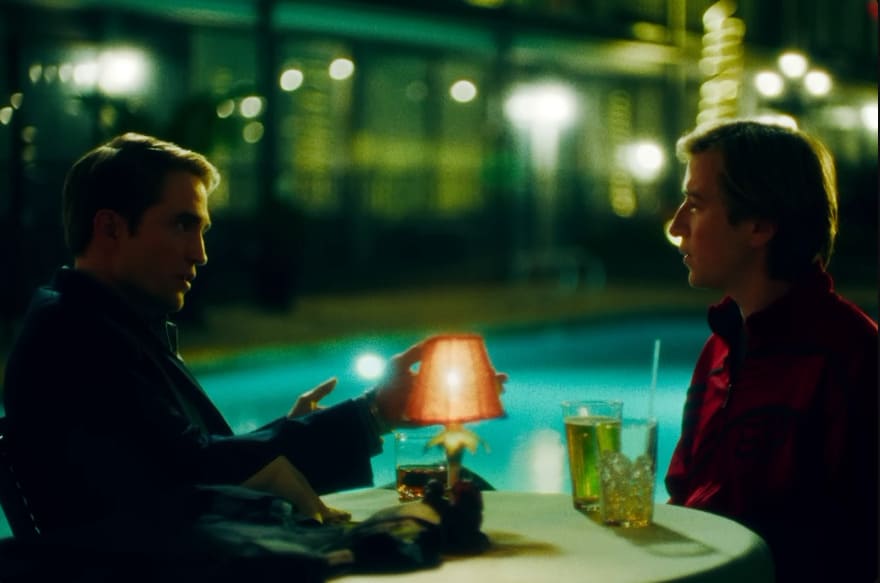
Bokeem Woodbine’s Performance at a Glance
| Element | Woodbine’s Approach |
|---|---|
| Personality | Aggressive, excitable and intensely ideological |
| Humor | Dark, uncomfortable and often absurd |
| Physical Acting | Large gestures and explosive movement |
| Voice | Loud, commanding and highly theatrical |
| Character Function | Represents the collision of policing and entertainment |
| Relationship With Hansen | A raw counterpoint to Hansen’s polished television persona |
| Overall Effect | Funny, unsettling and increasingly disturbing |
Is Chief Gunn Supposed to Be a Villain?
This is where Primetime gets more interesting than a straightforward true-crime recreation.
Gunn can certainly look villainous. But the film seems more interested in showing how a system encourages certain behavior than simply pointing at one person and saying, “This is the bad guy.”
That’s a much messier idea.
Gunn believes in what he is doing. Hansen believes in his role. The producers have their ratings. The vigilantes have their own ideology. Everyone can construct a justification for participating.
The problem comes when those motivations overlap.
Television wants compelling footage.
Police want arrests and public visibility.
Online vigilantes want exposure.
Audiences want shocking television.
Put all of that together and the boundaries become dangerously unclear.
Woodbine’s Gunn is essentially the human embodiment of that collision.
Why Fans Are Talking About Woodbine
The character has obvious appeal for movie fans who enjoy performances that go completely against the expected supporting-role formula.
On film forums and social media discussions surrounding Primetime, viewers have focused heavily on the movie’s uncomfortable mixture of satire, true crime and media criticism. Woodbine’s Gunn naturally attracts attention because he is one of the film’s most immediately recognizable personalities.
And I can understand why.
There is something almost addictive about watching him in these scenes. You know you’re watching somebody who is far too enthusiastic about what is happening, but you can’t look away.
The performance also gives Primetime some of its strangest humor. This isn’t comedy that makes you feel comfortable. It’s the kind where you laugh and immediately wonder whether you were supposed to.
That feels very appropriate for a film about televised humiliation.
The Real Strength of Bokeem Woodbine’s Role
What makes Chief Cortland Gunn memorable isn’t simply that Woodbine shouts a lot or plays him as a larger-than-life Texas police chief.
It’s the contradiction underneath all that noise.
Gunn wants to look like the toughest person in the room. He wants to be part of something important. He wants the operation to succeed. He seems thrilled by the cameras and the attention.
But the more seriously the movie takes the consequences of the sting, the uglier that enthusiasm becomes.
Suddenly those earlier jokes don’t feel quite as funny.
That is good filmmaking, and Woodbine understands exactly how to sell it.
His performance gives Primetime an uncomfortable face for its examination of reality television, law enforcement and public spectacle. Pattinson may be the obvious headline name, but Woodbine gives the movie one of its most difficult characters to forget.
Chief Cortland Gunn isn’t the guy you walk away from Primetime feeling comfortable about. He’s the guy you keep thinking about afterward.
And for me, that’s exactly why Bokeem Woodbine’s performance works.