Does the Dog Die in Heart of the Beast (2026)? Odin’s Fate Explained
There is a particular kind of tension that hits differently when a movie puts a dog beside its main character. You can accept a hero getting beaten half to death, lost in the wilderness, or pushed beyond any reasonable limit, but the moment the dog is in danger, the whole thing becomes personal. That is exactly the anxiety surrounding Heart of the Beast, David Ayer’s 2026 survival thriller starring Brad Pitt. The question has been everywhere since the film arrived: does the dog die?
The answer is no. Odin survives. And considering how aggressively the movie puts this battle-scarred German Shepherd through the wringer, that answer matters. Heart of the Beast is built around survival, exhaustion, memory, and the strange, almost instinctive bond between two veterans who have already endured more than most people could imagine. It is also a film that understands exactly how nervous audiences become when a beloved animal is placed in mortal danger.
The story is deliberately light on dialogue, so much of the emotional work comes through movement, facial expressions, landscape, and the relationship between Pitt and his canine co-star. Ayer leans into the physical side of survival rather than filling every quiet moment with exposition. That makes Odin’s fate feel even more important, because the dog is not simply accompanying the protagonist. He is one half of the film’s emotional center.
10 Intense Survival Movies Like Heart of the Beast (2026) You Must Watch
The Heart of the Story: James Belmont and Odin
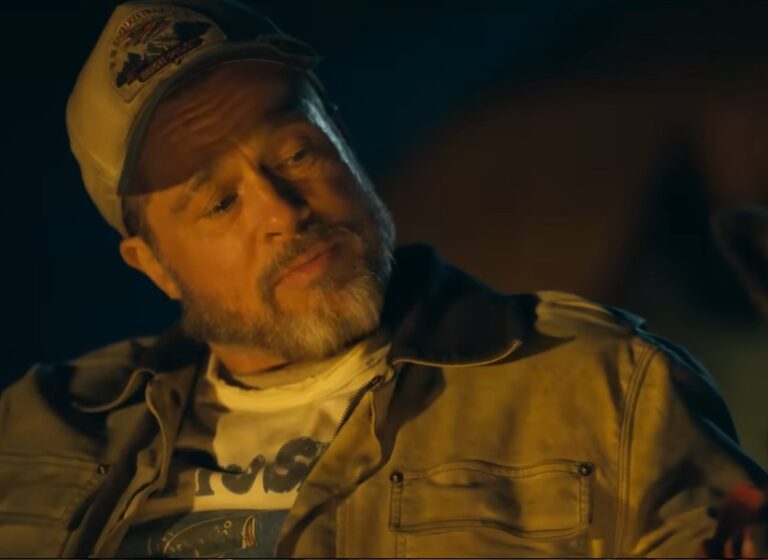
Brad Pitt plays Sgt. Maj. James Belmont, a retired Special Forces officer who has spent roughly three decades carrying the psychological weight of combat deployments in Iraq and Afghanistan. Belmont has pulled away from ordinary life and settled into the Alaskan wilderness, where isolation seems easier for him than dealing with the noise and chaos of civilization. He is not portrayed as someone searching for a grand new purpose. He mostly wants quiet.
There is one important exception to that solitude. Odin is with him.
Odin is a German Shepherd combat dog who served alongside Belmont during numerous dangerous military missions. He is old, heavily scarred, and very clearly carrying his own history. The film makes a point of showing that Odin is not treated like a normal household pet. He is Belmont’s former colleague, survivor, and companion. Their relationship has been shaped by years of relying on each other when things went badly wrong.
Odin has titanium teeth and a specialized prosthetic hind leg, details that immediately tell us how much this animal has been through. He also experiences vivid nightmares associated with PTSD, creating a striking parallel with Belmont’s own psychological scars. Neither character needs to explain what happened to the other. They already understand it.
That is where the film gets much of its emotional weight. Their connection can almost feel telepathic, but the movie generally earns that effect through small physical details rather than speeches about friendship. A look from Odin, a gesture from Belmont, the decision to keep moving when either one could stop — those moments carry more information than pages of dialogue might have.
The movie actually opens by giving away part of the mystery. A young woman, played by Anna Lambe, encounters Odin standing alone on an isolated road in Alaska. He is there without Belmont, which instantly creates an uncomfortable question. What happened to the two of them? Why is Odin alone? And, perhaps most importantly, how did their journey reach that point?
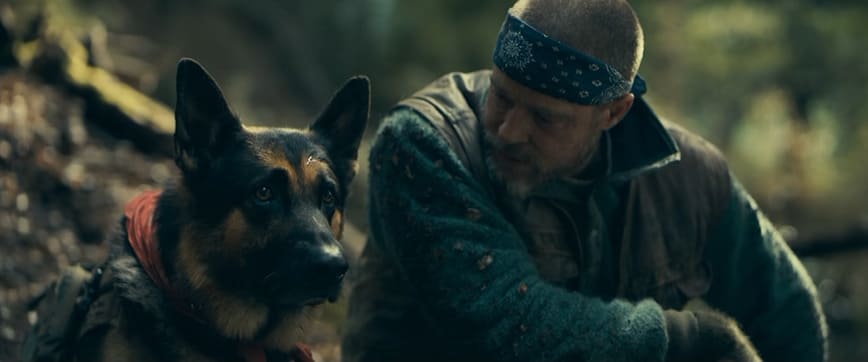
The Plane Crash Changes Everything
The main story then jumps back roughly a week. At first, Heart of the Beast looks almost peaceful. Belmont pilots a small seaplane across Alaska, passing over snow-covered mountains and pristine lakes before setting up camp beneath the night sky with Odin. For two men who have spent years dealing with war, it feels like a rare chance to exist without somebody trying to kill them.
That calm does not last.
A catastrophic mechanical failure sends their aircraft crashing into the Alaskan wilderness. The transition is brutal because the movie does not spend much time preparing the audience for it. One moment Belmont and Odin are moving through an enormous, beautiful landscape, and the next they are dealing with wreckage, injuries, cold, and the realization that there is no quick way out.
They are stranded dozens of miles from civilization and eventually have to make an exhausting 58-mile trek toward safety. Neither character is in ideal physical condition, and the environment is actively hostile. Hypothermia becomes a constant threat. The terrain is dangerous. Predatory animals are nearby. Supplies are limited, and every mile puts additional strain on bodies that have already suffered years of damage.
This is where the film’s sparse dialogue becomes particularly effective. Belmont and Odin cannot simply talk their way through the problem. They have to move. They have to watch each other. When one starts to struggle, the other becomes the reason to keep going.
Does Odin Die in Heart of the Beast?
No. Odin survives the events of Heart of the Beast. That is the clearest answer for anyone who simply wants to know whether the movie delivers the kind of devastating animal death that has become a source of dread for viewers.
That does not mean Odin gets an easy ride. Quite the opposite. The film repeatedly places him in situations where his survival looks uncertain. He faces brutal encounters with predators, dangerous terrain, freezing conditions, and the consequences of the injuries he already carries. Ayer understands exactly what the audience is thinking every time Odin disappears from sight or is pushed beyond his physical limits.
There is also a particularly painful sequence in which Belmont, badly injured himself, becomes convinced that the worst has happened to Odin. His reaction is not played as a conventional action-movie moment. It is grief, exhaustion, and fear all collapsing together. The possibility of losing Odin hits Belmont differently because the dog represents much more than companionship.
Then the film gives the audience its release: Odin has survived.
By the time the credits arrive, the combat dog is still alive, and the relationship at the center of the story has endured the journey. It is a cathartic choice, especially after so much punishment. The movie spends most of its runtime making viewers fear that Ayer might eventually pull the trigger on the emotional gut punch, only to take the story somewhere more hopeful.
Odin’s Fate at a Glance
| Question | Answer |
|---|---|
| Does Odin die? | No. Odin survives. |
| Is Odin badly injured? | Yes. The journey repeatedly puts him in serious physical danger. |
| Does Odin face predators? | Yes. Several dangerous encounters threaten him and Belmont. |
| Does Belmont believe Odin may be dead? | Yes. His injuries and exhaustion lead him to fear the worst. |
| Is Odin alive when the film ends? | Yes. His survival forms part of the film’s emotional resolution. |
Why Odin Matters So Much to the Story
It would be easy to reduce Odin to the classic movie-dog role: loyal companion who follows the hero around and gives the audience something to worry about. Heart of the Beast is doing more than that. Odin is a reflection of Belmont. Both are veterans. Both have physical scars. Both carry psychological trauma. And both have been shaped by years of surviving situations they probably should not have survived.
That parallel gives the 58-mile journey a different meaning. Belmont is not simply trying to get himself out of the wilderness. He is trying to make sure Odin gets out too. Their survival becomes mutual. Belmont protects Odin when he can, Odin keeps Belmont moving when the older soldier is close to giving up, and neither is willing to abandon the other.
There is something slightly old-fashioned about that relationship, and I mean that as a compliment. The movie does not need a complicated speech explaining why these two care about each other. We can see it. Their shared history is written into their bodies and behavior.
The Real Dog Behind Odin
Brad Pitt may be the biggest name attached to Heart of the Beast, but he has reportedly been happy to redirect attention toward the animal performer playing Odin. During the film’s promotional campaign, Pitt repeatedly described the four-legged performer as the real star of the production.
Odin was primarily portrayed by a highly trained German Shepherd named Uber. The role demanded considerably more than simply getting a dog to sit, run, or look toward the camera. Uber underwent months of specialized training, including preparation for working comfortably with the prosthetic limb used to portray Odin’s injured hind leg.
The production also placed unusual demands on the human and animal cast because Ayer chose to shoot in real wilderness environments in New Zealand. Instead of leaning heavily on green screens and artificial backgrounds, the production wanted the landscape itself to feel dangerous and physical. Cold, wet conditions and exhausting terrain became part of the filmmaking process.
That decision helps explain why the relationship between Pitt and Uber comes across as convincing. The two are not simply performing against a digital wilderness. They are physically interacting with the environment around them. The fatigue, mud, cold, and difficult terrain become part of the performances, and the camaraderie between the human and canine production teams seems to have helped sell the bond on screen.
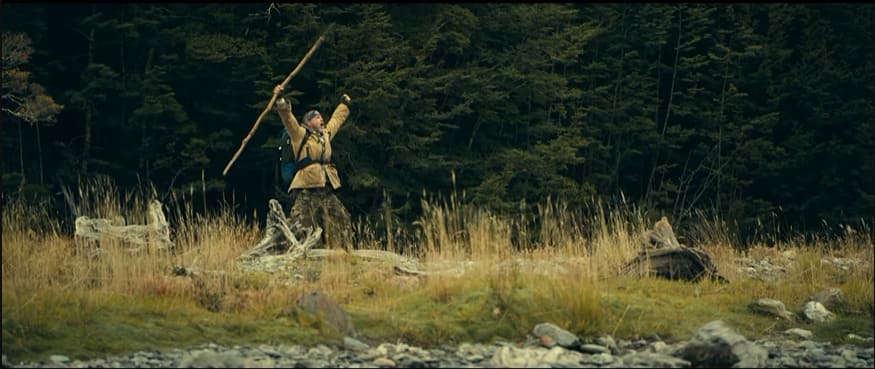
Brad Pitt’s Performance and the Quiet Approach
Pitt plays Belmont with restraint rather than turning him into another loud, hyper-aggressive survival hero. There are moments of violence and desperation, but much of the performance lives in his face and posture. Belmont looks like someone who has spent years learning not to explain what he is feeling.
That makes the scenes involving Odin especially revealing. The dog is one of the few places where Belmont’s emotional defenses crack. When Odin is threatened, the character stops looking like a hardened Special Forces veteran and starts looking like a tired man terrified of losing the one living creature who has remained beside him.
The lack of dialogue helps here. The movie gives Pitt and Uber space to communicate through physical behavior. It is not always subtle, and some viewers may find the sentiment a little heavy, but the central idea remains clear: these two have survived because they have each other.
Audience Reaction to Odin’s Survival
The decision to keep Odin alive has also shaped the way audiences have responded to the film. Movies have a long history of killing animal companions to produce an easy emotional reaction, and modern audiences are often very sensitive to that particular trick. The dread surrounding Heart of the Beast was therefore never just about whether the movie was going to be violent. People wanted to know whether it was going to break their hearts in the process.
Instead, Ayer takes the story in a more hopeful direction. The danger is real, the injuries are serious, and Odin is repeatedly placed in situations where survival looks uncertain, but the film ultimately treats his continued existence as part of the reward for everything Belmont and Odin endure together.
Audience reactions have reflected that relief. Viewers have described the film as nerve-racking but emotionally rewarding, particularly because of its focus on military working dogs and the trust that can develop between an animal and the person who serves alongside it. The positive response also reflects how much of the film depends on Odin himself rather than simply using him as background decoration.
Heart of the Beast Is Really About Two Survivors
Calling Heart of the Beast a survival thriller is accurate, but it does not quite explain why the movie works emotionally. The snow, mountains, crash, predators, injuries, and freezing temperatures create the physical obstacles. Belmont and Odin give those obstacles meaning.
They are two battle-worn survivors who have already lost pieces of themselves long before the plane goes down. The wilderness simply strips away everything else until their relationship is all that remains. Belmont needs Odin. Odin needs Belmont. Neither one is willing to leave the other behind.
And yes, the movie absolutely wants you to worry about the dog. It knows exactly what it is doing. There are moments designed to make anyone who has ever loved a dog tense up and start wondering whether the filmmakers are really going there. But Heart of the Beast ultimately chooses compassion over tragedy.
So, for anyone searching for the answer before watching: Odin does not die. He survives the brutal Alaskan journey, and his survival gives the ending a sense of relief that the rest of the film spends a long time withholding. After all the cold, blood, exhaustion, fear, and memories of war, the image of these two survivors still moving forward together is the emotional point. The beast makes it out.