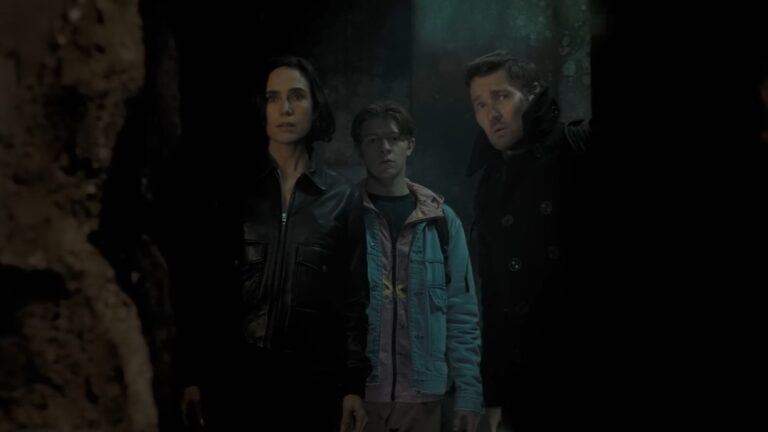
Pulp: What Do You Do for an Encore? (2026) Plot Breakdown & Full Movie Review
Okay, I need to talk about this film because I’ve been sitting with it for a few days now and I still can’t shake it. If you grew up loving Pulp — or if you’re one of those people who only knows “Common People” from a wedding DJ set and never dug deeper — this documentary is going to hit you somewhere you didn’t expect.
Directed by Garth Jennings (yes, the guy who gave us “Sing” and “The Hitchhiker’s Guide to the Galaxy,” so you already know the visuals are going to be doing something interesting) and narrated by Jarvis Cocker himself, this MUBI release isn’t your standard “look how famous we got” rock doc. It’s built around Pulp’s massive 2025 reunion arena tour, which came hot on the heels of “More,” their first new album in over twenty years. Clocking in at around 100 minutes, it’s tight, it’s emotional, and honestly, it earns every minute.
Why This Isn’t Just Another Reunion Cash-Grab Doc
Here’s the thing that got me immediately: this movie doesn’t pretend the band’s comeback happened in a vacuum. Jennings weaves together shiny, immaculate 2025 concert footage with archival material going back four decades — some of which nobody has seen before. And instead of laying it all out in a boring timeline (“first they did this, then this happened”), the film treats past and present like they’re talking to each other constantly, cutting back and forth so you feel the weight of everything Pulp went through to get here.
Case in point — early on, the doc drops you into the band’s infamous 1988 Sheffield show, which at the time basically felt like a funeral. We’re talking a young, visibly worn-down Jarvis playing to a crowd that could not care less. It’s uncomfortable to watch. It’s supposed to be. Because what the film is really doing is setting up just how long and brutal the road to “Common People” and “Disco 2000” actually was — we’re talking twelve straight years of grinding in obscurity before anyone outside Sheffield gave a damn.
That context matters. It reframes the Britpop explosion of the 90s not as a lucky break, but as the payoff of over a decade of frustration, failed shows, and lived-in working-class observation finally crystallizing into pop songs that hit like a gut punch.
The 2025 Tour Footage Is Genuinely Stunning
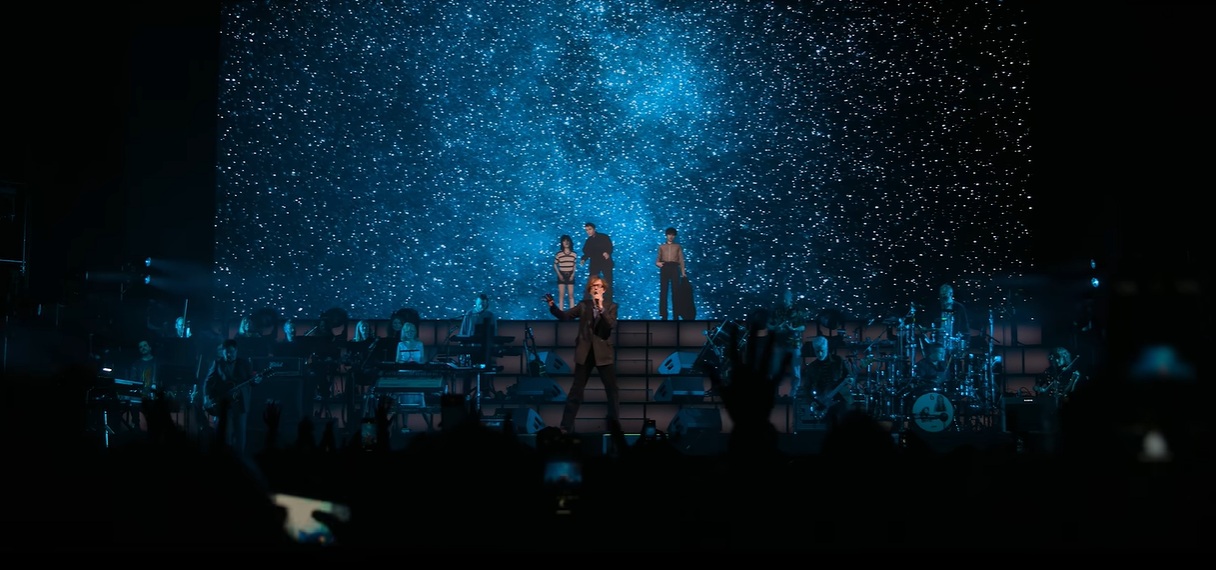
Let’s talk about the actual concert stuff, because it’s not just filler between the archival bits — it’s the heartbeat of the whole thing.
Jarvis, somehow, is in his 60s and still moves like a man possessed. That same jerky, theatrical, borderline-unhinged stage presence that made him a Britpop icon in the first place? Still fully intact. He’s flanked by the classic lineup — Nick Banks, Candida Doyle, Mark Webber, Mark Sainsbury — plus a full 10-piece string section that turns these songs into something genuinely cinematic rather than just “nostalgia tour, played faithfully.”
A few things that stood out to me watching the live sequences:
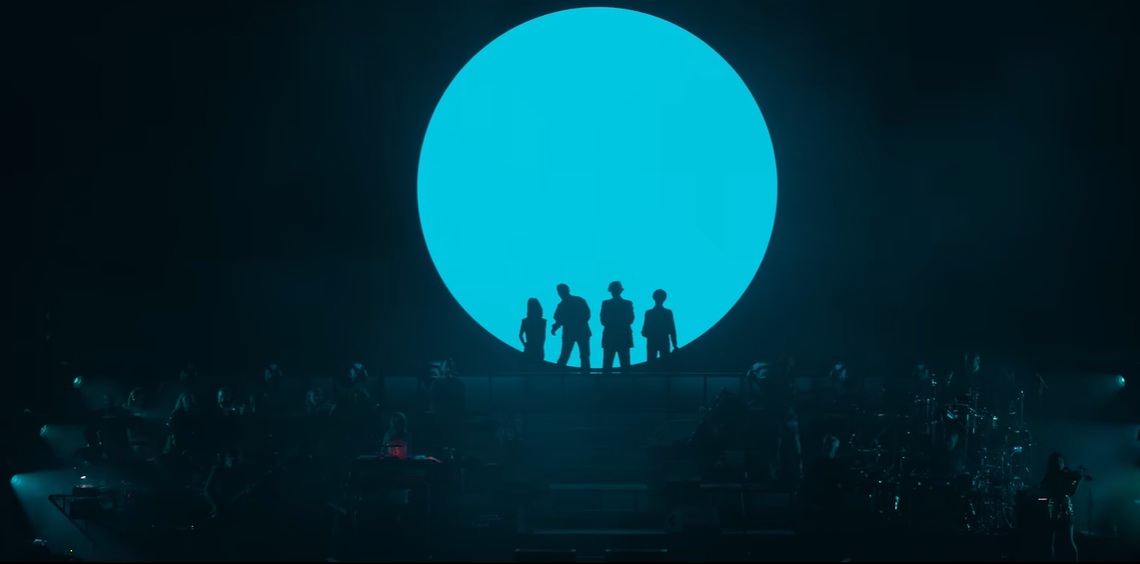
- The staging is theatrical, not corporate. Big, colorful, slightly absurd visual elements that feel like an extension of Jarvis’s personality rather than a generic arena-tour light show.
- New songs from “More” don’t feel bolted on. They’re mixed right into the setlist alongside the classics, and the film makes a point of showing the band still has creative juice — this isn’t a band coasting on “Common People” forever.
- The camera doesn’t just watch from the crowd. Jennings shoots from inside the performance, which makes even people who’ve never been to a Pulp show feel the physicality of it.
And then there’s the stuff that happens between songs, which honestly might be my favorite part of the whole film. Jarvis’s narration throughout is this weirdly poetic, philosophical thread — at one point he talks about how songs hold onto little pockets of energy from your past that get released again every time you perform them. The film literally visualizes that idea, matching emotional peaks from the 2025 shows with old archival clips of the band decades earlier, so you’re watching the same energy ripple across forty years of their lives.
Sheffield Is Basically a Main Character
If you only know Pulp through their singles, you might not realize how much this band is Sheffield. Jennings clearly gets this, because he refuses to make an insular “band members only” documentary. Instead, he goes out into the city itself — talking to shopkeepers, lifelong fans, random residents — to show just how much affection the city still has for its most famous export.
There are dreamy, slightly surreal sequences of everyday Sheffield life that echo the visual language of Pulp’s old music videos, which is a genuinely clever touch. And then there’s the stuff that got me a little emotional: interviews with Jarvis’s mother and grandmother, who are honestly hilarious and refreshingly unpretentious about raising this eccentric, awkward kid who somehow became a pop icon.
It all ties back to the film’s central argument — that Pulp’s music worked because it was never about aspirational fantasy. It was about supermarkets, cold remedies, boring cafes, and ordinary heartbreak, dressed up as grand pop theatre. That’s the whole trick, and the documentary nails why it still works.
Pulp What Do You Do for an Encore Movie Release Date 2026: Where to Watch in the US
A Quick Breakdown, If You’re Deciding Whether to Watch
| What You Get | Why It Matters |
|---|---|
| 2025 arena tour footage | Proof the band still has real creative and physical energy, not just nostalgia |
| Four decades of archival material | Context for why their songs hit as hard as they do |
| Sheffield community interviews | Grounds the “rock star” narrative in real, ordinary life |
| Jarvis’s narration | Turns the whole thing into something closer to a memoir than a standard doc |
| Richard Hawley cameo | Digging through old vinyl — a nice quiet moment of pure music-nerd joy |
Does It Actually Answer Its Own Question?
The title asks “what do you do for an encore,” and by the end, the film has a pretty clear answer: it’s not about replaying the hits for applause. It’s reclamation. It’s a band proving that everything they said about class, identity, love, and the mundane grind of ordinary British life is still true — maybe even more true now than it was thirty years ago.
What impressed me most is how the film handles aging. It doesn’t hide it or awkwardly avoid it. You see the gray hair, the wrinkles, the physical toll of decades on the road. But instead of that reading as sad or desperate, it reads as earned. There’s a real difference between a band chasing relevance and a band that never actually lost the thing that made them relevant in the first place.
Critics have been throwing around words like “celebratory” instead of “mournful,” and I get why — because Jarvis’s humor and warmth carry the whole thing. This could’ve easily tipped into self-indulgent hagiography. It doesn’t. It stays funny, a little messy, deeply human.
If you’ve got any history with this band — or honestly, even if you don’t — this is one of those rare music docs that works as both a genuinely great concert film and a story about what it means to grow older without losing the thing that made you interesting in the first place.