Pulp What Do You Do for an Encore Review: Is the 2026 Music Documentary Worth Watching?
I walked into this expecting another glossy nostalgia trip. You know the type — talking heads reminiscing about the good old days, a few blurry VHS clips, maybe a tearful “we never thought we’d get this big” moment, and out you go. That’s not what Garth Jennings made. What he made is something closer to a confession booth with a light show attached, and honestly, it wrecked me a little.
Let’s get the practical stuff out of the way first, because you’ll need it:
- US & Mexico theatrical run: September 24, 2026
- Global streaming premiere: September 25, 2026, exclusively on MUBI
- Runtime: 1 hour 39 minutes
- Director: Garth Jennings
- On screen: Jarvis Cocker, Nick Banks, Candida Doyle, Mark Webber, Mark Sainsbury
Now — the actual review, unfiltered.
This Isn’t a “Rise of the Band” Documentary. Thank God.
The lazy version of this film exists in an alternate universe somewhere, and it’s a chore: 1978, garage, misfits, slow climb, Britpop, fade to black. Jennings throws that structure out entirely. Instead he anchors everything to Pulp’s colossal comeback tour behind More, their first album in 24 years, and lets the past bleed in around the edges rather than marching through it chronologically.
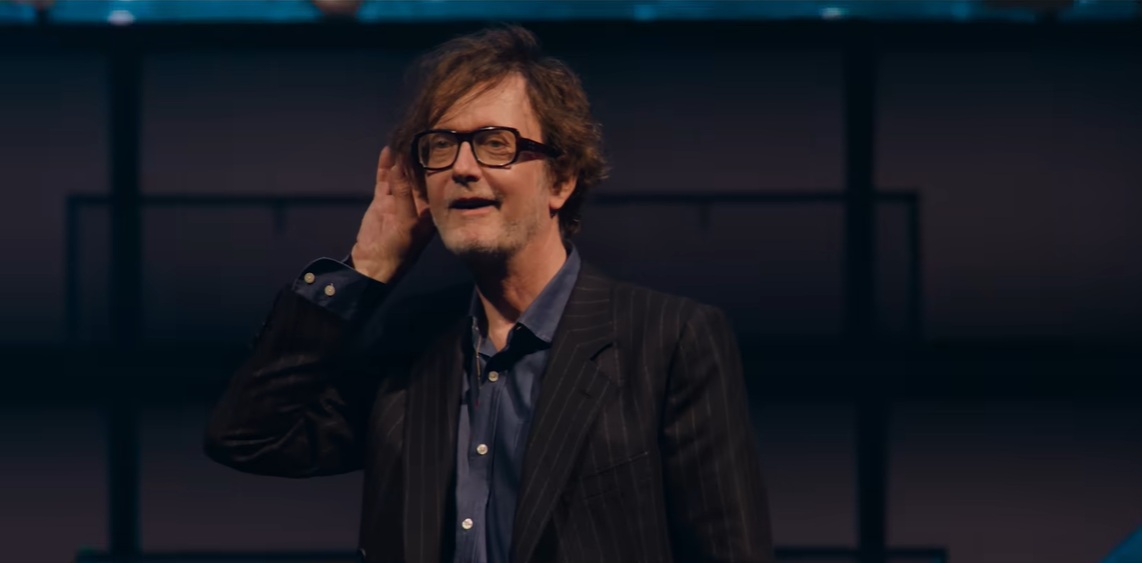
That choice is the whole film, honestly. It means you’re not watching history — you’re watching Jarvis Cocker, in his sixties, physically negotiating with his own back catalog in real time. And that negotiation is more interesting than any origin story could be.
Jarvis Cocker Should Not Move Like That at His Age
I’ll say it plainly: the man is unnerving to watch on stage. Not in a bad way — in a “how is this legal” way. The lanky, off-kilter dancing, the theatrical pauses, the way he seems to be having a private argument with the crowd and winning — none of it has softened. If you came in worried this would be a diminished, greatest-hits-on-autopilot kind of show, relax. It’s not.
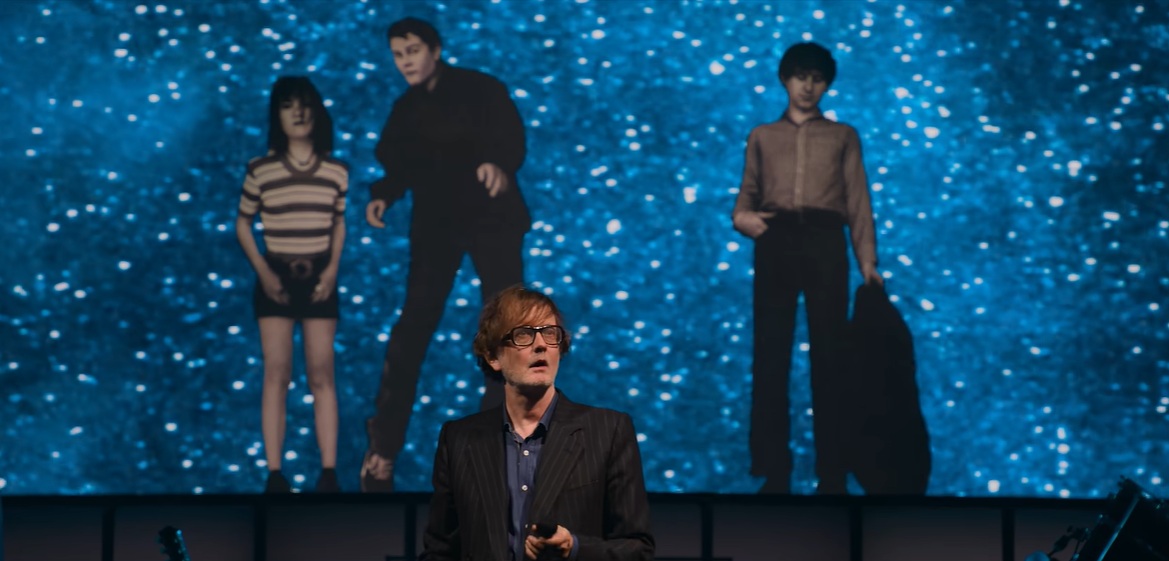
Backing him is most of the classic lineup — Candida Doyle, Nick Banks, Mark Webber — plus a 10-piece string section that turns the arena into something that feels less like a rock show and more like an event with consequences. The staging leans hard into massive screens and synchronized lighting, and it works, but the strings are the real flex. They give even the most familiar tracks a weight that a standard four-piece band setup simply can’t manufacture.
The Setlist Doesn’t Just Coast on the Hits — And That’s the Right Call
Twenty songs deep across the catalog, and — this matters — the film doesn’t just lean on “Common People,” “Disco 2000,” or “This Is Hardcore.” New material from More gets real screen time, which tells you something: this isn’t a band cashing in on a legacy tour disguised as a documentary. They’re actively pushing, still writing, still arguing with themselves about what a Pulp song should sound like in 2026.
That’s a braver structural choice than it sounds. It would’ve been so easy to lean entirely on nostalgia and let the crowd do the emotional labor for you. Jennings doesn’t take the easy road.
The Interludes Are Where the Film Actually Lives
Here’s my honest opinion: strip the concert footage away entirely, and you’d still have a great film — because the spine of this thing is Cocker’s voiceover between songs. Philosophical, self-deprecating, occasionally devastating. There’s a line about how songs hold “pockets of energy from your past life that are released again when you perform them”, and I haven’t stopped thinking about it since I left the screening.
That idea — performance as time travel, songs as sealed jars of who you used to be — is the emotional engine of the whole documentary. It’s not really about Britpop at all. It’s about what happens when a 60-something man has to physically re-inhabit the anger, horniness, and social frustration of his 30-year-old self, eight nights a week, on a stage the size of a football pitch.
The Family Interviews Are the Funniest Thing in the Film, Full Stop
Nobody warned me about Jarvis Cocker’s mother and grandmother showing up on camera, and it’s genuinely the best surprise in the whole runtime. Dry, unimpressed, hilariously matter-of-fact Sheffield wit — the exact opposite energy of an arena full of screaming fans. It’s a smart structural counterweight. Every time the film risks tipping into rock-mythology grandiosity, it cuts back to someone who remembers Jarvis as an awkward kid, not a legend, and the whole thing stays grounded.
The Crowd Shots Might Be the Most Emotionally Honest Part
Jennings keeps cutting to the audience — not for crowd-surfing spectacle, but to catch the generational split. Fans who lived through Different Class in ’95 standing shoulder to shoulder with teenagers who found the band on a playlist three months ago. It’s a quiet, unforced way of proving the film’s real thesis: this music was built for outsiders and misfits, and that category doesn’t age out. It just keeps recruiting.
Pulp: What Do You Do for an Encore? (2026) Plot Breakdown & Full Movie Review
Quick Verdict Breakdown
| Category | My Take |
|---|---|
| Concert footage & sound | Genuinely arena-grade, the strings elevate everything |
| Archival material | Rich, rare, never over-explained |
| Jarvis’s narration | The best part of the film, full stop |
| Pacing | Tight — never drags across 99 minutes |
| Emotional payoff | Unexpectedly heavy for a “music doc” |
| Best for | Longtime Pulp fans, but genuinely accessible to newcomers |
So — Is It Actually Worth Your Time?
Yes. Not “sure, if you’re into Britpop” yes — an actual, unreserved yes. Critics have piled on the praise (100% on Rotten Tomatoes out of early reviews, audience scores sitting comfortably around 8.0–8.2 on IMDb and Prime Video), and for once I think the hype is earned rather than inflated by algorithm-friendly enthusiasm.
If you grew up on His ‘n’ Hers or Different Class, this is mandatory viewing — the four decades of unseen footage alone justify the ticket. But even if your only exposure to Pulp is one song on a curated Spotify playlist, the film works as something bigger than a band retrospective. It’s a meditation on aging, memory, and what it costs — emotionally, physically — to keep stepping back into the person you used to be, night after night, for an audience that’s still growing.
You catch it in theaters across the US and Mexico starting September 24, 2026, then it lands globally on MUBI on September 25. Don’t wait for the streaming date if you can help it — this one earns the big speakers and the dark room.