AHS Season 13 Full Crossover Explained: Ryan Murphy’s Endgame Revealed
If there was ever a moment for American Horror Story to stop playing coy with its mythology, Season 13 is it. After years of fans connecting dots between seasons, arguing over timelines, and treating every returning character like evidence in a murder trial, Ryan Murphy appears ready to throw the entire AHS universe into one giant supernatural blender.
And honestly? About time.
The franchise has been quietly interconnected for years. Apocalypse was the closest thing we had to a full-scale collision, bringing together characters and mythology from Murder House, Coven, and beyond. But Season 13 appears to be throwing that idea and pushing it to an absurd new level: a massive crossover designed as a sequel to the entire AHS saga.
This isn’t simply another season with a few familiar faces. The premise reportedly involves returning characters, multiple versions of the same performers, overlapping realities, resurrected figures, and an ultimate evil powerful enough to threaten the entire structure of the show’s universe.
That sounds completely ridiculous.
It also sounds exactly like the kind of glorious chaos American Horror Story has been building toward.
Season 13 Is Breaking the Anthology Formula
For most of its run, American Horror Story worked because every season could reinvent itself. New setting, new characters, new nightmare. Even when connections existed, they were usually rewards for obsessive viewers rather than requirements for understanding the story.
Season 13 appears to be throwing that philosophy straight out the window.
The reported plan is a 13-episode season consisting of half-hour installments, making it significantly faster than the traditional AHS format. The premiere strategy is equally unusual, with multiple episodes arriving together before the series settles into double-episode weekly releases toward Halloween.
That shorter runtime immediately raises a question: how on earth do you fit an enormous cast and twelve seasons of mythology into episodes that are roughly thirty minutes long?
The answer may be that Murphy isn’t interested in slowly explaining everything anymore.
This could be AHS at its most manic: characters appearing, realities colliding, old mysteries resurfacing, and major confrontations happening almost immediately.
And frankly, after some of the franchise’s slower stretches, a season with absolutely no patience sounds pretty appealing.
The Wildest Part: Actors Playing Multiple Characters
The casting concept might be even crazier than the crossover itself.
Several AHS veterans are reportedly returning to play multiple characters from different seasons. We’re not talking about a performer playing one new character with a clever connection to the past. The idea is that familiar actors could potentially embody several established roles during the same season.
That opens the door to something AHS fans have dreamed about for years: characters from completely different seasons actually sharing the screen.
Sarah Paulson Could Become the Ultimate AHS Chameleon
Sarah Paulson is arguably the perfect actor for this experiment.
Her AHS history is packed with wildly different personalities, from the tortured journalist Lana Winters to Cordelia Goode, Ally Mayfair-Richards, Audrey Tindall, and Sally McKenna.
Cordelia is particularly important because her story already places her near the center of the franchise’s supernatural mythology.
The possibility of seeing Paulson return as several of these characters is fascinating, but there’s also a danger here. If the season becomes nothing more than a parade of recognizable faces and references, the emotional weight could disappear beneath the fan service.
I want these characters to matter, not just appear.
Evan Peters Has Plenty of Material
Evan Peters is another obvious centerpiece.
His AHS résumé alone could practically support its own crossover:
- Tate Langdon from Murder House
- James Patrick March from Hotel
- Kai Anderson from Cult
- Kit Walker from Asylum
- The Rubber Man persona
Having Peters interact with versions of himself would be completely unhinged, but that’s precisely why the idea works.
Tate confronting Kai? March encountering another Peters character? Rubber Man appearing in a scene alongside one of Peters’ human roles?
There are countless possibilities, and some of them sound like the sort of thing fans will be freeze-framing every five seconds.
Jessica Lange’s Return Is the Moment I’m Most Interested In
Then there’s Jessica Lange.
Her return to the main AHS universe is a big deal regardless of the plot. Lange helped define the identity of the early seasons, and her absence has been noticeable.
The reported crossover gives her the opportunity to revisit four of her most memorable characters:
| Character | Season | Why It Matters |
|---|---|---|
| Constance Langdon | Murder House | One of AHS’s defining characters |
| Sister Jude | Asylum | A brutally complicated tragic figure |
| Fiona Goode | Coven | The Supreme who helped shape AHS mythology |
| Elsa Mars | Freak Show | A deeply flawed performer chasing a dream |
And Fiona is the obvious elephant in the room.
After Apocalypse, the witches became arguably the closest thing AHS had to a recurring central mythology. Bringing Fiona back alongside Cordelia, Marie Laveau, and Madison Montgomery could produce some spectacular supernatural drama.
I just hope Lange isn’t brought back merely to deliver a handful of memorable lines and walk away.
Give Constance something nasty to do. Give Fiona a real reason to be there. Let Sister Jude actually matter.
Who Is the Ultimate Evil?
This is where things get particularly interesting.
The obvious theory is Satan.
The Devil has already been woven through multiple corners of AHS mythology. The supernatural force connected to Asylum eventually ties into the larger mythology surrounding Michael Langdon, while Murder House establishes the Antichrist storyline that eventually dominates Apocalypse.
Other seasons have introduced demonic forces, occult groups, supernatural entities, extraterrestrial mysteries, and cursed locations.
If Season 13 reveals that these weren’t isolated horrors but fragments of a much larger design, it could radically reframe the entire franchise.
Imagine discovering that the seemingly unrelated nightmares of previous seasons were all consequences of the same cosmic conflict.
The Murder House wasn’t just haunted.
The witches weren’t simply fighting their own battles.
The events of Hotel, Roanoke, Cult, 1984, Double Feature, and Delicate weren’t necessarily isolated nightmares.
They were pieces of something bigger.
That’s an enormous storytelling gamble.
The Real Challenge Is Making the Chaos Mean Something
Here’s where I’m skeptical.
AHS has never been afraid of excess. Sometimes that’s its greatest strength. Sometimes it feels like the writers have thrown twenty ideas against a wall and decided to film whichever ones stick.
Season 13 could easily become the ultimate fan-service machine.
Imagine thirty minutes of references flying at the audience: Tate appears, Cordelia enters, Fiona insults somebody, Madison drops a one-liner, Twisty shows up, another character dies, and then we’re suddenly in a different timeline.
That would be fun for about an hour.
Then it would become exhausting.
The crossover needs an emotional spine.
The strongest AHS seasons weren’t memorable simply because they had shocking imagery. They worked because characters were suffering, making terrible choices, betraying each other, or desperately trying to survive.
If Season 13 remembers that, the crossover could be something special.
If it forgets it, we’re just watching a very expensive AHS reunion special.
Why the Half-Hour Format Could Actually Work
The shorter episodes initially sound strange, but I’m warming to the idea.
AHS occasionally struggles with pacing. Some seasons begin brilliantly and then lose momentum because the story stretches itself too thin.
Thirty-minute episodes could force Murphy and his writers to stop wasting time.
There would be less room for repetitive conversations, unnecessary subplots, and scenes that exist purely to maintain the runtime.
The reported multi-episode premiere also makes sense for a story this dense. Dumping three episodes on viewers immediately could establish the crossover rules before the weekly schedule takes over.
A structure like this could potentially look something like:
- Episodes 1–3: Establish the collision and reveal the central threat.
- Episodes 4–6: Bring the major characters together and expose the larger mythology.
- Episodes 7–10: Reality begins collapsing as old conflicts return.
- Episodes 11–13: The surviving characters face the ultimate evil.
That’s only a theory, but the format certainly lends itself to a rapid escalation.
The Characters I’d Most Want to See Together
There are combinations that practically write themselves.
Fiona Goode and Constance Langdon arguing in the same room would be worth the price of admission alone.
Cordelia and Marie Laveau could finally explore the complicated history between witches and voodoo practitioners without being confined to a single season’s storyline.
Madison Montgomery would obviously complain about the apocalypse before somehow becoming essential to saving everyone.
And then there are the darker possibilities.
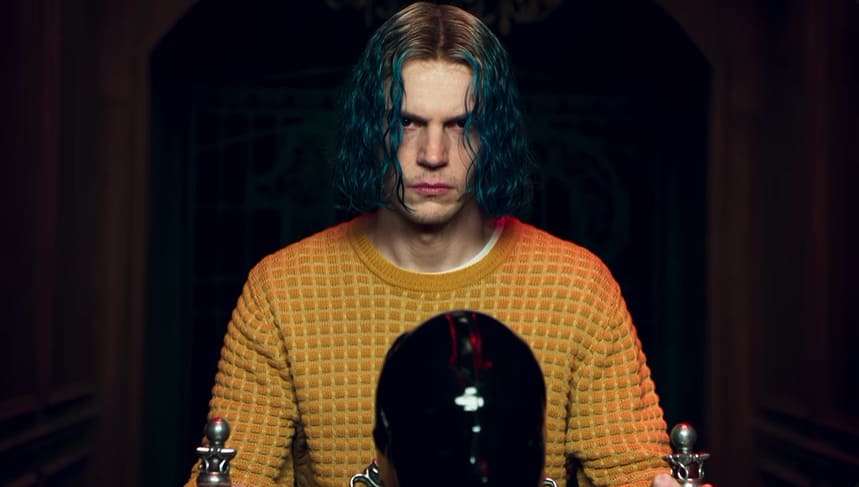
What happens when Tate Langdon meets other versions of Evan Peters?
What does Sister Jude think of the world after everything she endured?
Does Lana Winters investigate the crossover like a journalist, or is she dragged into the supernatural nightmare herself?
Does Twisty the Clown remain a monster, or is he simply another symptom of something much larger?
These aren’t small questions, and the fact that AHS has enough established characters to ask them is both ridiculous and impressive.
Season 13 Could Be AHS’s Biggest Gamble Yet
There’s something strangely fitting about Season 13 becoming the season where American Horror Story finally embraces everything it has become.
This franchise has spent years creating mythology, abandoning it, revisiting it, contradicting it, and then connecting it back together when nobody expected it.
Now Murphy appears to be saying: Fine. You wanted everything connected? Here you go.
That’s bold.
It could also be a disaster.
A crossover this ambitious can collapse under its own mythology. Too many characters means less time for individual stories. Too many callbacks can turn drama into trivia. Too much nostalgia can make a supposedly terrifying season feel like a convention panel with better production design.
But there’s still something incredibly exciting about the possibility.
For more than a decade, fans have been asking what would happen if all these worlds truly collided.
Now we’re apparently getting the answer.
And if Season 13 really does bring together the witches, ghosts, killers, demons, survivors, monsters, and tragic figures of the AHS universe, I’m absolutely watching.
Not because I expect Ryan Murphy to make everything perfectly coherent.
I expect chaos. I expect fan service. I expect at least one completely insane twist that makes me question why I ever thought the previous twelve seasons were complicated.
Most importantly, I want the show to remember why these characters became iconic in the first place.
If Season 13 can give them meaningful stories while delivering the enormous crossover fans have been waiting for, it could become the most entertaining experiment American Horror Story has ever attempted.
And if it completely falls apart?
Well, that’s also very, very AHS.