The Love Hypothesis Movie Changes: Every Character Cut and Backstory Shift Explained
Okay, so I finally sat down and watched Prime Video’s The Love Hypothesis adaptation, and I have Thoughts™. Like, the kind of thoughts you need to type out at 1 a.m. because your group chat is officially tired of hearing about Olive and Adam. Claire Scanlon directed this one, Lili Reinhart plays Olive Smith, Tom Bateman is our resident grumpy-genius Adam Carlsen, and overall? It’s a solid watch. But if you came to this movie fresh off a book hangover like I did, there’s one absence that’s going to nag at you through the entire runtime.
Where. Is. Holden.
Why Did Olive Kiss Adam in The Love Hypothesis Movie? The Real Reason Explained
The Holden-Shaped Hole in This Movie
If you’ve read Ali Hazelwood’s 2021 novel (and if you’re reading this, you probably have), you know Holden Rodriguez isn’t some throwaway side character. He’s Adam’s friend. One of maybe three people on the planet who can crack a joke at Adam’s expense and live to tell about it. He’s a fellow tenured Stanford professor who gets to see the version of Adam that isn’t terrifying freshmen during office hours.
The movie just… doesn’t have him. At all.
And look, I get why on a technical level. Reinhart herself has explained in interviews that you can’t cram every subplot from a novel into a two-hour movie without turning the whole thing into narrative soup. Fair enough. But cutting Holden isn’t just trimming some extra material. It’s removing one of the only windows we had into Adam as a person who has friends, gets teased, and exists outside of his own head.
Without Holden, early-movie Adam reads as much more of a walking icicle than the novel ever intended. We’re stuck relying almost entirely on Olive slowly and painstakingly chipping away at that ice to prove there’s a heart underneath it. And sure, that’s the entire point of the romance, but it hits differently without Holden’s warmth acting as a counterweight.
In the book, Adam isn’t simply the intimidating professor who eventually falls for Olive. His friendships give us little cracks in the armor before Olive ever gets close enough to create them herself. Those moments matter because they tell us that Adam has a life beyond the central romance. The movie loses some of that texture.
So Who’s Doing Holden’s Job Now?
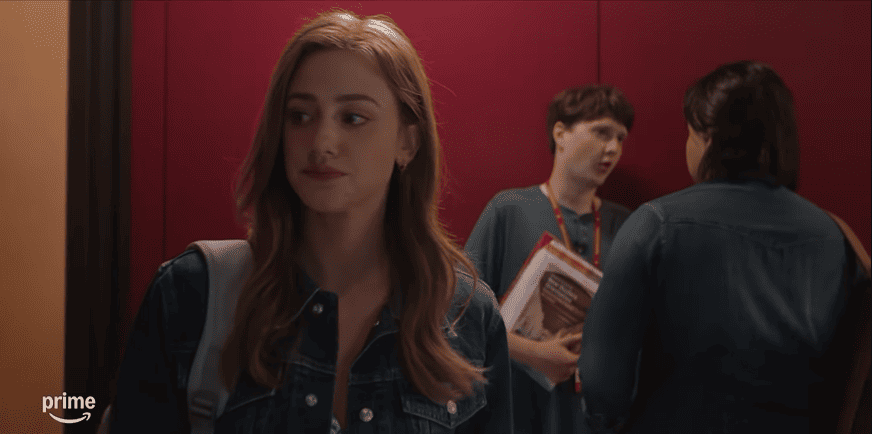
Here’s the thing about cutting a character who actually mattered to the story: their job doesn’t magically disappear. Somebody else has to pick up the pieces. In this case, Anh Pham, played by Rachel Marsh, and Malcolm, played by Jaboukie Young-White, basically inherit a huge chunk of Holden’s workload.
Think about what Holden did in the book:
- He provided office gossip and comic relief.
- He helped push the fake-dating plan forward when Adam needed a shove.
- He gave readers another reason to trust Adam beyond what Olive saw through her own perspective.
Now compare that with what Anh and Malcolm are doing on screen, and the overlap becomes pretty obvious. They’re carrying a lot of the social energy that Holden would have brought into the adaptation.
And honestly? They pull it off.
The movie stays laser-focused on Olive’s world instead of splitting its attention between multiple separate friend groups. That keeps the pacing surprisingly snappy, and there’s very little dead weight. For a romantic comedy trying to squeeze a full novel into a feature-length runtime, that’s a smart choice.
But there is a trade-off. Adam’s professional life feels emptier than it does in the book. His world revolves almost entirely around Olive and the central conflict, whereas the novel gives him more connections outside the romance. I’ve seen plenty of fans notice that exact difference, and I completely understand why.
The Academic World Got the Trim Treatment Too
Holden wasn’t the only casualty of the adaptation process. The book builds a dense, almost suffocating academic ecosystem around Olive’s PhD life. There are grad students, department politics, lab relationships, professors, colleagues, and all those little details that make the university setting feel like an actual workplace rather than a pretty backdrop for a romance.
The movie collapses most of that into a much tighter circle.
Honestly? This is one cut I’m much less angry about.
It gives Jeremy, played by Nicholas Duvernay, actual room to breathe instead of letting him disappear into a sea of supporting characters. It also means that nearly every recognizable face on screen has a clear purpose in the Olive and Adam storyline. That’s smart filmmaking, especially when the movie has to keep its central romance moving.
The Tom Benton storyline, including the predatory Harvard professor plot, still lands. It just arrives faster and with fewer moving parts surrounding it. The book has more time to let that storyline simmer and make the academic environment feel increasingly uncomfortable. The movie has to get to the point, and it does.
The Third Act Takes a Sharp Left Turn
This is where the adaptation makes one of its boldest changes.
In the book, the breakup is Olive’s decision, forced by Tom Benton’s blackmail, and the emotional fallout stretches across a genuinely agonizing stretch of chapters. It’s messy, painful, and very much part of the slow-burn rhythm that defines the novel.
The movie flips the situation.
Adam is the one who ends things, and the reason isn’t blackmail. Instead, the conflict comes from a misunderstanding about Olive potentially moving to Boston.
That’s a real structural change, not just a lazy shortcut. And surprisingly, I think it works better for a two-hour movie. The film doesn’t have enough runtime to reproduce every layer of the book’s breakup storyline without completely throwing the pacing off a cliff. By changing the source of the conflict, the adaptation creates a cleaner emotional crisis that can be resolved within the movie’s structure.
But, once again, the missing Holden becomes noticeable.
There’s nobody there to talk Adam down. Nobody is around to give him an outside perspective. Nobody gets to look at the situation and basically tell him, ‘Adam, my guy, what are you doing?’
The conflict stays almost entirely locked between the two leads. That makes the breakup more immediate and melodramatic, but it also removes some of the nuance the book gets from Adam having people around him who actually know him.
Book vs. Movie: The Biggest Relationship Changes
| Book Version | Movie Version |
|---|---|
| Olive ends the fake relationship because of the blackmail situation. | Adam ends the relationship after a misunderstanding involving Olive’s possible move to Boston. |
| Holden provides Adam with emotional and social support. | There is no direct equivalent to Holden’s role. |
| The tension unfolds gradually across a longer slow-burn structure. | The conflict is condensed to fit the feature-length runtime. |
Is It a Betrayal or Just… Evolution?
Here’s my honest take: I miss Holden.
I think the movie is quietly colder without him, and I don’t think that’s just a nitpick for book fans who want every single character preserved. Holden changes how we understand Adam. He gives us evidence that Adam is capable of friendship, humor, loyalty, and normal human interaction before Olive comes along and starts dismantling all his defenses.
Take Holden away, and Adam becomes more mysterious, more isolated, and arguably more intimidating. That can work for the movie’s version of the character, but it changes the emotional balance of the story.
At the same time, I can’t pretend the movie doesn’t work.
Reinhart and Bateman have genuine chemistry. The pacing rarely drags. The central romance gets the overwhelming majority of the screen time, exactly where it needs to be, and the ending still delivers that satisfying ‘yes, Professor Olive Smith, we made it’ payoff that fans showed up for.
That’s the frustrating part about adaptations. Every decision solves one problem while creating another. Add every supporting character from the novel and suddenly the movie is overcrowded. Remove them and suddenly longtime readers are sitting there wondering why Adam seems to have approximately zero friends.
What the Movie Gains by Cutting Holden
It’s easy to focus on what disappears when an adaptation cuts a beloved character, but there are legitimate reasons for the decision. A movie has a very different storytelling rhythm from a novel. Characters who can occupy dozens of pages in a book may have only a handful of useful scenes once the story is translated to the screen.
By cutting Holden, the adaptation can keep its attention on Olive and Adam. The fake-dating setup moves faster, the supporting cast remains manageable, and the movie doesn’t have to stop every few minutes to explain another relationship from Adam’s professional life.
There’s also a practical benefit: Anh and Malcolm become more important to the story. Instead of spreading the emotional and comedic workload across a massive ensemble, the movie consolidates it. That gives the supporting characters who remain on screen more to do.
From a filmmaking perspective, I understand the logic.
From a fan perspective, I’m still staring at the screen asking where Holden went.
The Real Cost of the Adaptation
The biggest difference isn’t actually that one character was removed. It’s what that removal does to Adam.
The novel gives us several ways to understand him. Olive provides one perspective, obviously, but Holden gives us another. Their friendship tells us that Adam’s intimidating exterior isn’t the entire story. When Holden jokes with him or challenges him, we get to see Adam respond in ways that don’t involve romantic tension.
The movie doesn’t have that luxury. Almost every important emotional beat involving Adam eventually loops back to Olive.
That makes the romance more concentrated, but it also makes Adam’s transformation feel more dependent on the relationship. In the book, Olive discovers a man who already has a life, friendships, frustrations, and connections. In the movie, she sometimes feels like the person who has to unlock the entire character by herself.
That’s a subtle distinction, but for anyone who loved the book, it’s probably going to be one of the things that sticks with you after the credits.
So, Do I Think the Holden Cut Ruins The Love Hypothesis?
No. Not even close.
But do I think the movie would have benefited from having Holden around? Absolutely.
The adaptation makes several changes that are understandable once you consider the limitations of a feature-length romance. Some of them even improve the movie’s pacing. The problem is that Holden wasn’t just another name on a character list. He helped define Adam’s world, and removing him changes the way the audience experiences Adam before the romance takes over.
That’s why this particular omission bothers me more than some of the other changes.
I’m not asking for a three-hour director’s cut where every grad student gets a subplot and every page of Ali Hazelwood’s novel gets recreated shot for shot. Please, no. The movie made the right call by trimming the academic ecosystem and keeping the story focused.
But Holden? Yeah. I still want him.
Adaptations always cost something. This one just happens to cost us Holden Rodriguez, and honestly? I’m still not over it.