The Vvaan Movie Goddess Identity Revealed: Force of the Forrest (2026) Deep Dive and Mythological Breakdown
Okay, I need to talk about this movie because my group chat has not stopped buzzing since the trailers dropped. ‘The Vvaan: Force of the Forrest’ (2026) is the kind of folk-horror that makes you want to text everyone you know at 1am going ‘WAIT DID YOU CATCH THE TIGER SYMBOLISM.’ Directed by Deepak Kumar Mishra and written by Arunabh Kumar, this is Balaji Motion Pictures and TVF’s first big supernatural swing together, and the internet has basically turned into a mythology decoding lab since the first teaser hit.
The question everyone’s been screaming into the void? Who — or what — is the goddess hiding in that forest.
Grab a chai. Let’s actually get into it.
The Vvaan Ending Explained: Decoding The Mythology, Climax, and Divine Justice of The Folk Thriller
This Isn’t Made-Up Horror — There’s a Real Temple Behind This
Here’s what genuinely got me: this isn’t some writers’-room fantasy pulled from nowhere. The whole premise traces back to a real, 400-year-old shrine — the Maa Van Devi Temple in Bihta, near Patna, Bihar. There’s an actual sacred stone icon (a ‘pind’) swallowed up by dense forest, and locals have followed one unbreakable rule for generations: nobody goes into those woods after sunset. Not ‘shouldn’t.’ Doesn’t.
Writer Arunabh Kumar reportedly spent months talking to village priests and elders to get the texture of this taboo right, and honestly, you can feel that research in every frame. This is why the film hits different from your average Western horror flick — it’s not built on jump-scare mechanics, it’s built on something people actually believe.
The Setup: A Skeptic Walks Into the One Forest He Was Told Not To
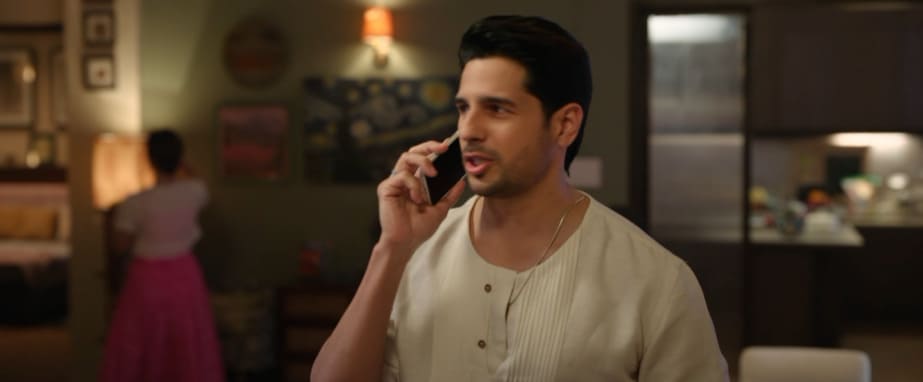
The plot itself is classic ‘arrogance meets ancient consequence.’ Sidharth Malhotra plays a city guy — rational to a fault, the type who calls every family tradition superstition. He travels with his wife (Tamannaah Bhatia) to her home village for Chhath Puja, and despite warnings from a stacked supporting cast (Sunil Grover, Shweta Tiwari, Anup Soni — all clearly having a blast), he does the one thing you never do in a folk-horror movie: he walks into the forbidden forest at night because he simply doesn’t believe.
Reader, he should have believed.
That single act cracks a centuries-old seal and wakes something enormous.
Alright, The Big Reveal: Who Is She?
Based on the film’s full visual and narrative language, the goddess is Vvaan Devi, also referred to as Maa Van Devi — a primordial embodiment of Prakriti (Nature) and Shakti (divine feminine force). Mishra leans hard into classic Durga/Chandi iconography for her design, and once you clock the references, you can’t unsee them:
| Symbol | What It’s Telling Us |
|---|---|
| The Trishul (trident) | Malhotra’s character isn’t just fighting — he’s being handed a divine weapon, becoming the goddess’s chosen instrument. |
| The Tiger | Durga’s traditional vahana (vehicle), carved into forest ruins and stalking the trailer footage — a marker of raw dominion over the wild. |
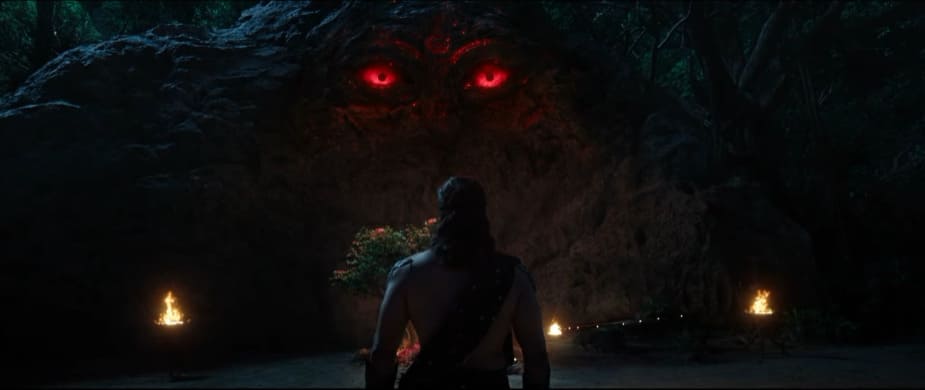
| Glowing red eyes on stone idols | Her Ugra form — the wrathful aspect, not a gentle nature spirit but an active cosmic enforcer. |
That third one is the detail Reddit threads keep circling back to. This isn’t a protective forest fairy. She’s a judge, and the forest was always her courtroom.
What The Goddess Actually Represents
What makes Vvaan Devi more interesting than a standard supernatural monster is that she doesn’t seem to exist simply to scare people. Her presence is tied to the idea of nature having its own authority, rules, and consequences. The forbidden forest isn’t merely a spooky location where bad things happen; it functions almost like sacred territory that humans have forgotten how to respect.
That makes the mythology much more important to the story. The goddess represents the force that maintains the boundary between the human world and everything that exists beyond it. Once that boundary is broken, the resulting horror isn’t random. It’s the consequence of disturbing a balance that was already there long before the characters arrived.
Tanmal’s Character Is Doing More Than It Looks Like
Here’s the part I think is genuinely clever writing: the trailer shows her walking through the same terrifying woods holding a diya, completely calm, while her husband is falling apart. That’s not just a cute contrast shot.
Her character carries a bloodline connection to the shrine’s original guardians — she’s the human anchor between the village and the goddess. He becomes the physical weapon; she’s the spiritual thread that actually keeps the whole thing from collapsing into chaos. Some fan theories are even reading her as a quiet, earthly echo of the goddess herself, gently steering her husband toward what he’s about to become. I’m not saying they’re wrong.
The Real Villains Aren’t What You’d Expect
The forest’s night-time ban wasn’t there to keep humans out for tradition’s sake — it was keeping something else in. Enter the Bhuttakas: chaotic, ancient entities described as older than night itself. When Malhotra’s character breaches the boundary, he doesn’t just anger a goddess — he lets these things loose. Vvaan Devi doesn’t wake up to punish the village. She wakes up because balance just got broken, and someone has to fix it.
That distinction matters. If the goddess were simply another creature hunting the characters, the whole mythology would feel much more familiar. Instead, the story appears to position her against the entities that emerge from the broken boundary. The humans are caught somewhere in the middle, forced to understand rules they previously dismissed as superstition.
Why This Is Landing So Hard Outside India
American horror fans who fell for ‘Midsommar’ or ‘The Witch’ because of their thick, specific folklore are going to feel right at home here. ‘The Vvaan’ skips the haunted-house playbook entirely and goes straight for something rarer: a mythology that actually exists, dressed in modern VFX. It’s also wild seeing Mishra pivot from the grounded comedy of ‘Panchayat’ to this — and the shift works, especially with a score stacked with Vishal Mishra, Amit Trivedi, Tanishk Bagchi, and Sam C.S. all contributing.
What really makes the premise stand out is that the supernatural isn’t separated from everyday life. Chhath Puja, village traditions, family history, sacred spaces, and local beliefs are all part of the same world as the monsters and supernatural imagery. That gives the horror a sense of place that a generic fictional mythology simply can’t replicate.
The Tiger Symbolism Might Be The Biggest Clue
If you’re watching the trailers again, keep your eyes on the tiger imagery. In the context of Durga iconography, the animal isn’t just there because tigers look terrifying. It reinforces the idea that Vvaan Devi has authority over the wilderness itself.
The repeated appearance of the tiger alongside ancient carvings, the forest, and the goddess imagery creates a visual language that keeps pointing back to the same idea: humans are entering a domain that isn’t theirs. That’s also why the trident matters. The weapon isn’t just a cool fantasy prop. It connects the protagonist directly to the divine mythology that he’s spent so much of the story dismissing.
What I Think The Movie Is Really Saying
At its core, this is a film about what happens when modern arrogance collides with something ancient that was never asking for permission. It’s rooted in a real temple, a real 400-year-old rule, and it respects that history enough to let the horror breathe instead of rushing it. If you’ve been craving folk-horror with actual mythological weight behind it, this is the one to watch.
And honestly, that’s probably why the goddess reveal sticks with me. Vvaan Devi isn’t scary simply because she looks monstrous or supernatural. She’s scary because the movie treats her as something that existed before the characters understood her, before the rules made sense to them, and before anyone thought they could challenge them.
That’s the kind of horror that gets under your skin. You can forget a jump scare five minutes later. A forest with a centuries-old rule, a goddess watching from the darkness, and a protagonist realizing that maybe the villagers weren’t being superstitious after all? Yeah. That stays with you.