Weredog Raww Personality in Forgotten Island (2026): A Deep Dive into DreamWorks Newest Fan-Favorite
I went into Forgotten Island expecting to like the talking dog. I did not expect to be emotionally wrecked by him. Raww is the loud, chaotic weredog in DreamWorks’ 2026 animated adventure, and he turned out to be the character I can’t stop thinking about, and clearly I’m not the only one.
Quick Setup: What Is Forgotten Island?
The movie comes from Joel Crawford and Januel Mercado, the duo behind Puss in Boots: The Last Wish. If that film’s look and heart got you, you already know what these two can do.
The story is set in the 1990s. Two teenage best friends, Jo and Raissa, stumble through a mystical portal and land on Nakali, a magical island soaked in Philippine mythology and folklore. Nakali is gorgeous and dangerous, and it slowly eats the memories of anyone stuck there. So the clock is ticking, and the girls are literally racing to leave before they forget each other.
That’s the emotional spine of the film. But the supporting cast of mythological creatures is where things get fun, and one of them hijacked the internet.
Forgotten Island 2026 Animated Movie Characters List: Full Voice Cast and Folklore Guide
Meet Raww: Centuries Old, Zero Chill
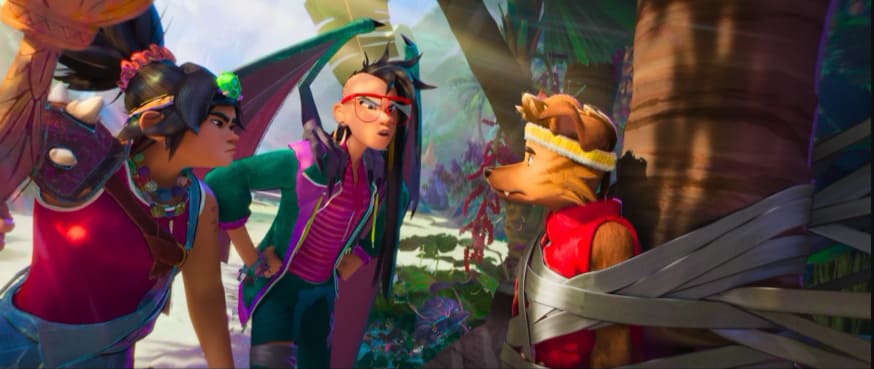
Raww is voiced by Dave Franco, and he’s the film’s deuteragonist, so he’s much more than a sidekick who shows up for one-liners. He’s a well-meaning, hapless weredog with brown fur, big brown eyes, a bright red vest, a yellow headband and blue shorts. It’s a very 90s look and I love it.
Some details make him stand out:
- He’s hundreds of years old. According to Crawford, Raww has lived on Nakali for centuries.
- He’s the only one of his kind. No other weredogs, no family, and his origins stay mysterious.
- He’s a weredog, not a werewolf. The Philippines has no native wolf population, so the filmmakers swapped the classic European monster for something that actually fits the setting. Smart, and it makes him feel like he belongs in this world instead of being dropped in from somewhere else.
He shares the island with creatures like the duwende, the tiyanak and the terrifying, body-splitting Manananggal, and even in that lineup he’s the odd one out.
The Part Where He Ruins Everything (Lovingly)
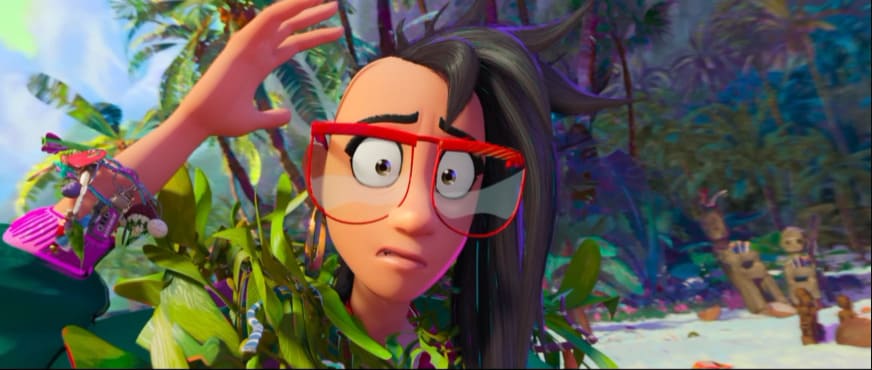
Raww’s default setting is ‘enthusiastic disaster.’ The second Jo and Raissa land on Nakali, terrified and lost, he appoints himself their guide. Is he qualified? Absolutely not. He misreads danger, trips over his own paws, and comes up with plans that make things worse. One of his suggestions sends the trio toward a Kapre village and changes their whole route across the island.
But he’s never malicious, and that’s why it works. Every mistake comes from wanting to help too badly. He’s the friend who shows up at your door with a truck when you needed a hand, and somehow breaks the truck. You can’t stay mad at that.
Wild Pack, Baby!
If I had to pick one word for Raww, it’s loyal. Once he decides Jo and Raissa are his, that’s it. He calls the group the Wild Pack, and the marketing leaned hard on his slogans, like ‘Wild Pack, baby!’ and his signature yell, ‘Wapoosh!’, which he throws out whenever he’s hyping everyone up or launching into something reckless.
The loyalty isn’t just talk, though. When the Manananggal shows up and things get genuinely scary, Raww doesn’t run. He throws himself between danger and his friends. The chaotic goofball act covers a brave protector, and the movie lets you see both at once.
Where It Gets Sad (You Were Warned)
Trailers sold Raww as pure comic relief, and honestly, some fans worried he’d be the annoying loud sidekick. The finished film goes somewhere much deeper.
Think about his situation. He’s spent centuries as the only weredog on the island, which means centuries of loneliness. Under all that relentless positivity is a fear of being left behind. Crawford and Mercado wrote him that way on purpose. He keeps secrets, not to trick anybody, but because he’s terrified that if he seems useless, uncool or flawed, the pack will walk away and he’ll be back to isolation.
Reviewers have pointed out that other creatures on Nakali hide secrets too, but Raww’s hit hardest for me. It reframes every joke he made earlier. The over-the-top energy reads differently once you know what it’s protecting.
Dave Franco Is the Secret Weapon
I need to give Franco his flowers. He has great comedic timing and a talent for frantic, high-strung characters, and here he uses both. The fast-talking, panicky delivery fits Raww’s rubbery, expressive animation perfectly. Then he drops into a quiet, shaky whisper when Raww finally opens up, and it lands because you’ve spent the whole movie hearing him at full volume.
Behind-the-scenes clips from Universal show the animators borrowing Franco’s real facial expressions and physical comedy. You can feel that in the final result. Raww looks spontaneous, like he might do something unscripted at any second.
Why the Cultural Angle Matters
Here’s a quick look at what the weredog choice adds:
| Element | What DreamWorks Did | Why It Works |
|---|---|---|
| Creature type | Weredog instead of werewolf | Fits the Philippines, where wolves aren’t native |
| Personality | Sympathetic, flawed, emotional | Folklore monsters are often flat or purely villainous |
| Setting | 1990s vibes on a mythic island | Mixes nostalgia with ancient stories |
| Audience hook | A familiar archetype, reworked | Global viewers get a way into Philippine mythology |
Taking something recognizable and rooting it in a specific culture is smart storytelling. Raww feels familiar enough to grab you right away, and then the film gently pulls you into a much bigger mythological world. People have praised the movie for how it handles Filipino culture, and Raww is a big part of that.
What the Internet Thinks
Before release, Reddit, TikTok and YouTube were buzzing with theories. Was Raww a cursed human? A native magical being of Nakali? Fans wrote whole threads about it. Some early trailer reactions were split, since a few people feared the ‘loud sidekick’ trap.
After the full film came out, that mostly flipped. Raww is now a proper fan favorite. Fan artists on Pinterest and Instagram keep drawing his 90s outfit, and YouTube essays call his arc a masterclass in balancing big comedy with real vulnerability. People compare him to the great supporting characters of past animated classics, and I think that’s fair.
The Weredog Who Won
Raww works because he’s several things at once: a disaster, a hero, a joke machine and a lonely kid inside a centuries-old body. The movie is a story about friendship and memory, and he’s the character who shows what it costs to be afraid of losing people, and what it looks like when someone decides to stay.
Crawford and Mercado gave him room to be weird and messy, Franco gave him a voice you’ll be quoting for weeks, and the animators gave him a face that sells every emotion. If you’ve been on the fence about Forgotten Island, go for Jo and Raissa, and stay for the weredog. Wapoosh!