Why Did San and Ashitaka Separate at the End of Princess Mononoke? The Ending Explained
Let’s get one thing out of the way immediately: if you finished Princess Mononoke waiting for San and Ashitaka to walk off into the sunset together, you missed the movie. I say that with love, because I used to feel exactly the same way the first time I watched it. It’s a natural instinct — two people fight side by side, save each other’s lives, clearly love one another, and Western storytelling has trained us for decades to expect that this ends in a kiss and a shared home. Miyazaki looks at that expectation and quietly refuses to give it to you. And once you sit with the ending for more than five minutes, you realize refusing it was the only honest move available.
Two People, Two Impossible Worlds
Here’s the thing people skip past: San and Ashitaka aren’t just two individuals with a scheduling conflict. They’re walking embodiments of two systems that are actively, violently incompatible at the point the film ends.
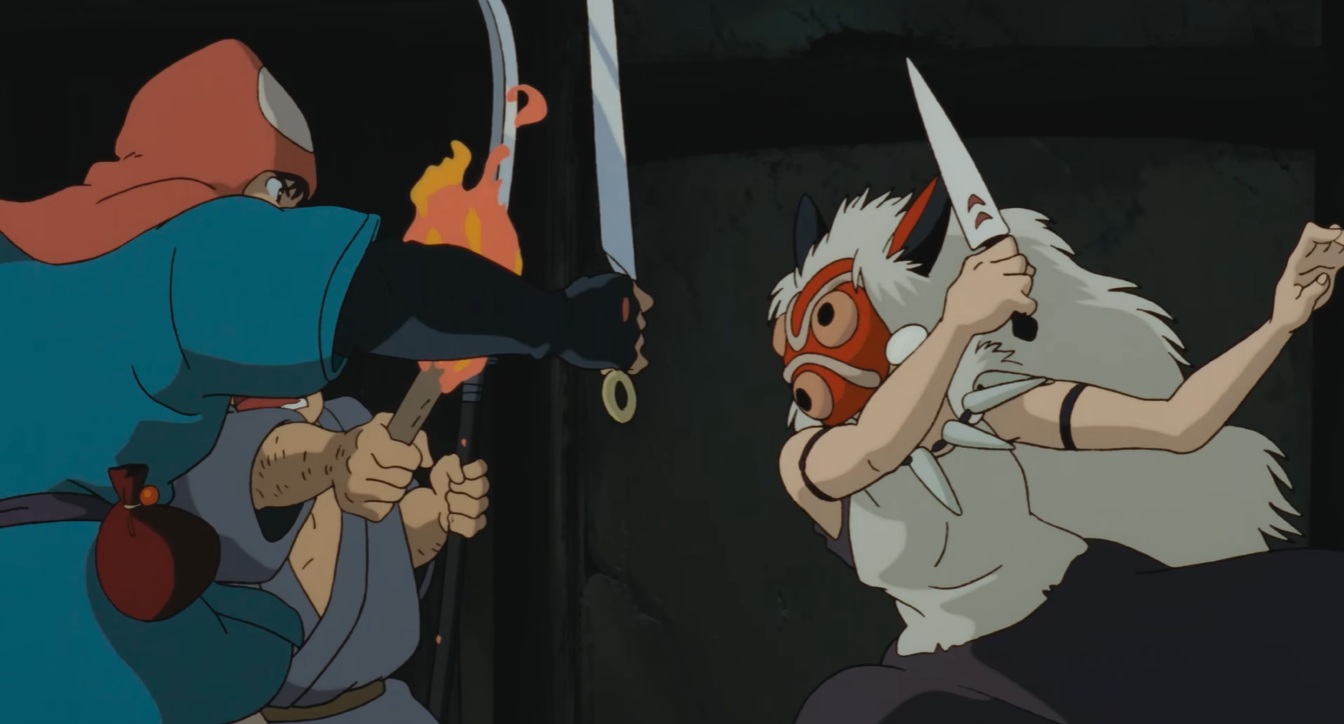
- San was raised by wolves after her own parents abandoned her to Moro. She doesn’t identify as human. She’s watched her adoptive mother die, watched a boar god rot into madness, and watched the Forest Spirit get decapitated by the very species she was born into. Her hatred isn’t a personality quirk — it’s the accumulated weight of real, specific loss.
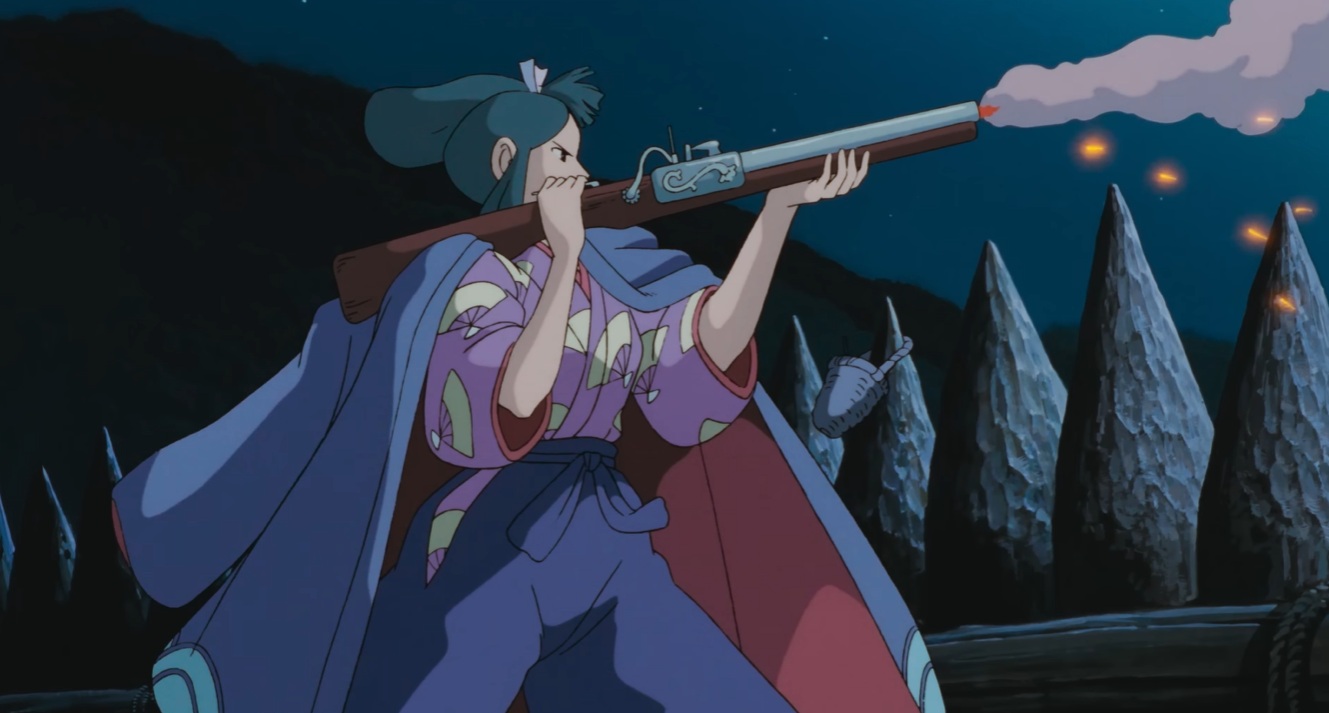
- Ashitaka carries a curse from an iron bullet, forged by humans, that’s slowly killing him. And yet his entire arc is about refusing to let that poison his judgment. He wants to see the world “with eyes unclouded by hate” — which, notably, is a standard San hasn’t reached and isn’t required to reach.
Putting these two in the same house at the end of the film wouldn’t be romantic. It would be a lie. It would ask one of them to swallow their entire worldview for the sake of a tidy conclusion, and Miyazaki — to his enormous credit — just doesn’t do that.
San’s Refusal Isn’t Coldness, It’s Integrity
The line that actually matters here is simple and devastating: “I love you, Ashitaka. But I cannot forgive what humans have done.”
People love to read this as tragic. I don’t. I think it’s one of the most mature statements in any animated film, period. San isn’t punishing Ashitaka. She’s telling him the truth: love and forgiveness are not the same transaction, and she’s not willing to fake the second one just to keep the first one comfortable for everyone watching.
And practically speaking — the forest needs her. It’s not metaphorical. The old gods are dead. What’s left is a fragile, newly-sprouting wilderness with no protector unless she stays. Asking her to abandon that post to live in Iron Town would be asking her to abandon the only family she has left, twice.
Ashitaka Isn’t “Choosing Humanity Over Her” — He’s Doing the Harder Job
This is where I think a lot of casual takes get lazy. People frame Ashitaka staying in Iron Town as some kind of consolation prize, like he “settled.” That’s backwards. Staying is the harder, less glamorous choice.
Lady Eboshi just lost her arm and watched her town nearly get erased by a dying god’s rage. She’s promised to rebuild “a better town” — but promises made in the wreckage of a catastrophe have a short shelf life once survival pressure creeps back in. Ashitaka staying isn’t romantic defeat. It’s him taking a job nobody else in Iron Town is equipped to do: being the person Eboshi and her people actually respect enough to listen to when they’re tempted to cut corners with the forest again.
He’s not choosing Iron Town over San. He’s choosing to make sure Iron Town becomes a place San doesn’t have to keep fighting against.
| San | Ashitaka | |
|---|---|---|
| Loyalty | The forest, the wolves, Moro’s memory | |
| Wound | Generational — grief and rage at what’s already been destroyed | |
| Role after the ending | Guardian of the regrowing wilderness | |
| What staying together would cost them | Her identity and duty to the forest | |
| Loyalty | Humanity’s future, but not its past sins | |
| Wound | Literal — a curse that’s actively killing him | |
| Role after the ending | Conscience embedded inside human civilization | |
| What staying together would cost them | His ability to reform Iron Town from within |
The Closing Dialogue Is the Real Ending, Not a Kiss
Ashitaka’s actual response to San’s confession is the part I think gets underrated: “You live in the forest, and I will live in Iron Town. I will come to see you, and we will ride together on Yakkul.”
That’s not heartbreak. That’s a negotiated, adult relationship with clear terms, and it’s honestly kind of refreshing to watch. Nobody’s pretending the distance doesn’t exist. Nobody’s demanding the other person cross it permanently. They just… agree to keep showing up for each other across it. If more romantic subplots in animation had this level of emotional honesty, I’d have a lot fewer complaints about the genre.
Where to Watch Princess Mononoke 4K Online: Streaming Options for September 2026
Miyazaki Wasn’t Interested in a Utopia, and Neither Should You Be
Go read Miyazaki’s interviews around this film and a pattern jumps out fast: he genuinely does not believe humans and nature can fully merge into one harmonious blob. Civilization consumes resources. Nature resists being consumed. That friction doesn’t resolve — it gets managed, carefully, forever, by people willing to stand in the gap.
That’s what San and Ashitaka become. Not a couple. Guardians of a boundary line.
Compare this to something like Pocahontas or Avatar, where the human protagonist eventually just defects entirely to the indigenous/natural side and the story treats that as the moral finish line. It’s a satisfying fantasy, but it’s a fantasy. It pretends the human world can simply be abandoned. Princess Mononoke is more clear-eyed than that. Humans aren’t going anywhere. The forest can’t be allowed to disappear either. Someone has to hold both truths at once, and that someone can’t live in only one location.
The Last Kodama Says It Better Than I Can
The final shot — a single Kodama appearing and tilting its head in that familiar clicking rhythm — is Miyazaki’s quiet confirmation that the forest is coming back, slowly, imperfectly, without the old gods watching over it anymore. If San and Ashitaka had physically merged their lives at that moment, the image would tip too far toward one side of the story. Keeping them apart is what keeps the ecosystem — literal and narrative — in balance.
I’ll be honest: the first time I saw this ending, part of me wanted the easier version. I wanted the reunion, the shared home, the neat bow. But the more times I’ve rewatched it, the more I think a version where they stayed together would have aged terribly — it would have felt like a betrayal of everything the film spent two hours establishing about how messy, unresolved, and ongoing this kind of conflict actually is.
San and Ashitaka don’t lose each other at the end of Princess Mononoke. They just refuse to pretend that love automatically erases duty, grief, or identity. That refusal is exactly why the ending still hits, decades later.