Hope 2026 Ending Explained: Cosmic Horror, Alien Lore, and That Wild Twist Revealed
Warning: Major spoilers for Hope (2026) below.
There are movies that leave you thinking about the story on the drive home. Then there are movies like Hope, which leave you wondering whether you watched the same film as everyone sitting around you.
Na Hong-jin’s Hope starts out looking like a grimy rural monster thriller. A dead bull. Strange tracks. A nervous village. Hunters heading into the woods with guns because, naturally, nobody has a better plan. It feels dirty, tense, strangely funny at times, and very much in the director’s wheelhouse.
And then the movie pulls the rug out from underneath you.
By the final act, this isn’t really a story about villagers fighting a creature anymore. It’s about aliens, a catastrophic mothership disaster, a dead child, and the horrifying possibility that the universe itself can be rewritten. That tonal jump is going to infuriate some viewers. Personally, I found it completely insane — but also fascinating.
So what actually happens at the end of Hope? Who are the aliens? Why does Empress Jor say “Change fate”? And was Sung-ki really dead?
How the Disaster in Hope Actually Begins
The first part of Hope deliberately keeps things small.
In the isolated border settlement of Hopohang, an enormous bull is discovered dead in the fields. The wounds don’t look normal. The tracks don’t look normal either. But because the village sits near the DMZ, the locals reach for the most familiar explanation they can find: a dangerous animal must have wandered into the area.
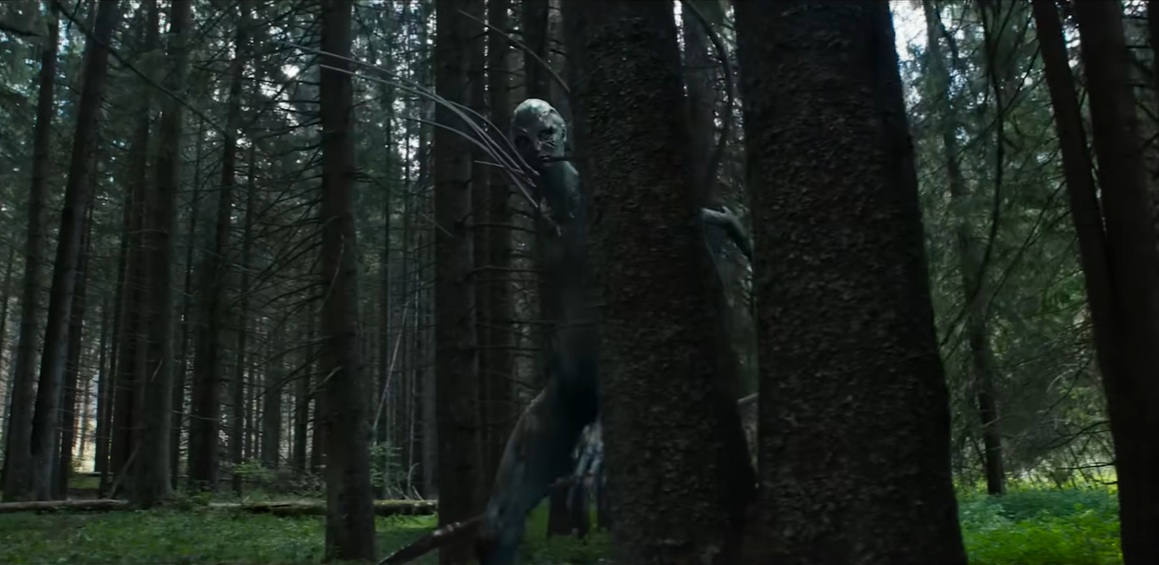
That assumption is exactly what makes the early sections work so well. Nobody immediately thinks, “Maybe an extraterrestrial organism has landed nearby.” They think tiger. They think poacher. They think escaped animal.
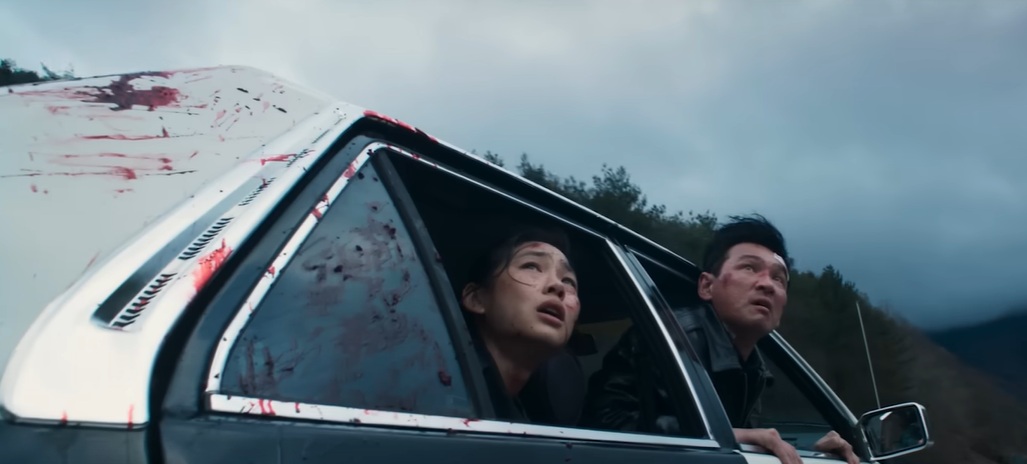
Bum-seok, the exhausted police chief played by Hwang Jung-min, is trying to keep everyone calm while his inexperienced deputy Sung-ae, played by Hoyeon, attempts to understand what they’re dealing with. Unfortunately, their options are shrinking by the minute.
A huge wildfire elsewhere has pulled emergency resources away from the region. Communications have been disrupted. Military support isn’t coming quickly enough. Hopohang is effectively cut off.
Then the locals decide to solve the problem themselves.
Sung-ki, played by Zo In-sung, leads a group of hunters into the surrounding mountains. They expect to find an animal. Instead, they discover something that doesn’t belong on Earth.
The “Monster” Was Never the Real Villain
This is where Hope starts playing a nasty little trick on its audience.
The creature is absolutely dangerous. It attacks people, destroys everything around it, and becomes the center of a rapidly escalating nightmare. But the villagers don’t understand its behavior, and the creature doesn’t understand them either.
Every shot fired creates another reaction. Every attempt to defend the village makes the situation worse.
That’s one of the parts of the movie I actually appreciate. The humans aren’t heroes facing an evil monster in some clean-cut battle between good and bad. They’re frightened people reacting to something they can’t comprehend.
And the alien isn’t simply a traditional movie monster, either.
The creature turns out to be a young extraterrestrial. The villagers have essentially stumbled into a situation they don’t understand and then responded with escalating violence. What looks like a monster hunt from the human perspective is something much more tragic from the alien perspective.
That distinction becomes crucial once the mothership arrives.
The Hope Ending Explained: What Happens to the Mothership?
The final act is where Hope goes completely off the rails.
Just when it seems like the survivors are finally reaching the end of their nightmare, an enormous alien spacecraft appears above the Korean peninsula. For a few seconds, the movie seems ready to become a full-scale invasion story.
But that’s not what happens.
The mothership suffers a catastrophic explosion from within. Instead of attacking Earth, the massive vessel begins breaking apart in the sky.
The destruction is enormous. Debris rains down. The survivors are caught in the middle of something so far beyond their understanding that their original fight suddenly seems almost absurdly small.
And then Na Hong-jin makes his biggest gamble: the movie leaves the humans behind.
The camera shifts toward the alien figures aboard the ship, introducing Empress Jor, played by Alicia Vikander, and Maveillo, played by Michael Fassbender.
They aren’t presented like conventional invading monsters. They’re powerful, intelligent beings with their own hierarchy, history, and emotional stakes.
Then comes the reveal that completely changes the earlier events.
The creature hunted by the villagers was their son.
Suddenly, everything we’ve watched takes on a different meaning.
The dead animal wasn’t simply the beginning of a monster movie. The creature wasn’t merely an invader. The humans weren’t stopping an alien attack. They were unknowingly killing the child of beings operating on a scale that makes humanity look microscopic.
What Does “Change Fate” Mean?
This is easily the most controversial moment in the entire movie.
After witnessing the death of their son and the destruction of their vessel, Empress Jor tells Maveillo two words:
“Change fate.”
That’s it.
No explanation. No giant exposition dump. No friendly alien sitting down to explain the rules of the universe.
And honestly, I think that makes the scene more disturbing.
The most straightforward interpretation is that Jor wants to alter the sequence of events that led to her son’s death. The aliens may possess technology or abilities connected to time, reality, or some kind of cosmic manipulation. If they can genuinely change fate, then the events we just watched may not be permanent.
That opens a much darker possibility.
Earth may not simply be facing an alien invasion. It may be sitting inside a timeline that an alien civilization is about to rewrite.
And humanity might not even be important enough to receive a warning.
Why the Cosmic Horror Twist Works — and Why It Might Not
I’ve seen the argument that the ending is either brilliant or ridiculous, with very little room between those positions. I understand both sides.
The first two-thirds of Hope are intimate. The danger feels physical. You can almost smell the smoke, mud, blood, and sweat. The village feels like a real place occupied by ordinary people making increasingly desperate decisions.
Then suddenly we’re watching gigantic extraterrestrial beings and a collapsing spaceship.
That’s a massive tonal shift.
Some viewers will absolutely hate it. I wouldn’t blame them. If you came for the grounded tension of the opening, the final act can feel like somebody swapped the movie halfway through.
But there’s another way to read it.
The entire point may be to make the audience experience the same loss of perspective as the characters.
For most of the film, we assume the villagers’ struggle is the central event. We care about Sung-ae. We worry about Bum-seok. We follow Sung-ki into the mountains. We want these people to survive.
Then the movie reveals that, from the perspective of an interstellar civilization, none of this was the main event.
It was an accident.
Humanity wasn’t the enemy. Humanity wasn’t even the protagonist of the larger story.
That is a pretty brutal form of cosmic horror.
The Meaning Behind the Title “Hope”
The title becomes considerably more cynical once you reach the ending.
On the surface, Hope refers to Hopohang, the remote settlement where the story begins. But the emotional meaning of the word becomes increasingly uncomfortable.
The villagers survive because they have hope. They believe help will arrive. They believe the creature can be killed. They believe the situation can still be controlled.
But those assumptions also contribute to their downfall.
They keep trying to force an understandable explanation onto something that isn’t understandable.
That’s where the title starts feeling almost cruel. Hope can keep people alive, but it can also encourage them to believe they have control when they don’t.
And by the final scene, the people who possess the greatest ability to change the future aren’t the humans at all.
It’s the aliens.
Did Sung-ki Survive? The Post-Credits Scene Explained
Yes. Sung-ki survives.
Earlier in the movie, the character appears to meet his end during a chaotic escape sequence. After his vehicle crashes, the film gives viewers every reason to assume that Zo In-sung’s character is finished.
Then the post-credits scene pulls him back into the story.
Sung-ki emerges from the wreckage, badly injured but alive. He struggles to stand and eventually limps away from the destroyed highway.
It’s a surprisingly simple scene after everything that has happened.
And that’s exactly why it works.
For a few seconds, Hope stops talking about cosmic civilizations and reality manipulation. It returns to one exhausted human being who simply refuses to stay down.
Whether that scene is meant to set up a sequel is another question. It certainly leaves the door open. Sung-ki now knows that the “creature” was something much bigger than anyone imagined, assuming he fully understands what happened at all.
Where to Watch Hope (2026 Movie): Streaming Status, Theater Showtimes, and Digital Release Dates
The Biggest Hope Fan Theory: The Aliens Were Already Running
One of the more interesting theories surrounding the ending suggests that Jor and Maveillo weren’t arriving on Earth to invade it in the first place.
They may have been escaping something.
According to this interpretation, the mothership was already damaged or fleeing from a larger conflict before reaching Earth. The young alien could have ended up on the planet because of that crisis rather than as part of a deliberate invasion.
If that’s true, the villagers weren’t just unlucky.
They were standing in the middle of a cosmic conflict that had nothing to do with them.
The mothership’s unexplained internal destruction gives this theory some fuel, although the movie intentionally refuses to confirm it. And I suspect that’s going to keep Reddit theorists busy for quite a while.
| Mystery | What the Ending Suggests |
|---|---|
| The Creature | The young son of Jor and Maveillo |
| The Mothership | Destroyed by a catastrophic internal event |
| “Change Fate” | A possible attempt to alter time or reality |
| Humanity | Mostly irrelevant to the larger alien conflict |
| Sung-ki | Alive after the post-credits scene |
Is Hope 2 Happening?
This is where things get frustrating.
The ending clearly gives Na Hong-jin plenty of material for another story. There’s an alien civilization we barely understand, a possible conflict beyond Earth, a mysterious ability to alter fate, and at least one human survivor who has witnessed the impossible.
That’s basically an entire sequel sitting on the table.
But the film doesn’t necessarily need one.
In fact, the ambiguity may be the whole point. A sequel explaining exactly what “Change fate” means could destroy some of the mystery that makes the ending so unsettling.
Personally, I’m torn. I would absolutely watch a sequel because the alien mythology is too strange to ignore. At the same time, I like that Hope refuses to hand us a neat explanation. Not every mystery needs a wiki page explaining every alien rule.
What makes the ending stick is the uncomfortable idea that the characters we’ve spent hours following may have been caught in a story much larger than themselves.
They thought they were fighting for their village.
They thought they were fighting a monster.
They thought survival was the goal.
Then the universe basically tells them that none of those assumptions mattered.
That’s a pretty savage final note. And whether you think Na Hong-jin pulled off the gamble or pushed the movie too far, it’s difficult to argue that Hope plays it safe. The ending is messy, strange, ambitious and deliberately uncomfortable.
I’m still not sure I love it.
But I definitely haven’t stopped thinking about it.