Not a Stranger Ending Explained: Nazli’s Real Motives and the Twisted Nanny Plot Explained
Okay, I need to talk about this show because I am still not over it. Not a Stranger (or Seni Tanıyorum if you watched it the way it was originally meant to be watched) snuck up on me. I went in expecting a fairly standard “creepy nanny” thriller — the kind where you clock the twist by episode three and just coast to the finale waiting for everyone else to catch up. That is not what happened here. This show plays a much longer, much dirtier game, and by the finale I was genuinely rattled.
So let’s break down what actually happened, why Nazlı did what she did, and why that final shot of Funda standing outside in the dark, watching her own life happen without her, is one of the most quietly devastating endings I’ve seen in a domestic thriller in years.
The Setup Nobody Should Have Fallen For (But Totally Would Have)
Here’s the thing that makes this show work: Funda is not stupid, and Nazlı is not sloppy. Funda is a painter who put her career on pause for motherhood and is drowning — exhausted, isolated, desperate to get back to her canvas before an exhibition swallows her whole life. She doesn’t trust random childcare. Fair enough, honestly.
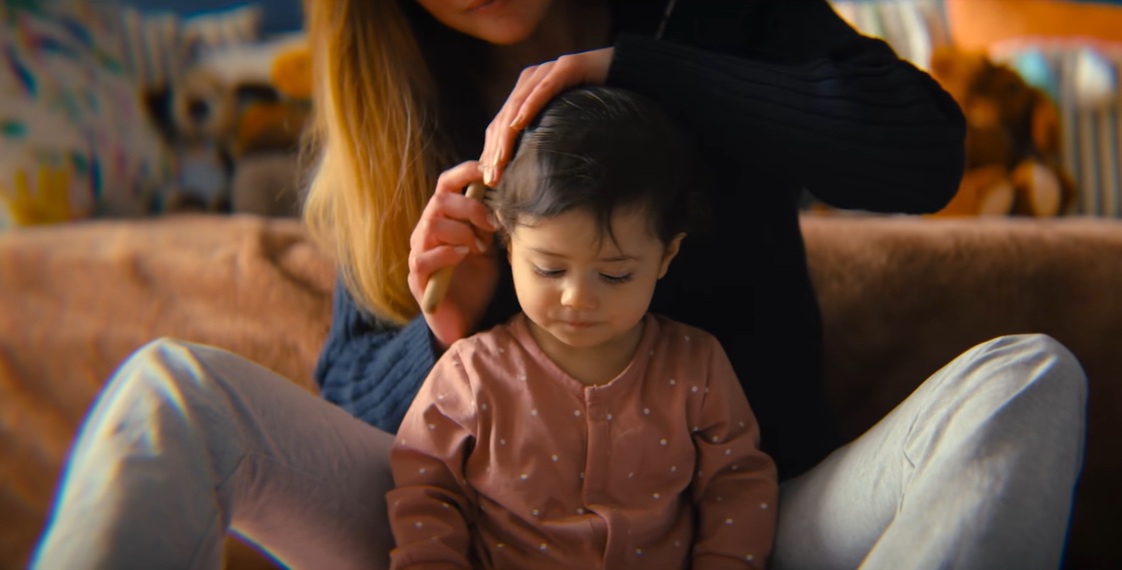
Then Nazlı shows up as Mavi’s swimming instructor, hired for a completely mundane reason (the baby has a stiff neck), and she’s just… perfect. Patient. Calm. Weirdly good at soothing a screaming infant in a way that makes every exhausted parent watching this show want to hire her immediately.
That’s the trap. And it’s a good one, because Nazlı isn’t improvising. She built a profile on this family before she ever got near the pool. This wasn’t opportunity — it was surveillance dressed up as kindness.
The Slow Poison Plot Is Genuinely Nasty
This is where the show stopped being a “watch with one eye on your phone” experience for me and became appointment viewing. Once Nazlı moves in, Funda starts falling apart — migraines, memory lapses, mood swings, dizzy spells. Everyone, including her own husband Ilker, assumes it’s a brutal case of late-onset postpartum breakdown.
It’s not. It’s chemistry.
Nazlı used to be a nurse, and she used that training the way a chess grandmaster uses a board — not to hurt Funda catastrophically, but to make her doubt her own mind. A few of the mechanics worth flagging:
- The substance never risked killing Funda — it was engineered to mimic psychiatric collapse, not physical illness, which is exactly why nobody suspected foul play
- Every symptom got “gently corrected” by Nazlı in real time, reinforcing the idea that Funda was unraveling on her own
- The timing always lined up with Funda’s existing insecurities, so the gaslighting felt like confirmation, not manipulation
That last point is what makes it so upsetting to watch. Nazlı wasn’t inventing Funda’s fear of being a bad mother. She was farming it.
So Why Did She Do It? Three Motives, One Very Broken Woman
The internet lost its mind trying to untangle Nazlı’s “why,” and honestly, the writers earned that reaction — this isn’t a one-note villain with a single trauma flashback. It’s layered, and each layer makes her scarier, not more sympathetic.

1. There’s history with Ilker that predates the job entirely.
Kemal — Funda’s friend, and clearly someone with his own complicated feelings for her — starts digging and finds out Nazlı’s connection to this household goes back way further than her employment contract. This wasn’t a random nanny gig. It was a target selected with intent, rooted in something between Nazlı and Ilker’s past.
2. She lost a pregnancy, and it broke something in her permanently.
This is the part that almost made me feel for her, and I think that’s exactly the point. Nazlı had a miscarriage, and instead of grieving and moving forward, she developed an obsessive fixation on the idea of a perfect family. When she met Mavi, she didn’t see a client’s baby. She saw the child she believes she was owed. Her love for Mavi is real. That’s what makes it monstrous instead of just sad.
3. She didn’t want to hurt Funda — she wanted to replace her.
This is the actual endgame, and it’s chillingly simple: isolate, destabilize, then step into the empty space. Every symptom Funda developed created an opening for Nazlı to be the calm one, the reliable one, the person Ilker could lean on. It’s not chaos for chaos’s sake. It’s a hostile takeover of somebody’s entire life, executed with the patience of someone who has clearly been planning this for a very long time.
Quick Motive Breakdown
| Motive | What It Reveals | Why It’s Effective Storytelling |
|---|---|---|
| Hidden history with Ilker | Nazlı’s targeting was deliberate, not opportunistic | Removes the “random encounter” excuse |
| Lost pregnancy / obsession with Mavi | Genuine grief twisted into entitlement | Makes her disturbingly human |
| Total identity displacement | The endgame was never sabotage — it was substitution | Reframes the whole season as a slow-motion coup |
The Ending: A Gut-Punch, Not a Resolution
Here’s what genuinely impressed me: the show refuses to give you catharsis. Funda, convinced she’s actively dangerous to her own daughter, checks herself into a psychiatric facility. And within days — days — she starts recovering. Because of course she does. She wasn’t sick. She was being poisoned, and removing her from the house removed the poison.
Meanwhile, back at the house, Nazlı has already slid into the role of devoted mother and partner so smoothly that from the outside, nothing looks wrong. Ilker and Nazlı are functioning as a family unit with Mavi while Funda is locked away getting “treatment” for a condition that doesn’t exist.
Kemal eventually connects the dots and confronts Nazlı directly, and she doesn’t even flinch. No denial, no shame — she just tells him, flatly, that she belongs in that house. That single scene tells you everything about who this character is. She’s not delusional. She knows exactly what she did, and she’d do it again.
And then that final shot. Funda, quietly discharged and back at the property, standing outside in the dark, watching Nazlı, Ilker, and Mavi laugh together through the window — locked out of her own home, her own marriage, her own daughter’s childhood. Kemal, meanwhile, is sitting on the truth, hesitating because exposing Nazlı might also expose his own feelings for Funda.
No resolution. No justice. Just a woman standing in the cold, looking at the life that was engineered out from under her.
My Honest Take
What makes Not a Stranger stand out from the flood of “evil caregiver” thrillers is that it never lets Nazlı be cartoonish. She’s not cackling in the shadows — she’s making tea, singing lullabies, and genuinely believing she’s the better mother. That’s so much scarier than a stock psycho-nanny archetype, because it forces you to sit with the idea that the most dangerous person in a house is often the one everyone else is grateful for.
If the show gets a second season — and that cliffhanger is basically begging for one — I want to see the fallout hit Kemal just as hard as it hits Nazlí. He’s not innocent in this either, and his hesitation at the end might end up being just as damaging as anything Nazlı did with a teaspoon of poison.