Monster Season 4 Finale Recap & Breakdown: The Lizzie Borden Story Ending Explained
I need to talk about what Ryan Murphy just did to us, because I finished the Monster: The Lizzie Borden Story finale two days ago and I’m still turning it over in my head. If you’ve made it through all eight episodes, you already know this season doesn’t hand you closure — it hands you a mirror and dares you to keep looking.
For anyone catching up: this is the fourth chapter of Murphy and Ian Brennan’s Netflix true-crime anthology, the same team behind the Dahmer season, the Menendez brothers’ story, and last year’s Ed Gein installment. This time the axe swings toward 1892 Fall River, Massachusetts, with Ella Beatty stepping into the role of Lizzie Borden and Vicky Krieps playing Bridget “Maggie” Sullivan, the family’s maid. And yes, before we go further — Sarah Paulson shows up as Aileen Wuornos, and it’s exactly as strange as it sounds.
What Actually Happens in Episode 8
The finale doesn’t linger on the murders anymore. That ship has sailed — episodes one through seven already dragged us through every gruesome detail of Andrew Borden’s (Charlie Hunnam) and Abby Borden’s (Rebecca Hall) deaths, plus the media frenzy of the trial. Episode 8 picks up right after the jury says “not guilty,” and honestly, that’s where the show gets interesting to me.
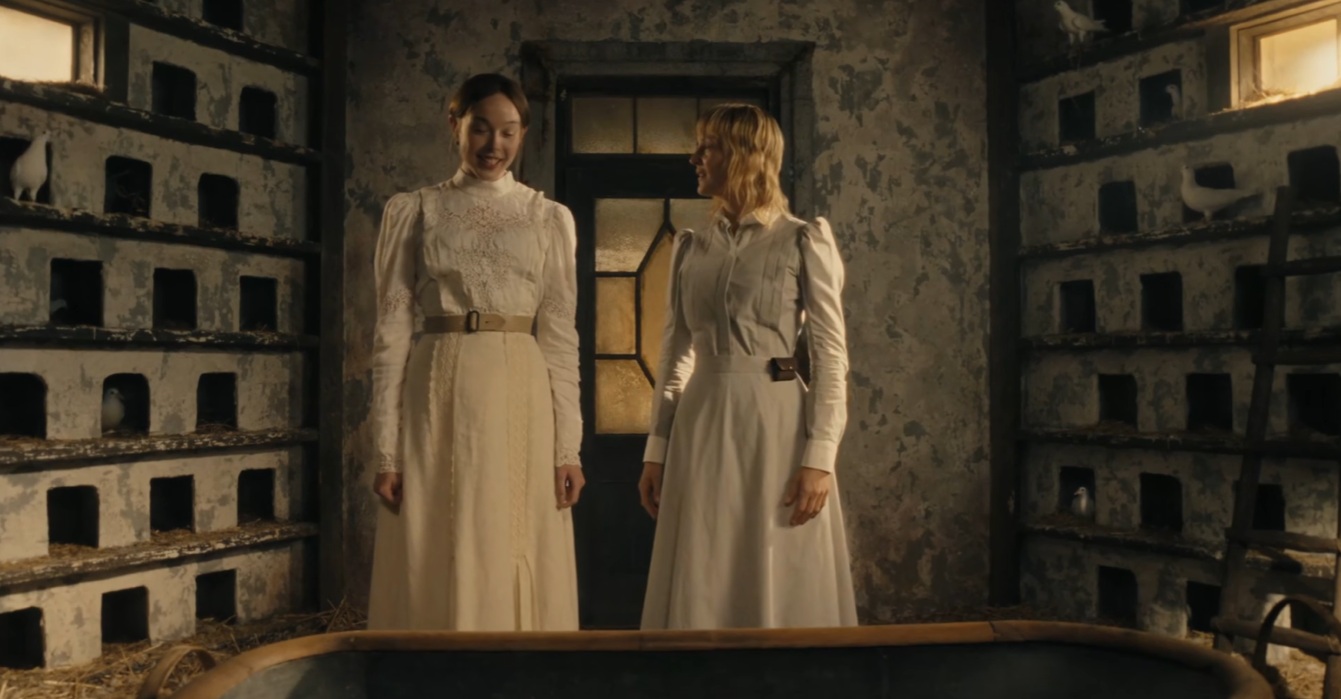
Legally, Lizzie walks free. Socially? Fall River has already convicted her. Murphy leans hard into that contrast, and it works. When Lizzie comes home with her sister Emma (Billie Lourd), the town has clearly rendered its own verdict, and no courtroom acquittal is going to undo it.
From there, the episode fast-forwards through years of quiet unraveling:
- Lizzie buys a lavish Victorian mansion called Maplecroft, chasing a life of theater, culture, and reinvention.
- She grows close to actress Nance O’Neil (Jessica Barden), a relationship that scandalizes the town all over again.
- Emma becomes more and more distant, unable to stomach her sister’s behavior or the unanswered questions hanging over the house.
The scene that actually got me was the confrontation between the sisters — Emma finally demanding the truth about August 4th, 1892, and Lizzie just… staring. No confession, no denial, nothing. Emma packs her things and leaves for good. It’s quiet, but it hits harder than any of the axe scenes from earlier episodes.
Then the show takes a swing I’m still not fully sure worked: it jumps to 1927, Lizzie’s final days, feverish and hallucinating, and blurs the line between her fading mind and something much stranger.
The Sarah Paulson Scene, Explained
Here’s the part everyone’s arguing about online. In Lizzie’s deathbed hallucination, a young Aileen Wuornos appears at her side. These two women never existed in the same century, let alone the same room — so this obviously isn’t a history lesson. It’s a thesis statement.
The scene functions as a conversation between two eras of the same archetype: the “violent woman” society loves to dissect and fear. Lizzie was suffocated by rigid Victorian expectations and a controlling father. Wuornos was chewed up by poverty, abuse, and institutional neglect nearly a century later. Different decades, different weapons, different outcomes — but Murphy and Brennan are clearly asking the same question about both of them: how much of what we call “monstrous” is actually just what happens when a woman is failed, over and over, by everyone around her?
I don’t think the scene is trying to excuse either of them. It reads more like a challenge aimed straight at the audience — asking why we’re so hungry to consume these stories in the first place.
Fact vs. Fiction: A Quick Breakdown
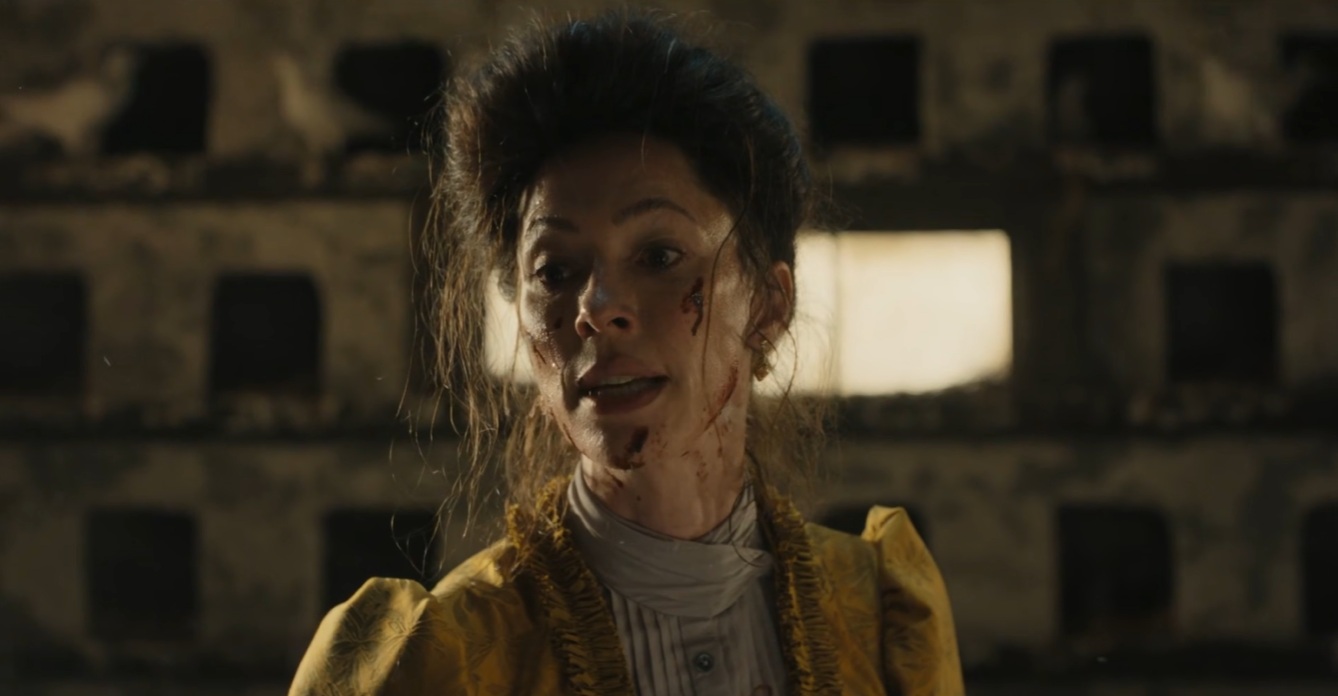
Since half of the internet is arguing about historical accuracy right now, here’s a cleaner look at what’s real and what’s dramatized:
| Historically Accurate | Creative Liberty |
|---|---|
| Lizzie was ostracized by Fall River even after acquittal — kids reportedly threw stones at Maplecroft | The entire hallucination sequence, obviously |
| Emma really did move out in 1905 and the sisters never reconciled | The show hints strongly at Lizzie’s guilt, when the real case is still officially unsolved |
| The relationship with Nance O’Neil was real and did fuel scandal | Alternative suspects (a third party, or Bridget herself) get almost no screen time |
That last point bugs me a little, if I’m honest. Part of what’s kept the Borden case alive for over a century is the uncertainty. This finale kind of shrugs that off in favor of a tidier emotional arc.
What the Internet Is Saying
I’ve spent way too much time scrolling r/television and r/MonsterNetflix threads this week, and the split in opinion is pretty clean:
Team “This Worked”:
- Ella Beatty’s performance is getting near-universal praise — people keep describing her as icy on the surface and fractured underneath, which honestly nails it.
- The cinematography during the Maplecroft years — all shadow and claustrophobic framing — is being called some of the strongest visual work in the franchise so far.
Team “It Lost Me”:
- A lot of true-crime fans feel the surrealist final act undercuts the tension the earlier episodes worked so hard to build.
- Some viewers are just tired of Murphy’s tendency to blend real tragedy with heightened, almost theatrical camp — a complaint that’s followed him since the Dahmer season.
Both camps have a point, honestly. I loved the ambition of the ending even while I understood why it frustrated people who wanted a straighter true-crime retelling.
Not a Stranger Ending Explained: Nazli’s Real Motives and the Twisted Nanny Plot Explained
Where This Leaves Season 4
Compared to the visceral horror of the Dahmer season or the courtroom-heavy drama of the Menendez chapter, this installment is the most experimental thing Murphy’s anthology has attempted yet. It’s less interested in “who did it” and more obsessed with what happens to a woman once the world decides it already knows the answer — verdict or no verdict.
The final image isn’t really about Lizzie Borden the murder suspect. It’s about Lizzie Borden the product — of a house, a town, a century, and a media machine that never let her go. And maybe that’s the real horror the finale is pointing at: sometimes the trial is just the beginning.