Unabomber Netflix 2026 Movie Spoilers, Ending Explained & Real Life Twists
There’s a particular kind of dread that sets in about twenty minutes into Unabomber, and it has nothing to do with the bombs. It’s the moment you realize this isn’t going to be another slick true-crime reenactment where a genius villain outsmarts bumbling agents for two hours. Janus Metz built something colder and more uncomfortable than that — a film that keeps asking whether Ted Kaczynski was born a monster or made into one, and refuses to let you off the hook with an easy answer.
I went in expecting a manhunt thriller. I came out thinking about a Harvard psychology lab.
Two Timelines, One Slow-Motion Trainwreck
The movie doesn’t tell its story in order, and honestly, that’s the smartest choice Metz makes. Instead of a straight chronological march from “brilliant kid” to “domestic terrorist,” the script (credited to Sam Chalsen and Nelson Greaves) cuts back and forth between:
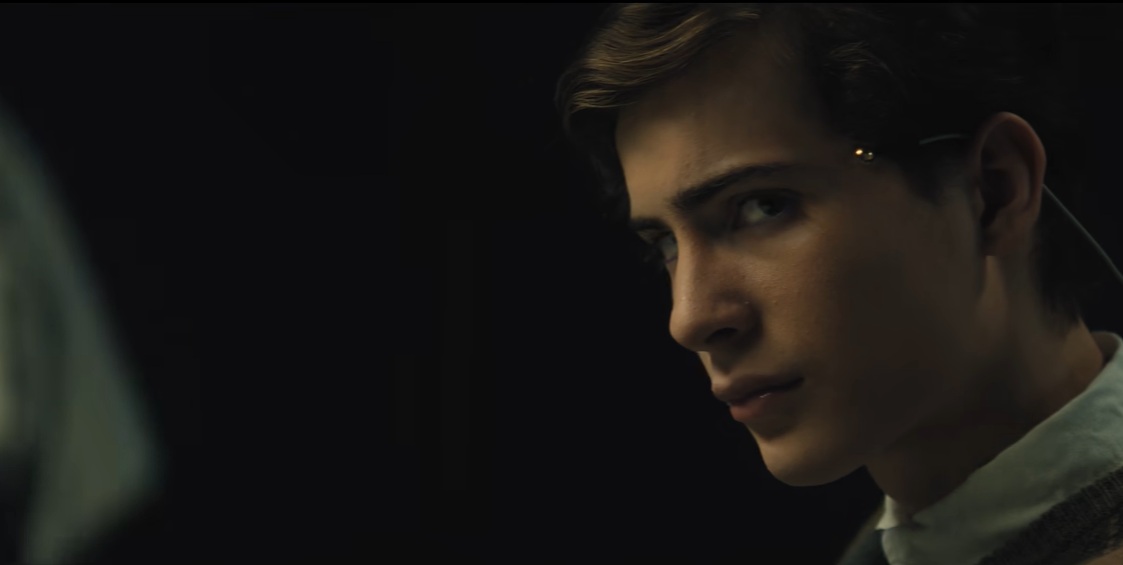
- 1958, Harvard University — a 16-year-old Kaczynski, played with unsettling stillness by Jacob Tremblay, navigating a campus where he’s academically ahead of everyone and socially light-years behind them.
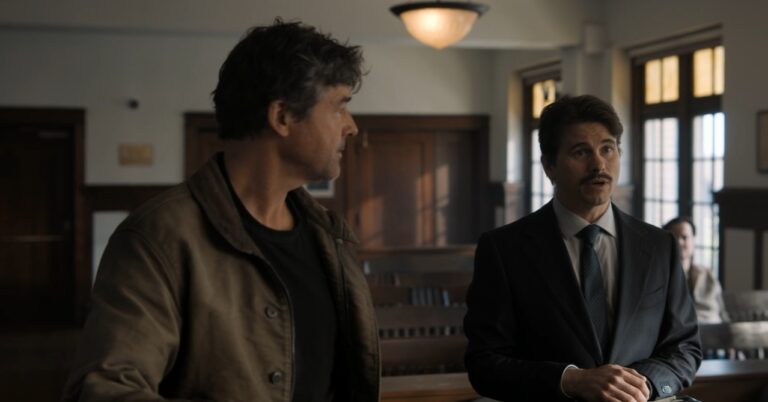
- 1995, the FBI task force — Agent Joanne Miller (Shailene Woodley) trying to convince a room full of skeptical superiors that the way to catch a bomber with zero forensic trace is to stop looking for fingerprints and start looking at sentences.
Here’s a rough breakdown of how the two threads stack up against each other:
| Harvard Timeline | FBI Timeline |
|---|---|
| Lead Character | Young Ted Kaczynski (Jacob Tremblay) |
| Central Figure | Dr. Henry Murray (Russell Crowe) |
| Weapon | Words, psychological pressure |
| What’s At Stake | Ted’s trust in institutions |
| Tone | Claustrophobic, intimate |
The genius of the structure is that it makes you complicit. You know how the Harvard scenes end before they even start — you know what this kid becomes — and that dread colors every “innocent” academic exercise with menace.
Russell Crowe’s Dr. Murray Is The Scariest Person In The Film (And He Never Raises His Voice)
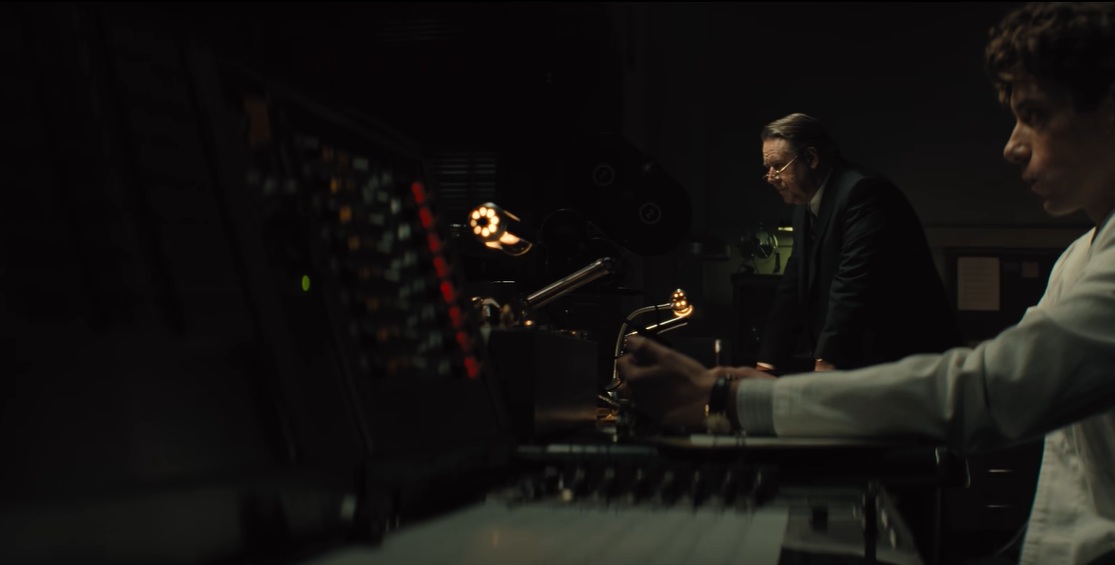
I want to talk about Dr. Henry Murray for a second, because Crowe plays him in a way that’s genuinely chilling — not villain-cackling chilling, but the quiet, credentialed kind of chilling that’s much harder to shake off.
The setup: Murray runs a study that asks undergrads to write down their most personal beliefs, hopes, and philosophies. Kaczynski, starved for any kind of intellectual recognition, writes an essay that’s basically his soul on paper. That’s the trap. The essays get collected, and then the real experiment begins:
- Kaczynski is wired up with electrodes to monitor his physiological stress responses
- He’s placed under a spotlight in a small, airless room
- A rotating cast of aggressive law students is brought in to tear his written beliefs apart, line by line, in front of him
- Murray watches from behind a two-way mirror, calmly taking notes on the boy’s unraveling
Watching this, I kept thinking about how the film is making an argument, not stating a fact. The real Kaczynski, in his own later writings, actually downplayed how much these sessions shaped him. But Unabomber doesn’t really care about that nuance — it builds its whole emotional case on the idea that a trusted mentor systematically humiliating a vulnerable teenager is the exact kind of wound that calcifies into ideology. Whether or not that’s historically airtight, dramatically it works, and it works because Crowe never plays Murray as evil. He plays him as curious. Which is somehow worse.
Shailene Woodley Gets The Harder Job
Here’s the thing nobody talks about with true-crime dramatizations: the investigator’s storyline is almost always the boring half. Not here.
Woodley’s Agent Miller isn’t chasing physical evidence because there basically isn’t any — no prints, no hair, no traceable parts in these meticulously hand-carved wooden bomb casings. So she pivots the entire task force toward something that sounds almost absurdly low-tech next to modern forensics: reading. Grammar quirks. Old-fashioned spelling choices. Philosophical fingerprints buried in a killer’s own words.
What sells this storyline isn’t the technique itself, it’s the internal battle Miller has to fight just to get anyone to take it seriously. There’s a real “nobody believes the woman with the unconventional theory” energy running through her scenes, and it pays off hard when she pushes for something that sounds borderline reckless on paper: publishing the killer’s 35,000-word manifesto in a national newspaper, on the theory that someone, somewhere, will recognize the voice behind it.
Spoiler: someone does.
The Ending — When A Brother Becomes The Star Witness
This is the part of the movie that genuinely got to me, and I don’t think that’s an accident.
David Kaczynski and his wife Linda Patrik read the published manifesto in Paris, Illinois, and something in David just breaks a little. He recognizes the phrasing. The odd turns of speech. The specific anti-industrial arguments that echo, almost word for word, letters his estranged brother Ted has been sending him for years from a shack in the Montana woods.
The film doesn’t rush this. It sits in David’s agony — the slow, sickening process of a man realizing he might have to turn his own brother in to the FBI. When he finally does, quietly, through an attorney, it sets up the movie’s most methodical stretch: Agent Miller cross-referencing Ted’s old personal letters against the manifesto’s language, building the linguistic case that gives the Bureau its search warrant.
The actual arrest is almost anticlimactic by design. No shootout, no standoff. Just forest rangers luring Kaczynski outside his own cabin under the pretense of a boundary dispute, and federal agents closing in the moment he steps through the door. After nearly two decades and the most expensive manhunt in FBI history, it ends in about fifteen seconds.
Inside The Cabin Is Where The Movie Really Lands Its Punch
The last sequence, wandering through Kaczynski’s actual 10×12 cabin, is where Metz’s direction is doing the most work. Journals. Chemical formulas. A fully assembled bomb sitting under the bed like it’s nothing. It’s staged less like a crime scene and more like a portrait of a mind that never left that Harvard interrogation room.
And that’s the final gut-punch: the movie cuts from a silent, uncooperative adult Kaczynski in an interrogation room straight back to teenage Ted, staring at Dr. Murray, vowing he’ll never let anyone control his mind again. It’s a promise he keeps in the worst possible way — by retreating from every institution, every relationship, every shred of human connection, until all that’s left in that cabin is the ideology.
The manhunt ends. The film makes it very clear the actual story never really does.
Tags: Unabomber, Netflix, Ted Kaczynski, True Crime, Movie Review
I Watched Netflix’s Unabomber So You Don’t Have to Cry Through It Blind — Full Spoiler Breakdown
Okay, let’s talk about this movie, because I have feelings. Janus Metz’s Unabomber dropped on Netflix and immediately turned into one of those films everyone’s whispering about — half true-crime obsession, half prestige psychological drama, and honestly? It earns the hype more than I expected going in. I’ll admit I clicked play rolling my eyes a little, bracing for another cash-grab true-crime cash-in. I was wrong, and I’m happy to say so.
Written by Sam Chalsen and Nelson Greaves, the film gives us Jacob Tremblay as a teenage Ted Kaczynski, Russell Crowe playing the deeply unsettling Harvard professor Henry Murray, and Shailene Woodley as FBI agent Joanne Miller. If you’re here, you’ve probably already seen it and you’re hunting for the details you missed, or you’re deciding whether it’s worth the two hours. Either way — spoilers ahead, obviously, and I’m not going to pretend this movie left me neutral.
The Structure: Two Timelines, One Gut Punch
Here’s what actually makes this movie work instead of feeling like a Wikipedia summary with better lighting: it refuses to tell the story in order. Instead of the usual “childhood → crime → capture” true-crime template, Unabomber braids two timelines together:
- 1958, Harvard — 16-year-old Ted (Tremblay), a math prodigy who is painfully isolated, gets pulled into a “psychological study” run by Professor Henry Murray and his colleague Christiana Morgan (Annabelle Wallis).
- Decades later — FBI agent Joanne Miller (Woodley) leads the hunt for a bomber who’s been terrorizing universities, airlines, and tech companies since 1978, with three people killed and 23 injured along the way.
The genius move here — and I mean that, this is genuinely clever writing — is that Miller doesn’t crack the case with forensics. She cracks it with language. She starts reading the 35,000-word manifesto, Industrial Society and Its Future, not as a rant, but as a fingerprint. The dialect, the syntax, the obsessive rhythm of the sentences all trace directly back to the Harvard years we’ve been watching the whole time. That’s not just a plot twist, that’s a thesis statement for the entire film: words are what convict him, and words are what broke him first.
The Harvard Scenes Are the Real Horror Movie
I need to be blunt: the Harvard sequences are the reason to watch this film, full stop. Everything else is well made, but this is where it earns its reputation.
Young Ted thinks he’s just having philosophical debates with fellow students. He is not. Murray — funded, disturbingly, under the umbrella of early MKUltra research — is running him through brutal psychological stress tests. Strapped into a chair, lights in his face, physiological responses monitored while an aggressive interrogator systematically demolishes his self-worth, his beliefs, everything. Watching Tremblay’s face during these scenes is genuinely uncomfortable in the best way a drama can be uncomfortable.
And then the film does something I didn’t see coming: Ted flips it.
He starts digging into Murray’s own cracks — his professional insecurity, his crumbling marriage, his shaky academic reputation — and reveals he’s been quietly writing to colleagues and administrators about the lab’s ethics violations. Murray loses it. Instead of owning any of it, he turns around and calls the teenager “unwell,” “delusional,” “psychotic.”
And here’s the part I actually appreciate as a viewer, rather than just tolerate: the film refuses to hand you an answer. Was Murray gaslighting a kid he’d already broken, purely to win one last round of the mind game? Or did he actually spot something real and dangerous forming in Kaczynski that early? Metz doesn’t tell you. You leave that scene arguing with yourself, which is exactly what good ambiguity should do.
The parting gift Ted leaves for Murray — a wrapped copy of Moby-Dick — ties back to a lecture Murray gives early in the film about obsessive, self-destructive pursuit. It’s a quiet, cold little detail, and it lands because you understand exactly what it means: Ted isn’t the whale anymore. He’s Ahab now.
Ending Explained — Why the Arrest Scene Hit Harder Than I Expected
By the time the two timelines converge on that cabin in Lincoln, Montana, you’d expect a tense standoff. You don’t get one. The arrest is quiet, almost anticlimactic on purpose — Kaczynski dragged out into daylight, physically frail, nothing like the myth of the untraceable domestic terrorist the country had built up in its head.
The emotional center of the ending, though, isn’t Kaczynski at all. It’s Miller. After years hunting a faceless threat, she doesn’t get triumph when she finally sees his face. She breaks down, because she’s no longer looking at a monster — she’s looking at the endpoint of a trauma that started in a Harvard lab decades earlier and radiated outward until it cost real people their lives. That’s a much harder note to end on than “justice is served,” and I respect the film for choosing it.
The closing text cards hit you with the facts, cold and fast:
| Real-Life Fact | Detail |
|---|---|
| Manhunt scale | Longest and most expensive manhunt in FBI history |
| Insanity defense | Kaczynski’s lawyers pushed for it; he rejected it himself |
| Plea deal | Guilty plea in 1998, life without parole, no public trial |
| Imprisonment | ADX Florence Supermax, later transferred to Butner, NC (2021) |
| Death | Suicide in his cell, June 2023, age 81, battling late-stage cancer |
That last line lands like a brick. No triumphant score, no redemption arc. Just a bleak, quiet fact dropped on screen.
Fact vs. Fiction — Where the Movie Bends the Truth
Look, this isn’t a documentary, and it doesn’t pretend to be. A few things worth knowing before you quote it at your next dinner party:
- Agent Joanne Miller is fictional — she’s a composite of multiple real FBI agents and profilers, most notably drawing from the real work of linguist James R. Fitzgerald, who genuinely helped crack the case through forensic linguistics.
- Henry Murray’s experiments are real, and they’re just as condemned by modern ethics boards as the film suggests — this isn’t dramatized exaggeration.
- The film is careful, almost deliberately so, not to say Harvard “caused” the bombings. It frames the abuse as fuel, not as an excuse, which I think is the correct and more responsible choice a lesser script wouldn’t have bothered making.
My Honest Take
Is it perfect? No — the pacing dips in the middle stretch of the FBI timeline, and a couple of side characters feel underwritten next to Crowe and Tremblay’s scenes, which are doing genuinely heavyweight work. But as a character study about how institutional cruelty can quietly manufacture a monster, it’s smarter and more restrained than I expected a Netflix true-crime drama to be. I went in ready to mock it. I left unsettled in the way only a film that respects its audience can manage.
If you’ve seen it — tell me: gaslighting or genuine diagnosis in that Harvard confrontation? I still can’t decide.