Why The Rivals of Amziah King Changes From Bluegrass Musical to Crime Thriller Explained
There are movies that change genres gradually, giving you plenty of warning. Then there is The Rivals of Amziah King, which basically looks you in the eye, lets a bluegrass tune play, hands you a jar of honey, and then kicks the door open to a crime thriller.
Honestly? I loved the nerve of it.
Andrew Patterson’s film is one of those movies that seems almost determined to make the audience uncomfortable with its own expectations. For roughly the first hour, it feels like a strange, warm Oklahoma folk tale about family, faith, music, bees, and a community held together by one very charismatic man. Then the entire emotional temperature drops.
The music disappears. The jokes dry up. The landscape suddenly feels threatening.
And Matthew McConaughey’s Amziah King — the person who seemed destined to carry this story from beginning to end — is gone.
That is the trick.
The genre change in The Rivals of Amziah King isn’t just there to surprise viewers. It changes what the entire first half means. Things that initially feel sweet become unsettling in retrospect, while Amziah’s folksy philosophy starts looking less like charming small-town wisdom and more like preparation for something much darker.
The Movie Basically Has Two Different Souls
The easiest way to describe The Rivals of Amziah King is as two movies sharing the same body.
The opening section is loose, musical, funny, and deliberately strange. Amziah is a beekeeper, a born-again Christian, a community figure, and the sort of guy who seems to know absolutely everyone in town.

McConaughey is perfectly cast here because he doesn’t play Amziah like a conventional inspirational father figure. There is something mischievous about him. He’s eccentric without becoming a caricature, and his optimism feels almost aggressively sincere.
The film leans into that personality.
There are bluegrass performances, church gatherings, local diners, pickup trucks, honey production, and long stretches where it feels as if Patterson simply wants us to hang around these people. The camera moves with them rather than constantly pushing the plot forward.
That relaxed rhythm matters.
Because once the movie turns dark, you realize Patterson wasn’t wasting time.
He was building a place worth losing.
The first half makes the Oklahoma community feel intimate enough that when violence finally enters the picture, it doesn’t feel like the plot has suddenly invented danger. It feels like someone has poisoned a place we already know.
Then Amziah Dies — And the Movie Loses Its Center
This is where the film makes its wildest move.
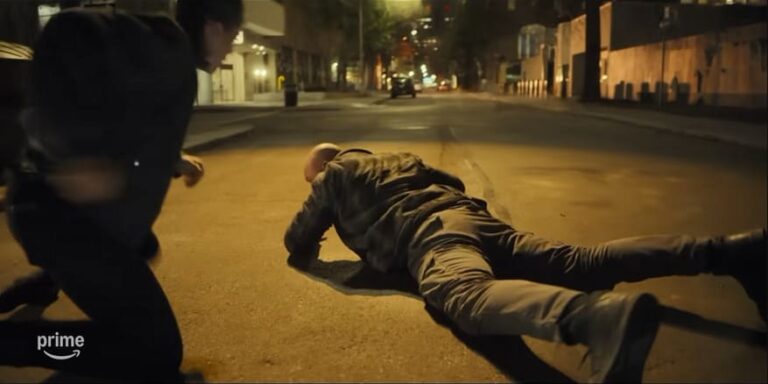
Amziah’s honey operation becomes entangled with a much uglier criminal world. His hives are stolen, and the shock contributes to his fatal heart attack.
That’s the moment when The Rivals of Amziah King effectively kills its own protagonist.
I can understand why some viewers would hate this choice.
You spend the first hour following Amziah. McConaughey dominates the movie. You get invested in his personality, his relationship with Kateri, his community, his worldview. And then Patterson essentially says: Okay, now watch what happens when he’s not here.
It’s a risky move.
For me, it’s also the reason the movie sticks.
Kateri, played by Angelina LookingGlass, suddenly inherits everything Amziah represented. She has the family connection, the damaged honey operation, the unresolved history, and now a reason to go looking for the people responsible.
But she isn’t Amziah.
That distinction drives the entire second half.
Kateri Doesn’t Need a Song. She Needs Answers.
The genre shift makes much more sense when you look at Kateri rather than Amziah.
Amziah sees possibility everywhere. Kateri has spent much of her life learning not to trust possibility.
Her history has made her more guarded, more observant, and much more prepared for confrontation. So when she becomes the center of the movie, Patterson changes the cinematic language around her.
The easygoing musical atmosphere starts disappearing.
The camera feels more watchful. Scenes become more tense. The rural landscape stops looking picturesque and starts looking isolated.

That’s a huge difference.
With Amziah, the same Oklahoma roads can feel like home.
With Kateri, they can feel like places where somebody could be watching you.
That is why I don’t think the movie’s genre transformation should be viewed as a random stunt. The filmmaking is following the characters. The movie stops being a musical because its emotional point of view has changed.
And that is much more interesting than simply saying, “The movie suddenly gets dark.”
The Honey Business Is Where the Crime Story Was Hiding
The smartest thing about the premise might be the honey itself.
At first, bees are practically a spiritual symbol.
Amziah sees the hive as a model for community. Thousands of individual creatures working together, each contributing to something larger. It’s exactly how he wants his town to function.
There is even a bizarrely beautiful sequence in which Amziah handles an enormous swarm of bees with almost supernatural calm.
It’s charming.
Then the movie starts talking about honey in a completely different way.
Money. Transportation. Theft. Barrels. Competition. Property.
Suddenly, this isn’t just a story about bees anymore.
The honey business becomes the bridge between Amziah’s idealistic world and the predatory one waiting outside it.
And that’s where the movie’s crime-thriller machinery really clicks into place.
The abandoned honey barrels worth hundreds of thousands of dollars aren’t simply a plot device. They reveal that the apparently sleepy rural economy has another side. Underneath the churches, diners, farms, and bluegrass sessions is a system where people can get very rich — or very hurt.
That’s when the arrival of bigger, more aggressive interests starts to feel inevitable.
The movie is essentially asking what happens when a community built around cooperation gets dragged into an economy based on exploitation.
Not exactly a cozy bee documentary.
Why the First Half Had to Be So Warm
This is the part I think gets overlooked when people complain about the tonal whiplash.
If Patterson had made the opening half darker, the second half wouldn’t hit nearly as hard.
The movie needs us to believe in Amziah’s world.
We need to enjoy the music.
We need to understand why people trust him.
We need to see Kateri reconnect with him.
We need to believe that this strange little community has something worth protecting.
Then Patterson takes it away.
That’s filmmaking built around contrast.
| First Half | Second Half |
|---|---|
| Bluegrass and folk music | Silence and tension |
| Community | Suspicion |
| Amziah’s optimism | Kateri’s survival instinct |
| Bees as cooperation | Honey as criminal economy |
| Warm rural life | Threat and violence |
| Character-driven storytelling | Investigation and revenge |
The contrast is almost brutal, but that’s the point.
If Amziah King had started as a crime thriller, the loss of Amziah would simply be a plot development.
Because the film spends so much time making us comfortable with him, his death becomes a rupture in the entire movie.
Andrew Patterson Is Clearly Having Fun With Genre
If you’ve seen The Vast of Night, Patterson’s approach here makes even more sense.
He’s never seemed particularly interested in making straightforward genre movies. The Vast of Night used long takes, unusual pacing, sound design, and a slow-building mystery to create tension without relying on conventional blockbuster tricks.
With The Rivals of Amziah King, he’s playing with something different: audience expectations.
The film encourages you to settle into one rhythm and then pulls the rug out.
There are moments where the editing itself feels slightly unstable, almost as if the movie is refusing to let you get completely comfortable. Patterson mixes poetic rural imagery with much harder-edged crime filmmaking.
That combination is what gives the movie its personality.
It’s not perfectly smooth.
But I actually think the rough edges help.
A movie this structurally strange probably shouldn’t feel polished like a conventional studio thriller.
Those Innocent Conversations Become Creepy Later
One of my favorite ideas in the film is how much of the first half starts changing meaning after Amziah is gone.
Take his conversation about church potlucks.
At first, it sounds like exactly the kind of eccentric observation Amziah would make. Every dish tells you something about the person who prepared it. It’s warm, personal, slightly ridiculous, and completely consistent with his worldview.
Then the crime story takes over.
Suddenly, that philosophy feels different.
Patterson understands something useful about foreshadowing: you don’t always need to announce that something matters.
Sometimes you just let a character say something ordinary and wait.
The thriller section can then return to that idea and make it uncomfortable.
That’s much more satisfying than having characters constantly explain the plot to us.
The Genre Shift Is Really About Losing Innocence
For all the talk about crime, money, revenge, and stolen honey, I think the movie is ultimately more interested in grief.
Amziah represents a version of rural life that is imperfect but still hopeful. He believes people can look after each other. He believes communities have value beyond money.
Kateri inherits that belief at exactly the moment reality starts trying to destroy it.
So her investigation isn’t simply about finding the people who caused Amziah’s death.
It’s about deciding what survives after him.
Does his philosophy survive?
Does the community survive?
Does Kateri become another hard person in a hard world, or does she find a way to protect what Amziah believed in without becoming him?
That makes the crime-thriller half feel less like a separate movie and more like a cruel test of everything the first half established.
And that is why the genre change works for me.
My Take: The Whiplash Is the Point
I wouldn’t recommend The Rivals of Amziah King to someone looking for a conventional, neatly structured crime movie.
That’s not what this is.
It’s stranger than that.
The movie spends its first half convincing you that you’re watching a quirky Oklahoma musical drama, then turns around and asks what happens when that world is forced to deal with greed, violence, grief, and revenge.
Some viewers will absolutely find the transition jarring. I get it. The movie practically dares you to complain about the tonal shift.
But I think that’s part of Patterson’s strategy.
The first half is supposed to feel safe. The second half is supposed to make that safety feel temporary.
Amziah’s music doesn’t simply disappear because the story gets darker. It disappears because the person who gave the world that warmth is gone.
That’s a much sadder idea.
And by the time Kateri is standing inside the machinery of the honey business, chasing answers instead of singing songs, you’re no longer watching the same Oklahoma community you met at the beginning.
You’re watching what happens after the innocence is gone.
That’s why The Rivals of Amziah King has stayed in my head. Not because the genre switch is shocking — although it absolutely is — but because Patterson actually gives the switch a reason to exist.
The movie changes genres because its characters lose the luxury of believing they’re living in a gentle world.
And honestly, I think that’s a far more interesting way to make a crime thriller.