The Vvaan Ending Explained: Decoding The Mythology, Climax, and Divine Justice of The Folk Thriller
Okay, I need to talk about this movie because it’s been living in my head since the credits rolled. The Vvaan: Force of the Forrest isn’t just another entry in the Indian folk-horror wave that Tumbbad and Kantara kicked off — it’s arguably the boldest swing yet, and the ending is the kind of gut-punch that makes you sit through the credits just processing what you watched.
Directed by Deepak Kumar Mishra and Arunabh Kumar (Balaji Motion Pictures x TVF), the film follows Rishi — played by Sidharth Malhotra with genuine skeptic-city-boy energy — who rolls back into his ancestral village with one goal: sell the family land, cash out, go home. Tamannaah Bhatia plays the grounded local presence who tries (and fails) to warn him that some plots of earth are not for sale. Shweta Tiwari, Sunil Grover, and Anup Soni round out a cast that sells the village’s genuine terror without ever tipping into camp.
The Setup: A Skeptic Walks Into a Sacred Forest
Here’s the thing that makes this movie click for me — it doesn’t waste time on ‘is the supernatural real or not.’ The forest bordering Rishi’s land is explicitly tied to a Durga-adjacent goddess figure, and the film telegraphs her presence early through recurring imagery.
- A tiger prowling just past the treeline
- Flashes of fire-lit eyes in the dark canopy
- The village’s blunt, unambiguous rule: nobody crosses after sunset
Rishi, dripping with real-estate-guy confidence, treats all of it as superstition standing between him and a payday. Naturally, he crosses the line. And the movie stops being a slow-burn mood piece and turns into something much bigger, much faster.
So What Actually Happens in the Climax?
Once Rishi’s trespassing wakes the deity the villagers call Van Devi, the film abandons any pretense that this is a ‘convince the skeptic’ story. This isn’t a goddess looking to be negotiated with — she’s closer to a law of nature than a character, and the back half of the movie is essentially Rishi’s punishment arc.
The third act drags him into a buried temple beneath the forest floor, and this is where the film gets genuinely inventive. Instead of Rishi fighting his way out with logic, tools, or brute force — none of which work, notably — he’s forced into something closer to a spiritual interrogation. He learns his own bloodline used to be the forest’s protectors, a duty his family walked away from generations ago for city life and money. Every hallucination, every monstrous shape stalking him in the dark, isn’t there to kill him. It’s stripping him down.
Who (Or What) Is Vvaan, Actually?
This is the twist that separates The Vvaan from a hundred other folk-horror movies with a scary title and nothing behind it. The marketing lets you assume Vvaan is a monster, or maybe some external savior who swoops in at the last second. It’s neither.
Vvaan is a role. A position. An inheritance.
| What you’re led to believe | What the ending reveals |
|---|---|
| Vvaan is a creature terrorizing the village | Vvaan is a guardian title passed through Rishi’s bloodline |
| Rishi will defeat the forest’s wrath | Rishi surrenders to it and becomes its new vessel |
| The story ends with Rishi returning home | The story ends with Rishi never leaving |
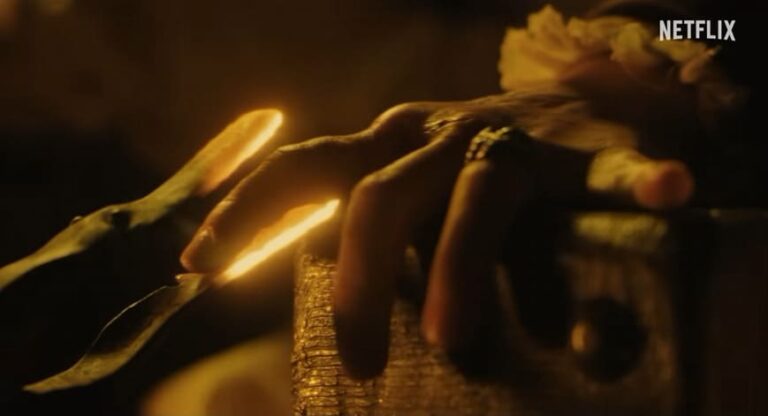
Once Rishi drops his rational ego entirely and accepts what his family abandoned, the tiger-and-flame imagery that’s been haunting him literally fuses with his silhouette. He doesn’t win the fight and go back to his old life. He becomes the thing standing guard at the treeline — torch in hand, permanently bound to the land he came to sell.
It’s a genuinely unsettling ‘happy ending,’ honestly, and I think that’s the point.
The Bigger Themes Underneath It All
The film leans hard into real folklore — it’s explicitly inspired by the Maa Van Devi Temple traditions near Bihta, Bihar — and that grounding is what makes the ecological subtext hit as hard as it does. Forests in this mythology aren’t backdrop, they’re jurisdiction. Sacred, governed, off-limits.
The ‘no entry after sunset’ sign that keeps reappearing throughout the movie isn’t just atmosphere — it’s basically the film’s thesis. Modern life assumes every square foot of the planet is eventually developable, sellable, ours. The Vvaan says: nope, some places bite back, and they’re right to.
What Fans Are Arguing About Online
The Reddit and forum discourse around this one has been genuinely fun to follow. There are two camps:
- The psychological reading: Rishi’s entire ordeal is guilt-induced trauma — the shame of abandoning his family’s legacy and trying to profit off it finally breaks him.
- The literal reading: the divine stuff is just… real, in-universe. The physical transformation, the Durga iconography, the village actually being saved — it all points to objective supernatural intervention, not metaphor.
I lean toward the second camp personally, but honestly the fact that both readings work is a sign of how well the script was built.

Why This Ending Sticks With You
What I love most is that the movie refuses the easy action-hero payoff. Rishi doesn’t save the day and drive off into the sunset. He loses his old identity completely and becomes something ancient and permanent instead — a fair trade in the story’s eyes, but a genuinely tragic one for the character we followed the whole runtime. If you liked how Kantara handled sacrifice and divine possession, this ending will hit a similar nerve, maybe even harder.
The final image works because it turns the entire movie back on itself. Rishi arrives believing the land belongs to his family and that his family can decide what happens to it. By the end, he understands that the relationship runs in the opposite direction. The land doesn’t belong to him; he belongs to it.
That makes the Vvaan reveal more than a last-minute supernatural twist. It’s the completion of Rishi’s character arc. He starts the movie trying to escape an inheritance and ends it becoming that inheritance in its most literal form. The money, the property sale and his plans for returning to the city all become irrelevant once he accepts the responsibility his family abandoned.
And that’s probably why the ending has stuck with me more than most recent folk-horror finales. There’s no clean victory, no loophole and no convenient resurrection of Rishi’s old life. He survives, but survival comes with a price: he is now part of the forest he once treated as property.
The Vvaan ultimately leaves us with a pretty uncomfortable idea. Sometimes the thing you spend the entire story trying to escape isn’t a curse at all. Sometimes it’s a responsibility you’ve inherited, ignored and eventually have to accept.